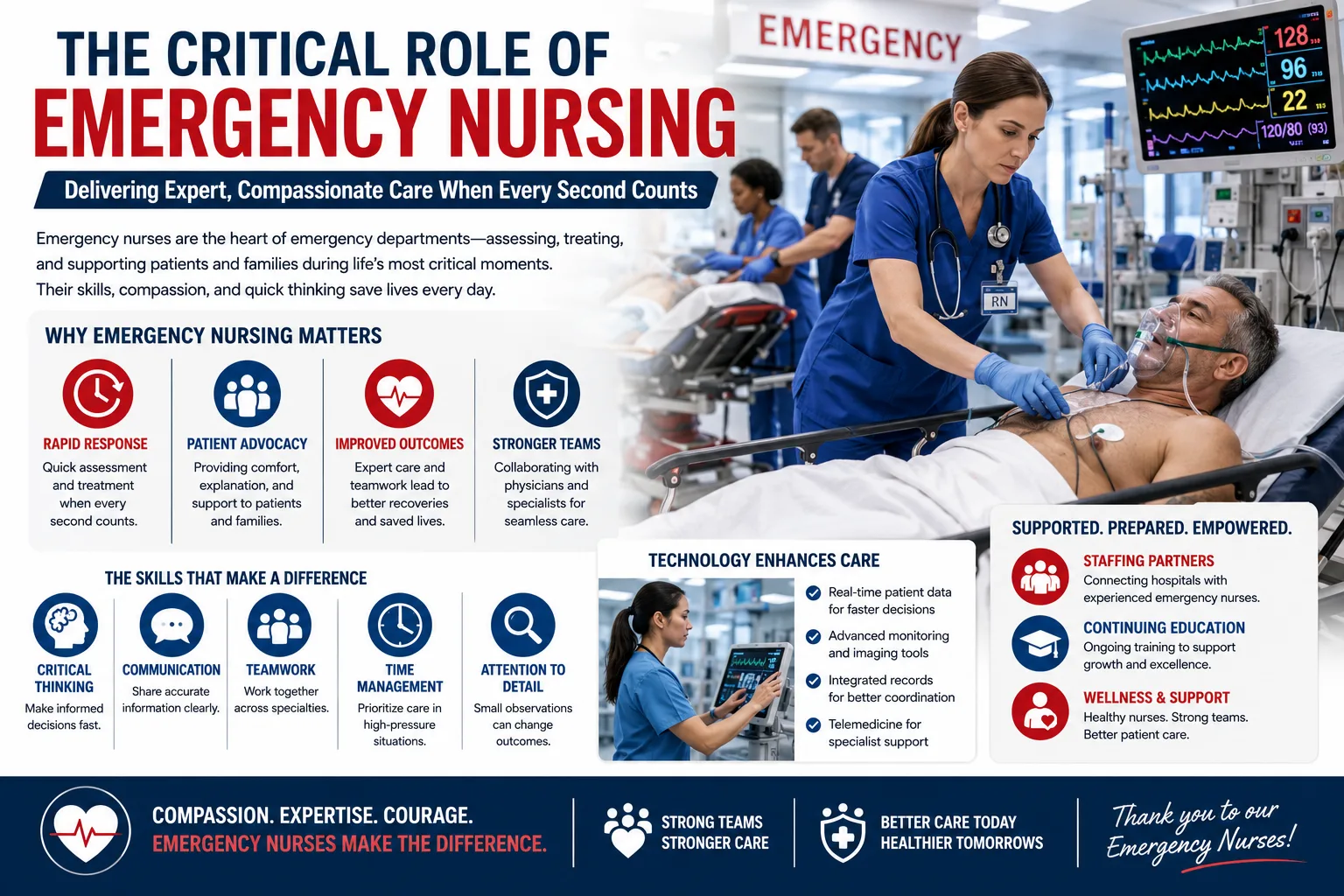
Healthcare environments are constantly evolving, but few areas are as fast paced and unpredictable as emergency care. Every day, hospitals receive patients experiencing serious injuries, sudden illnesses, and life threatening conditions that require immediate medical attention. Behind every successful emergency department is a team of highly trained healthcare professionals working together to provide rapid, compassionate, and effective care.
Among these professionals, nurses play one of the most important roles. They are often the first healthcare providers patients encounter, assessing symptoms, prioritizing treatment, monitoring recovery, and supporting families during stressful situations. Their ability to remain calm while making critical decisions helps improve patient outcomes and keeps emergency departments functioning efficiently.
As healthcare organizations continue responding to increasing patient volumes and more complex medical conditions, emergency nursing has become one of the most valuable specialties in modern medicine. Emergency nurses combine advanced clinical knowledge with excellent communication, adaptability, and problem solving skills to deliver quality care when every second matters.
Why Emergency Nursing Matters
Emergency departments never follow a predictable schedule.
One moment a patient may arrive with a minor injury, while moments later another patient requires immediate treatment for a heart attack, stroke, severe trauma, or respiratory distress.
Emergency nurses must quickly assess each patient's condition through triage, determine the urgency of care, and coordinate with physicians, specialists, and other healthcare professionals.
For example, after a major traffic accident, multiple patients may arrive simultaneously with different injuries. Emergency nurses organize care priorities, monitor changing conditions, administer medications, assist during procedures, and communicate with family members while maintaining a calm and organized environment.
Their ability to think clearly under pressure often has a direct impact on patient survival and recovery.
A Career That Demands Both Skill and Compassion
Emergency nursing requires much more than technical expertise.
Nurses work with patients experiencing pain, fear, uncertainty, and emotional distress. Along with providing medical care, they offer reassurance, explain treatments, answer questions, and support families during difficult moments.
Strong communication skills help reduce anxiety while ensuring patients understand their care plans.
Healthcare professionals in emergency settings must also demonstrate resilience because every shift presents new medical situations requiring quick thinking and adaptability.
Many nurses are drawn to emergency medicine because of its variety, constant learning opportunities, and meaningful patient interactions.
The Skills That Define Successful Emergency Nurses
Every emergency nurse develops a unique combination of clinical expertise and interpersonal abilities.
Critical thinking allows nurses to recognize subtle changes in patient conditions before complications develop.
Effective communication ensures physicians receive accurate information quickly.
Teamwork enables healthcare professionals from multiple specialties to coordinate treatment efficiently.
Time management helps nurses prioritize patient needs in busy departments where multiple emergencies occur simultaneously.
Attention to detail remains equally important because small observations can sometimes reveal significant medical concerns.
These skills develop through education, clinical experience, ongoing training, and continuous professional growth.
Technology Has Improved Emergency Care
Modern emergency departments use advanced technology to improve patient diagnosis, treatment, and communication.
Electronic health records provide instant access to medical histories, allergies, medications, and laboratory results.
Portable imaging systems, bedside monitoring equipment, and telemedicine consultations allow healthcare teams to make faster clinical decisions.
Emergency nurses interact with these technologies throughout every shift while continuing to provide personalized patient care.
Technology supports clinical practice, but human judgment remains essential.
Experienced nurses recognize symptoms that machines alone cannot fully evaluate and communicate important observations that influence treatment decisions.
Managing Challenges in Emergency Departments
Working in emergency care involves unique challenges.
Patient volumes fluctuate throughout the day, unexpected medical emergencies occur without warning, and emotionally difficult situations require professionalism under pressure.
Healthcare organizations increasingly recognize the importance of supporting emergency nurses through continuing education, wellness initiatives, and appropriate staffing levels.
Creating supportive work environments helps reduce burnout while improving employee satisfaction and patient care quality.
Hospitals that invest in strong nursing teams often experience better patient outcomes, improved teamwork, and higher staff retention.
Healthcare Staffing Supports Emergency Departments
Finding experienced emergency nurses has become increasingly challenging due to nationwide workforce shortages and growing healthcare demands.
Healthcare staffing agencies help hospitals identify qualified professionals with the clinical expertise, certifications, and adaptability needed for emergency settings.
For example, during seasonal illness outbreaks or periods of increased patient admissions, hospitals often require additional nursing professionals to maintain safe staffing levels.
Recruitment specialists streamline hiring by verifying credentials, evaluating experience, and matching healthcare professionals with organizations where they can succeed.
This approach allows healthcare facilities to continue delivering timely patient care while reducing administrative burdens.
Organizations such as EmpowerCare understand these workforce challenges by connecting healthcare employers with experienced nursing professionals who are prepared to meet the demands of modern emergency medicine. Their personalized staffing approach supports both healthcare organizations and clinicians seeking meaningful career opportunities.
Collaboration Across Healthcare Specialties
Emergency departments rarely operate independently.
Patients frequently require care from multiple healthcare teams, including intensive care, radiology, laboratory services, rehabilitation specialists, and operating room staff.
Close collaboration ensures patients move efficiently through each stage of treatment.
For example, trauma patients often receive immediate stabilization in the emergency department before undergoing surgery for internal injuries or orthopedic repair.
This seamless communication between departments improves patient safety while reducing treatment delays.
Healthcare professionals working together create stronger care experiences for patients facing complex medical conditions.
The Connection Between Emergency and Surgical Care
Many patients treated in emergency departments eventually require specialized surgical procedures.
This makes collaboration between emergency teams and surgery nurse professionals especially important. Surgery nurses prepare patients for operations, assist surgical teams during procedures, and monitor recovery afterward, ensuring continuity of care from emergency admission through postoperative treatment.
Their partnership with emergency nurses highlights how every healthcare specialty contributes to successful patient outcomes.
Conclusion
Emergency nursing remains one of the most demanding and rewarding careers in healthcare. Every day, emergency nurses combine clinical expertise, compassion, and critical thinking to care for patients during some of life's most challenging moments.
As healthcare continues evolving, the need for experienced emergency nurses will only continue growing. Supported by collaborative healthcare teams, advanced technology, and trusted staffing partners, these professionals play an essential role in delivering safe, efficient, and compassionate care to communities everywhere.
FAQs
1. What is emergency nursing?
Emergency nursing is a healthcare specialty focused on providing immediate assessment, treatment, and care for patients experiencing urgent illnesses, injuries, or medical emergencies.
2. What skills are essential for emergency nurses?
Critical thinking, communication, teamwork, clinical expertise, adaptability, compassion, and time management are among the most important skills.
3. Why is emergency nursing considered challenging?
Emergency nurses manage unpredictable patient volumes, rapidly changing medical situations, and emotionally demanding cases while making quick clinical decisions.
4. How do healthcare staffing agencies support emergency departments?
Healthcare staffing agencies help hospitals recruit experienced nursing professionals, reduce hiring delays, and maintain safe staffing levels during periods of increased patient demand.