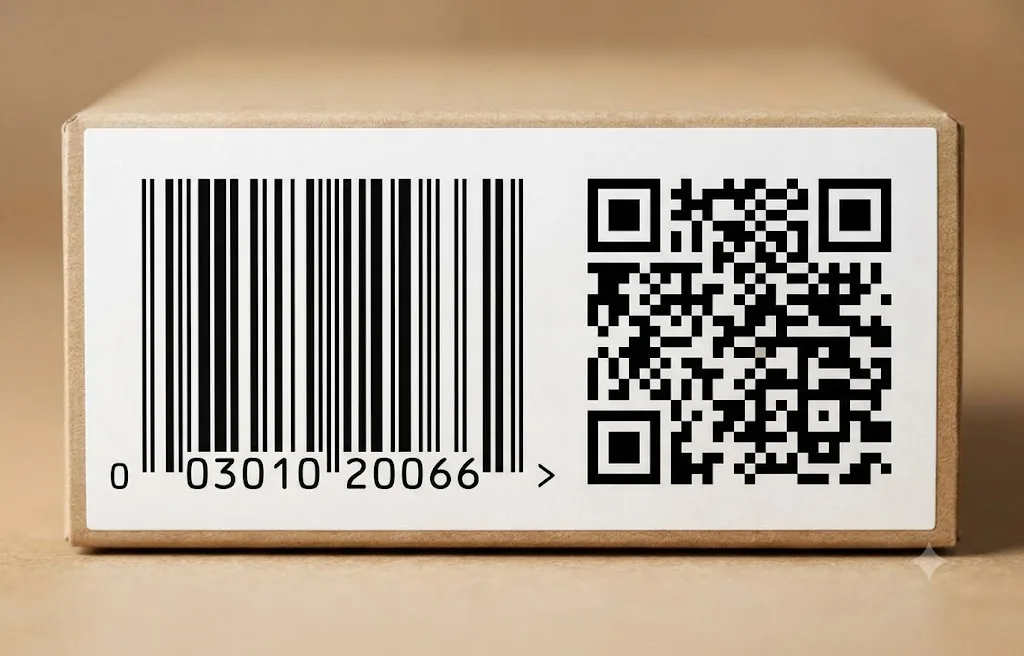
For fifty years, the linear UPC barcode has enabled retail checkout, inventory control, and supply chain visibility. Now, GS1, the global barcode standards organization, is driving its most significant transition with the Sunrise 2027 target. This initiative will require updates to your scanning and data infrastructure at the point of sale.
While the deadline is December 2027, preparation must begin sooner. Packaging redesigns, hardware updates, and system changes require long lead times. Auditing in 2026 will position your organization for a smoother transition. This article details the requirements, the importance of a 2026 audit, and offers guidance on structuring your review.
Key Takeaways
- GS1 Sunrise 2027 requires retail point-of-sale systems to scan 2D barcodes, such as QR codes and GS1 DataMatrix, by December 31, 2027, alongside existing 1D UPC and EAN barcodes.
- This is an industry commitment, not a government mandate. Traditional UPC barcodes will remain, and most products will display both symbols during the transition.
- 2D barcodes store more data, including batch, lot, expiration, and a GS1 Digital Link to online information.
- Hardware readiness is often the main challenge. A 2020 GS1 US study found most retailers still used laser scanners that cannot read 2D codes.
- Packaging and system transitions typically require 18 to 24 months, making 2026 the ideal time to audit scanners, software, master data, and labeling.
- A structured audit across four areas helps prevent rushed spending and checkout issues near the deadline.
Understanding What Sunrise 2027 Requires
Before beginning your audit, clarify what the deadline requires. Sunrise 2027 is a capability target: by December 31, 2027, retail point-of-sale systems must read and process 2D barcodes at checkout, in addition to existing linear barcodes.
Two key points are often overlooked. First, this is not a legislative mandate; no agency will issue fines if a product carries only a UPC after the deadline. It is a coordinated industry commitment, formalized in the United States by GS1 US in 2022. Second, the UPC will remain in use. GS1 recommends dual marking, with both 1D and 2D symbols on packaging during the transition.
The main driver for this change is data. A UPC encodes only a Global Trade Item Number (GTIN). In contrast, a 2D barcode using the GS1 Digital Link standard can include the GTIN, batch and lot numbers, expiration dates, serial numbers, and a web address for product information. This richer data supports recall management, freshness checks, and consumer engagement.
1D UPC and 2D Barcodes Side by Side
Comparing the two symbols from different barcode types shows why infrastructure updates are necessary. The differences affect not only appearance but also the required scanning technology.
Attribute 1D UPC / EAN 2D Barcode (QR / GS1 DataMatrix) Data captured GTIN only GTIN plus batch, lot, expiration, serial, and Digital Link Reading method Laser or imaging scanner Image-based (camera) scanner required Data capacity A dozen or so digits Hundreds of characters Consumer access None at the symbol Links to product pages via a smartphone Status after 2027 Still accepted Preferred, added alongside 1DThe main difference is the reading method. Traditional laser scanners read only linear codes and cannot interpret two-dimensional grids. QR codes and GS1 DataMatrix require image-based or camera-based barcode scanners. Start your scanner review by asking: can each device read 2D barcodes, or only linear ones?
Why 2026 Is the Year to Audit
With requirements defined, the timeline is clear. The necessary work to be ready by 2027 cannot be completed at the last minute.
Lead times are significant. A full packaging transition, including artwork updates, GTIN and Digital Link setup, and coordination with manufacturers, typically takes 18 to 24 months for mid-market brands. Hardware and software updates also require separate planning. Starting in late 2026 for a December 2027 deadline leaves little margin.
Hardware readiness is a key concern. In its 2020 study “Powering the Future of Retail,” GS1 US found that about 68.5 percent of retailers still used laser scanners that cannot read 2D barcodes, while 84 percent were considering or planning upgrades to advanced optical scanners. Support for the transition was strong, with 82 percent of retailers and 92 percent of brand owners favoring a move to data-rich barcodes within one to five years. The intent was present, but the necessary equipment often was not.
A 2026 audit is designed to close the gap between intent and readiness. Use 2026 for assessment and planning so that 2027 becomes an execution phase, not a last-minute rush.
How to Structure Your UPC Infrastructure Audit
An effective audit examines all systems that interact with barcodes, not just those at checkout. Dividing the review into four layers keeps it manageable and clarifies team responsibilities.
Audit layer What to check Common gaps Scanning hardware Whether each UPC scanner and mobile device can read 2D codes Aging laser-only units that cannot capture QR or DataMatrix Point-of-sale software Whether checkout software can parse a GS1 Digital Link and extract the GTIN Systems that read only fixed-length UPC data Master data Whether GTINs, product records, and attributes are accurate and complete Duplicate, missing, or outdated item records Packaging and labeling Whether artwork, printing, and label workflows can produce compliant 2D symbols No process for generating or validating GS1 Digital Link codesStart With Scanning Hardware and Software
Prioritize layers by remediation time, starting with scanning capability. Inventory all barcode-reading devices, including fixed checkout units and handheld or mobile scanners. For camera-based devices, ensure the scanning software is configured to decode 2D symbologies. Often, hardware is sufficient, but software or firmware updates may be needed to support QR codes and GS1 DataMatrix.
Give Master Data Equal Attention
Accurate data is essential. The value of a 2D barcode depends on the quality of the GTIN and product attributes it encodes. Duplicates, gaps, or outdated records in your master data will cause issues once richer barcodes are in use. Auditing and correcting product records now, and improving workflow automation, will prevent costly problems later.
Practical Next Steps for 2026
A clear framework turns the process into actionable steps rather than an abstract deadline. Several steps are especially important.
Assign an owner and form a small cross-functional team from operations, IT, and packaging, since no single group oversees all audit layers. Conduct a hardware inventory and identify devices that cannot read 2D barcodes, creating a specific, budgeted upgrade list. Ensure your point-of-sale and inventory systems can process a GS1 Digital Link, and pilot dual marking on one product line to validate end-to-end data flow before scaling. Schedule packaging changes to align with the 18 to 24 month lead time, and begin artwork updates promptly.
None of these steps requires a large up-front investment. What is needed is proper sequencing, which an early audit provides.
ConclusionThe GS1 Sunrise 2027 deadline marks a gradual but extensive transition. Retailers and brands that audit their scanning hardware, point-of-sale software, master data, and labeling in 2026 will navigate the change smoothly. Those who delay will face compressed timelines and higher costs.
The UPC will remain in use, and a complete overhaul is not required. Now is the time to assess your infrastructure and develop a plan to address gaps at a manageable pace. By starting your audit in 2026, you can approach the 2027 deadline proactively rather than reactively.