Linen has been part of human clothing for thousands of years. Long before modern fashion houses, summer collections and premium shirting fabrics, people were turning the fibres of the flax plant into cloth.
Ancient Egyptians wore linen garments, used linen for household textiles and valued fine linen as a high-quality material. Archaeological collections contain linen cloth dating back to the Old Kingdom, while exceptionally fine examples from the New Kingdom show how advanced linen production had become thousands of years ago.
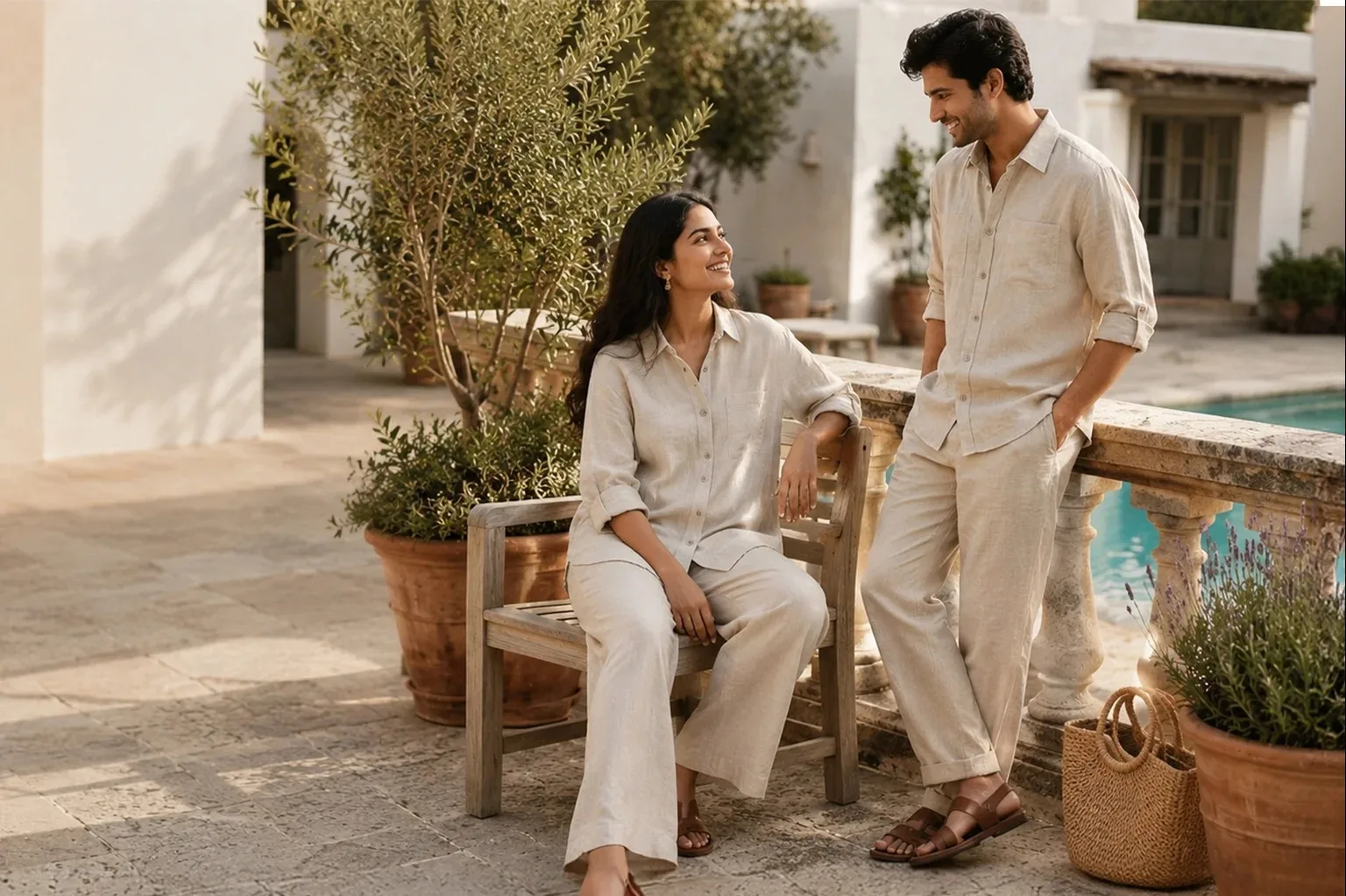
Today, linen fabric remains a familiar name in fashion. Linen shirts, trousers, dresses, jackets and co-ord sets are common choices for warm weather. Designers also use linen for its natural texture and ability to give garments a relaxed, refined appearance.
So, how did a fabric with such an ancient history remain relevant in modern clothing?
The answer lies in the fibre itself.
What Is Linen Fabric Made From?
Linen fabric is made from the fibres of the flax plant, scientifically known as Linum usitatissimum. Flax is a plant cultivated for both its seeds and its fibres, with the fibre-bearing stem providing the raw material for linen production.
The process starts with growing and harvesting flax. The stems then go through several stages of processing to separate the useful fibres from the woody parts of the plant. These fibres are prepared, spun into yarn and woven into fabric.
This gives linen a direct connection to agriculture. The fabric begins in a field as a plant and passes through a series of carefully controlled textile processes before becoming a shirt, dress, trouser or jacket.
Flax is also classified as a bast fibre. The useful fibres are found within the stem of the plant. Linen belongs to the same broad family of plant-based textile fibres as other bast fibres such as hemp.
The quality of the finished linen cloth depends on several factors, including the quality of the flax, fibre preparation, spinning, yarn construction and weaving.
Linen In Ancient Egypt
Some of the earliest and best-documented uses of linen come from ancient Egypt.
Flax cultivation and linen production date back to at least the Dynastic period, around 3100 BC. Linen was woven into clothing and other textiles, and Egyptian linen was also exported to regions around the Mediterranean, Arabia and India.
Linen became closely associated with Egyptian clothing. Men commonly wore kilts, while women wore dresses and wrapped garments made from linen. During the New Kingdom, finely pleated and lightweight linen garments became particularly prominent.
The fabric also had an important role in religious and funerary practices. Linen was used to wrap mummies, and large quantities of linen have survived from Egyptian tombs.
The Metropolitan Museum of Art holds an exceptionally fine piece of linen from around 1491 to 1473 BCE. The fabric was made with superfine thread and was so light and sheer that it demonstrates the skill of ancient Egyptian textile makers.
This tells us something important about the history of linen fabric. Linen was never simply a basic material. Skilled makers could produce different weights, textures and qualities for different uses.
How Linen Became A Valuable Textile
The quality of linen could vary considerably.
Coarser fibres could produce sturdy fabrics suited to practical uses. Finer fibres could be spun into delicate yarns and woven into lightweight cloth. Ancient Egyptian records and surviving textiles show that fabric quality was recognised and valued.
Some ancient linen pieces even carry marks associated with quality, ownership or production. The Metropolitan Museum of Art records linen marks from the Middle Kingdom that include references to quality and the people involved in acquiring or producing the fabric.
Linen also had a useful second life. Once old linen became too worn for everyday use, it could be reused for other purposes. Archaeological evidence from Egypt shows linen being used for clothing, bedding and other household purposes, with worn textiles also finding their way into mummification.
This long history of reuse reflects one of linen’s practical strengths: a well-made linen textile can remain useful for a long time.
From Flax Fibre To Linen Fabric
Making linen requires more work than simply harvesting a plant and weaving its stems.
After flax is harvested, the stems undergo processing to release the fibres. The fibres are separated, cleaned and prepared before being spun into yarn. The yarn is then woven to create linen fabric.
Traditional linen production involved considerable manual skill. Modern textile production uses machinery and controlled processes, while the fundamental relationship between flax fibre, yarn and woven cloth remains.
The fibre itself influences the final fabric’s character. Linen yarn can create fabrics ranging from lightweight, fine cloth to heavier, more textured materials.
The weave also affects the final appearance and performance of the fabric. Plain weave is widely associated with linen, although different constructions can create different textures and fabric weights.
This is why the phrase “linen fabric” covers a wide range of textiles. Two linen fabrics can feel and look very different depending on their yarn, construction, finishing and weight.
Why Linen Works So Well For Clothing
Linen has several qualities that have kept it relevant to clothing.
One of its most recognisable features is its natural texture. Linen has a distinctive surface that gives garments a relaxed and tactile appearance. It also develops a softer character with use and washing.
Linen clothing is particularly popular in warm climates because the fabric works well for lightweight garments. Linen can absorb moisture and allows air to move through the fabric, making it a practical choice for warm-weather dressing.
Its natural structure also gives linen a characteristic tendency to crease. Those creases have become part of the visual identity of linen clothing. A linen shirt can look polished while retaining a relaxed, lived-in quality.
The fabric can also be woven into different weights. Lightweight linen works well for shirts and dresses, while heavier constructions can be used for trousers, jackets and structured garments.
These qualities have helped linen move comfortably between casual and premium fashion.
Linen Enters Modern Fashion
As textile manufacturing developed, linen became part of a much larger global clothing industry.
Its use continued across Europe and other regions, appearing in shirts, undergarments, household textiles and other garments. By the nineteenth century, linen had become part of everyday clothing and textile production on an industrial scale. Linen also carried different social meanings depending on the garment, quality and wearer.
The twentieth century gave linen another strong connection with fashion.
Designers began using the fabric for its natural character, relaxed structure and ability to work well in warm-weather wardrobes. By the 1980s, Italian designer Giorgio Armani had helped establish linen as part of a sophisticated style associated with tailoring and luxury fashion.
That influence can still be seen today.
A linen shirt can be worn with tailored trousers. A linen blazer can be styled for a formal summer setting. Linen dresses can move between everyday and occasion wear. The same fibre can support very different design directions depending on how the fabric is woven, finished and cut.
Linen In Modern Fashion
Modern linen fabric fits naturally into the way people dress today.
Linen shirts remain a staple for warm-weather wardrobes. Linen trousers offer a lightweight option for everyday dressing. Linen dresses and skirts make use of the fabric’s natural drape and texture. Linen jackets can bring a softer character to traditional tailoring.
The fabric is also widely used in shirting. Fine linen and linen-blend shirting can offer designers a balance of texture, comfort and structure.
For fabric buyers and clothing brands, this variety makes fabric selection especially important. The right linen depends on the garment being produced.
A shirt may require a lightweight fabric with a smooth finish. A structured jacket may need more body. A relaxed dress may benefit from a softer drape. The fabric specification therefore plays a major role in the final appearance of the garment.
What Makes Good Linen Fabric?
The word “linen” alone does not tell you everything about a fabric.
When sourcing linen fabric for clothing, buyers should consider several factors.
Fibre Quality
The quality and preparation of flax fibres influence the yarn and the final fabric. Finer fibres can support finer yarns and lightweight fabrics.
Yarn Construction
The yarn affects the strength, texture and appearance of the fabric. Different yarn constructions can create very different results even when the raw material is the same.
Fabric Weight
Fabric weight should match the intended garment. Lightweight linen can work well for shirts and summer dresses, while heavier linen can provide greater structure.
Weave And Construction
The weave influences the fabric’s surface, drape and handle. Plain-weave linen is common, while different constructions can create distinct visual and tactile effects.
Finishing
Finishing can change the feel and appearance of linen. Softening, washing and other finishing processes can give the fabric a particular character suited to the final garment.
For brands and manufacturers, these details matter because fabric selection directly influences how a finished garment looks, feels and performs.
Why Linen Remains Relevant
Linen’s long history is remarkable because the material continues to serve a very modern purpose.
Textile Exchange estimates that global flax fibre production was around 0.4 million tonnes in 2022, with processed flax, also called linen, used in apparel and home textiles. Flax remains a relatively small part of the overall global fibre market, which gives linen its position as a specialised natural fibre.
The interest in plant-based fibres has also kept flax in conversations around material sourcing. Linen is a natural plant fibre, and flax is a crop with a long-established relationship with textile production. Its environmental profile still depends on how it is grown, processed, manufactured and sourced, so responsible sourcing requires attention to the entire supply chain.
For fashion, its appeal remains very practical. Linen brings texture, breathability, versatility and a recognisable natural character to clothing.
Thousands of years after the first linen garments were woven, designers are still working with the same basic fibre.
That is perhaps the most interesting part of linen’s history.
Fashion keeps changing. The material continues to find its place within it.
The Future Of Linen Fabric
The future of linen will depend on both traditional textile knowledge and modern fabric development.
Better fibre processing, improved spinning techniques, new fabric constructions and more refined finishing methods can expand what linen can do. Designers can work with different weights, textures and blends to create fabrics suited to contemporary clothing.
For fabric manufacturers and buyers, this creates an opportunity to look at linen beyond the traditional summer shirt. The fibre can support a wider range of shirting, tailoring and fashion applications when the right construction is selected.
Linen has already survived thousands of years of changes in clothing, technology and culture. Its continued presence in modern fashion comes from a simple fact: the qualities that made flax useful to early textile makers still have a place in contemporary clothing.
Choosing The Right Linen Fabric For Your Collection
For a fashion brand, garment manufacturer or designer, sourcing the right linen fabric is where the history of the fibre meets the practical demands of modern clothing.
Cirocco Fabrics brings decades of textile knowledge to this process, with a collection that includes premium linen shirting fabrics for contemporary fashion. With more than 3,000 fabrics and 200 new designs introduced each month, we offer fabric choices for brands looking at quality, texture and design together. For businesses looking for a reliable linen fabric supplier in India, Cirocco Fabrics is a strong sourcing partner for building refined, versatile fabric collections that carry the character of linen into modern clothing.