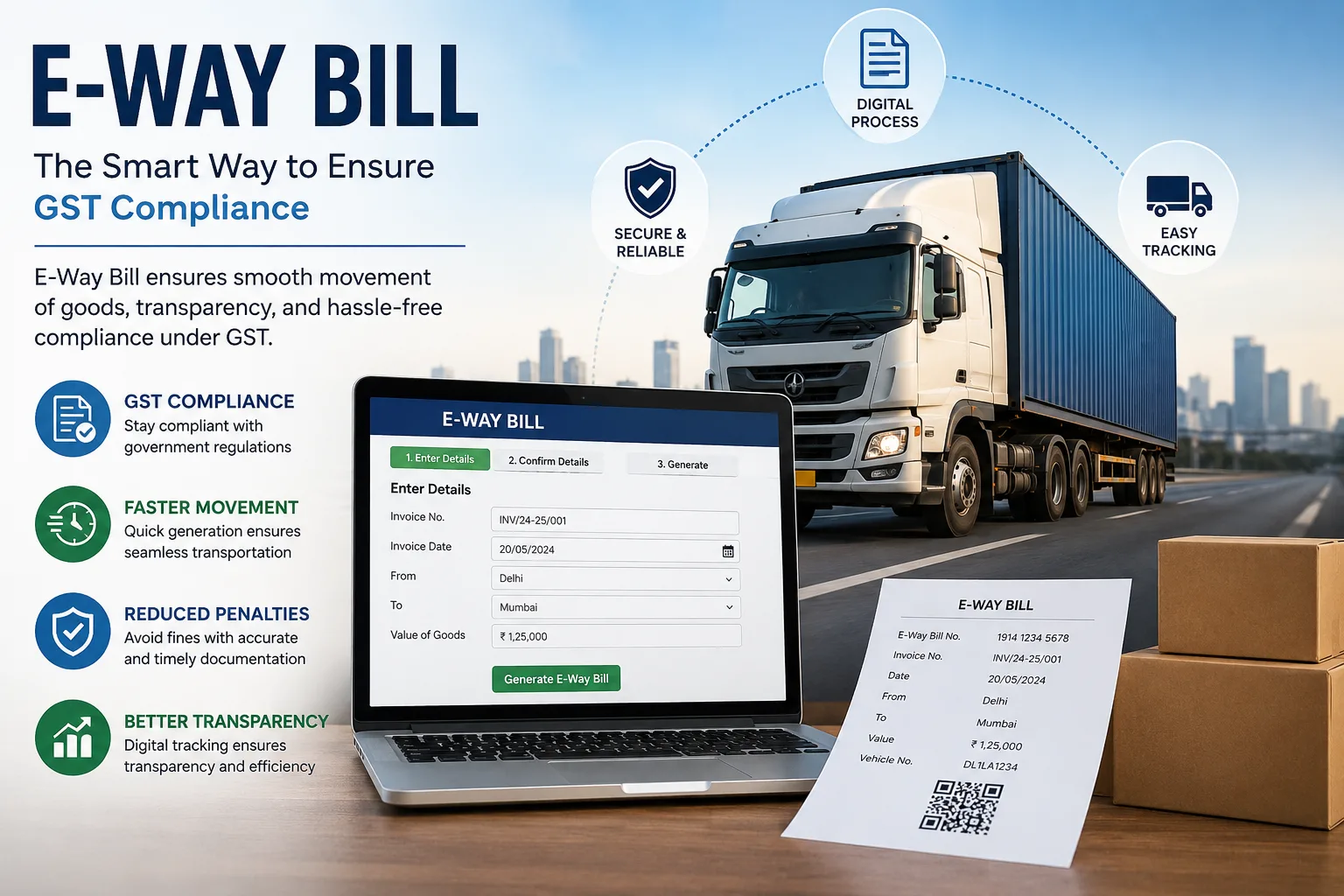
The Importance of E-Way Bills in Modern Logistics and GST Compliance
In today's rapidly evolving business landscape, the efficient movement of goods is essential for maintaining a competitive edge. Whether a company operates locally or across multiple states, ensuring compliance with tax regulations and transportation requirements is critical. One of the most important tools introduced under India's GST framework is the E-way Bill, which has transformed how businesses manage and track the transportation of goods.
What Is an E-Way Bill?
An E-Way Bill is an electronically generated document required for the movement of goods exceeding a specified value threshold. It contains important information related to the shipment, including details of the supplier, recipient, goods being transported, invoice information, and transporter details. The system was introduced to simplify compliance procedures and create greater transparency in the movement of goods.
Before the implementation of the E-Way Bill system, businesses often faced challenges due to varying state regulations, paperwork requirements, and delays during transportation. The digital nature of the E-Way Bill has significantly reduced these complications and improved operational efficiency.
Benefits of the E-Way Bill System
1. Improved GST Compliance
One of the primary advantages of the E-Way Bill system is enhanced GST compliance. Since all transportation records are digitally maintained, businesses can accurately document the movement of goods and ensure they meet legal requirements. This reduces the risk of penalties, fines, and disputes with tax authorities.
2. Faster Movement of Goods
The digital generation of transport documents has streamlined logistics operations. Transporters can quickly access and verify shipment details, reducing the need for manual paperwork and minimizing delays at checkpoints. As a result, goods reach their destinations more efficiently.
3. Greater Transparency
The E-Way Bill system creates a transparent record of every shipment. Authorities can verify transportation details in real time, helping prevent tax evasion and ensuring fair business practices. This transparency benefits both businesses and regulatory agencies.
4. Reduced Administrative Burden
Traditional documentation processes often required significant time and resources. By digitizing transportation records, businesses can reduce administrative work, improve accuracy, and allocate resources more effectively.
Impact on the Logistics Industry
The logistics sector has benefited greatly from the implementation of E-Way Bills. Digital documentation allows transporters to manage multiple shipments more efficiently while maintaining compliance with GST regulations. Companies can track consignments more effectively and respond quickly to operational challenges.
Additionally, standardized documentation has improved coordination among suppliers, transporters, and recipients. This has led to smoother supply chain operations and enhanced customer satisfaction.
Common Challenges Faced by Businesses
While the E-Way Bill system offers numerous advantages, businesses may occasionally encounter challenges such as:
- Incorrect invoice information
- Data entry mistakes
- Vehicle number mismatches
- Delayed document generation
- Lack of staff training
To overcome these issues, organizations should implement internal verification processes and ensure employees understand the requirements of GST compliance. Regular audits and proper record management can further reduce errors and improve operational efficiency.
Best Practices for Effective E-Way Bill Management
Businesses can maximize the benefits of the system by following several best practices:
Maintain Accurate Records
Always verify invoice details, transporter information, and shipment values before generating documents. Accurate data helps prevent compliance issues and transportation delays.
Train Employees Regularly
Staff involved in logistics and compliance should receive ongoing training regarding GST regulations and document generation procedures. This reduces mistakes and improves overall efficiency.
Use Digital Tools
Modern software solutions can automate document generation, tracking, and record management. Automation minimizes human error and saves valuable time.
Monitor Regulatory Updates
GST regulations continue to evolve, making it important for businesses to stay informed about new rules and compliance requirements. Keeping up with updates helps avoid unexpected issues and penalties.
The Future of Digital Compliance
As technology continues to reshape the business environment, digital compliance systems will become even more important. Governments and businesses are increasingly adopting automated processes that improve transparency, efficiency, and accountability. The E-Way Bill system represents a significant step toward a fully digitized logistics ecosystem.
Companies that embrace digital compliance tools are better positioned to optimize operations, reduce costs, and maintain regulatory compliance. With ongoing technological advancements, the future of logistics management is expected to become even more streamlined and data-driven.
Conclusion
The E-Way Bill system has become an essential component of modern logistics and GST compliance. By simplifying documentation, improving transparency, and enabling faster transportation of goods, it provides substantial benefits to businesses across various industries. Organizations that effectively utilize digital compliance systems can enhance operational efficiency, reduce risks, and build stronger, more reliable supply chains in an increasingly competitive marketplace.