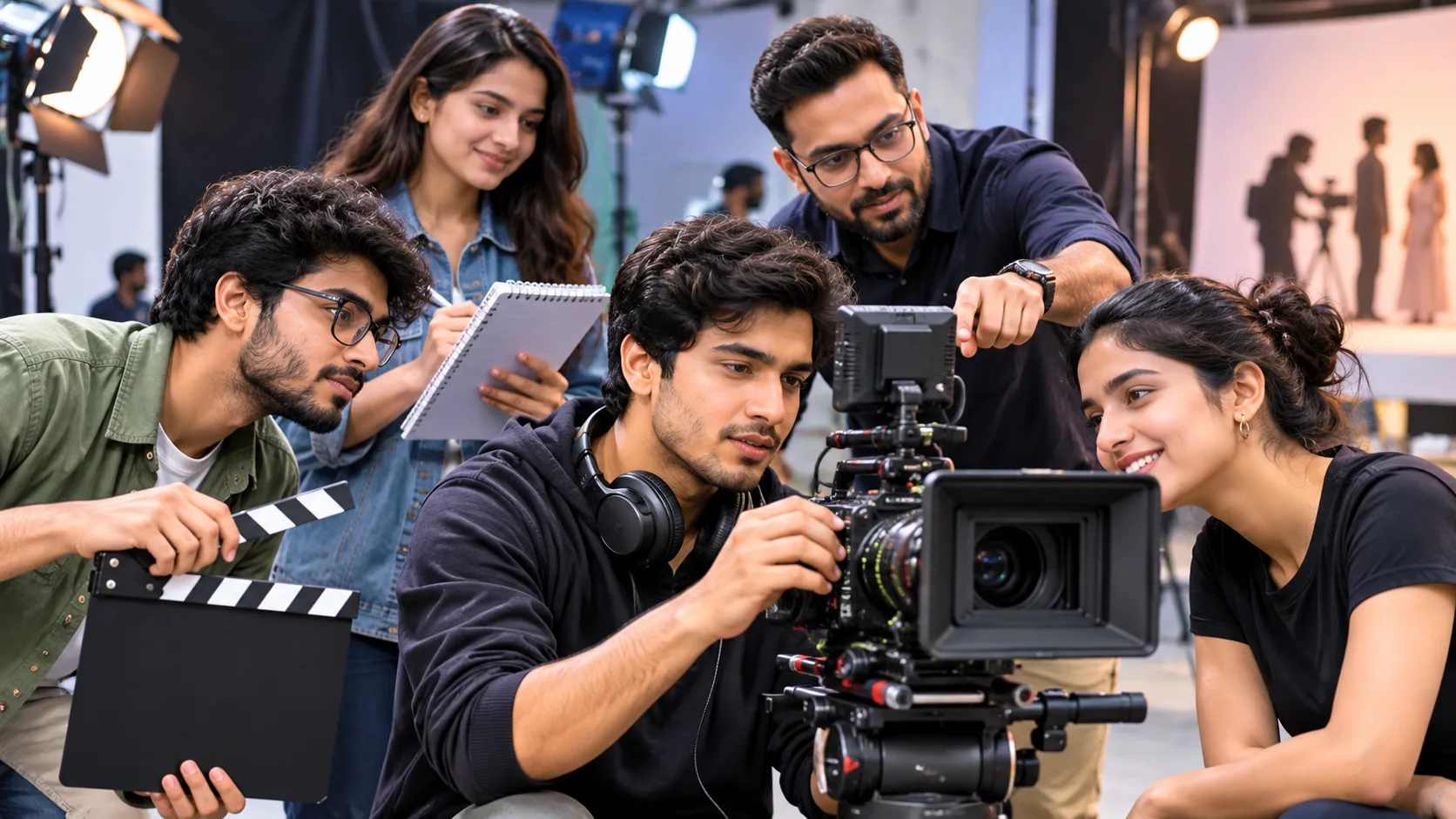
These days, anyone with a phone can shoot a film. Editing apps are free, tutorials are everywhere, and some of the most popular creators online never went to film school. So why spend a year or more on formal training? Because shooting a video and making a film are two different things. Here's what professional training gives you that YouTube tutorials usually can't.
You Learn the Process, Not Just the Tricks
Filmmaking is a workflow
A finished film goes through stages: idea, script, pre-production, shoot, edit, sound and final delivery. Self-taught filmmakers often jump straight to shooting and figure out the rest as they go. Training teaches you to plan properly, from breaking down a script to building a shot list and a schedule.
Why it matters on set
A well-planned shoot saves time, money and stress. On a professional set, nobody waits around while the director works out what to shoot next. Learning this discipline early is what separates hobbyists from people who get hired. You'll also learn the paperwork side of filmmaking, like call sheets, continuity notes and release forms, which nobody mentions in tutorials but every production uses.
You Get Honest Feedback
Someone to tell you what's not working
When you learn alone, it's hard to see your own mistakes. Friends and followers tend to be kind. In a good course, faculty and classmates will tell you why a scene feels flat, why the cut is too long, or why the audio is distracting. It's not always comfortable, but it's how you get better quickly.
Learning from each other's work
Watching your classmates' films, and seeing what they tried, teaches you almost as much as making your own. You start to notice what works across many films, not just your own, and that sharpens your eye quickly.
You Understand Every Role on Set
Not just the director's chair
Most people start out wanting to direct. Training shows you how every department works, including cinematography, editing, sound, production design and producing. Even if you end up directing, knowing what each person does helps you lead a crew with respect and clarity.
Finding your real strength
Many students discover they love a role they'd never considered, like editing or sound design. That's often where careers take off.
You Go Deeper on the Technical Side
Beyond auto settings
Professional training teaches you to control the camera, light a scene deliberately, record clean sound and colour-grade your footage. These are the skills that make work look and sound polished. Hands-on time in a proper cinematography lab with industry equipment is hard to get on your own.
Sound is half the film
Self-taught filmmakers often ignore sound until it ruins a scene. A good course teaches recording, mixing and sound design from the start.
You Finish Real Projects
A portfolio that proves your skill
The film industry hires on work, not certificates. A strong course makes sure you leave with finished films. In GKFTII's one-year diploma in filmmaking, for example, students work on multi-camera productions, short films of up to 10 and 20 minutes, an interview piece, a documentary of up to 15 minutes, a music video and ad films.
Deadlines teach you to finish
Plenty of talented people have hard drives full of unfinished projects. Course deadlines force you to complete work, which is a habit the industry values.
You're Closer to the Industry
Location and connections
Training near working studios gives you a feel for how the industry operates. Guest sessions, workshops and visits help you understand what producers and directors look for. India's film industry is large and varied, and bodies like NFDC support independent cinema, so there's room for many kinds of filmmakers.
A ready-made crew
Your classmates become your first crew, and often your long-term collaborators. The people you shoot with at film school are often the ones who call you when they get their first real project.
What Training Won't Do
Talent and effort still count
A course won't hand you a career. You'll still need to keep making work, keep learning and keep putting yourself out there. What training does is give you a strong base, so your effort goes further.
How to Choose a Course
Ask these questions
- How much time will I spend shooting and editing?
- What equipment will I have access to?
- What will I have made by the end?
- Who teaches, and what have they worked on?
- Will I get industry exposure or an internship?
If you're looking for a Filmmaking course in Delhi NCR, GKFTII's one-year diploma in filmmaking covers directing, screenwriting, cinematography, editing, sound and producing, taught inside Noida Film City. Call +91 84479 03923 or email info@gkftii.com to ask about the next intake for this Filmmaking course in Delhi NCR.