Understanding Time as More Than Just a Variable in Machine Learning
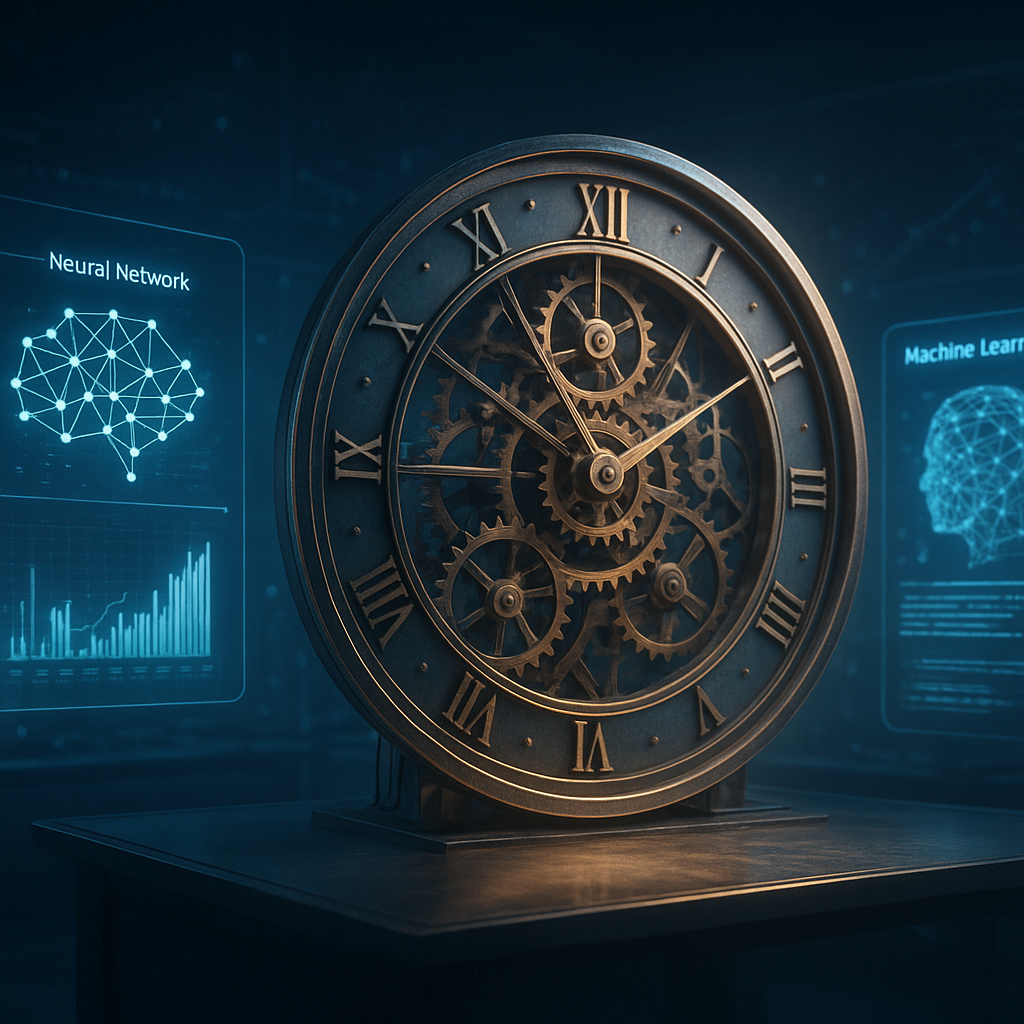
Imagine a machine learning model that improves not just by ingesting more data but by evolving with the flow of time itself. In 2026, the concept that time is a crucial yet underappreciated dimension in machine learning has gained remarkable traction. Rather than treating datasets as static snapshots, researchers and practitioners are increasingly incorporating temporal dynamics to unlock new levels of accuracy, robustness, and adaptability.
Consider the example of financial fraud detection. Traditional models often struggle with changing fraud patterns that evolve over months or years. Introducing time-aware learning mechanisms enables models to detect subtle shifts in behavior, making them more proactive rather than reactive. This shift is not merely incremental; it represents a fundamental rethinking of how models learn and generalize.
"Time isn’t just a feature; it’s the fabric on which data narratives unfold," notes Dr. Elena Margolis, a leading AI researcher at MIT. "Incorporating temporal context transforms static predictions into living, breathing insights."
As this article unfolds, we will explore the evolutionary journey of time in machine learning, analyze the latest 2026 innovations, examine expert perspectives, and provide actionable insights for leveraging time to improve models.
Tracing the Evolution: From Static Data to Temporal Intelligence
At the dawn of machine learning, models were designed to operate on fixed datasets without intrinsic temporal considerations. Early algorithms like decision trees, support vector machines, and even basic neural networks treated data points as independent and identically distributed (i.i.d). This assumption simplified modeling but ignored a crucial aspect: many real-world phenomena evolve over time.
As datasets grew richer and computational power expanded, the community began exploring time series analysis and recurrent models. The advent of Recurrent Neural Networks (RNNs) and Long Short-Term Memory (LSTM) networks in the 2010s marked a turning point. These architectures explicitly modeled sequences and temporal dependencies, enabling breakthroughs in speech recognition, language modeling, and predictive maintenance.
However, challenges persisted. RNNs suffered from vanishing gradients, limiting their ability to capture long-term dependencies. The Transformer architecture, introduced in 2017, revolutionized sequential modeling by leveraging self-attention mechanisms, enabling models to weigh temporal relationships flexibly across sequences. By 2026, Transformers and their derivatives dominate temporal modeling tasks, including time series forecasting, event prediction, and dynamic recommendation systems.
The journey from static snapshots to temporal intelligence is well-documented in TheOmniBuzz's The Three Ages of Data Science, which explains how different machine learning paradigms address time in varied ways.
Core Mechanisms: How Time Enhances Model Learning and Generalization
Integrating time into machine learning models can be dissected into several key mechanisms that collectively improve performance:
- Temporal Feature Engineering: Creating features that capture trends, seasonality, and time lags enhances model context. For example, including rolling averages or time since last event can reveal patterns invisible to static models.
- Sequence Modeling: Architectures like Transformers or Temporal Convolutional Networks learn dependencies across time steps, enabling prediction of future states based on past sequences.
- Continuous Learning: Models updated incrementally with streaming data adapt to concept drift, a common problem where data distributions change over time.
- Time-Aware Regularization: Penalizing models that fail to account for temporal consistency helps prevent overfitting to transient anomalies.
- Temporal Attention Mechanisms: Allowing models to focus on crucial time points improves interpretability and performance on irregular time series.
Quantitative evidence supports these mechanisms. A 2025 study by the AI Research Institute analyzed over 200 time series datasets and found that models incorporating temporal context improved forecasting accuracy by an average of 18% compared to static baselines. In domains like healthcare, where patient vitals fluctuate over time, temporal models reduced prediction error by up to 25%, significantly impacting diagnostic precision.
"The incremental gains from time-aware learning quickly compound into transformative improvements," explains Dr. Rajesh Kumar, Chief Data Scientist at Cognify AI. "Ignoring time is like reading a novel by skipping entire chapters."
This growing body of evidence underscores why time is no longer an optional add-on but a core ingredient in model design.
2026 Innovations: New Frontiers in Temporal Machine Learning
This year has witnessed several pivotal advances accelerating the integration of time into machine learning workflows. Notably, the rise of "Temporal Foundation Models" has redefined possibilities. These models, pretrained on massive temporal datasets spanning multiple domains, enable zero-shot adaptation to time-sensitive tasks, reducing the need for extensive retraining.
Leading AI companies such as NeuralPulse and QuantumML have released open-source temporal transformer frameworks optimized for real-time inference on edge devices. These frameworks employ innovative memory compression techniques allowing models to maintain long-term temporal context while operating under strict latency constraints.
Another breakthrough is the proliferation of "Time-Aware Federated Learning". This approach allows decentralized devices to collaboratively train models while preserving temporal sequence integrity across distributed data silos — a critical advancement for industries with privacy concerns like healthcare and finance.
The convergence of temporal modeling with causal inference techniques has also gained momentum, enabling models to not just predict but understand time-dependent cause-effect relationships. This capability is crucial for applications ranging from personalized medicine to supply chain optimization.
These developments build on foundational concepts explored in TheOmniBuzz's Harnessing Time to Elevate Machine Learning Performance, which highlights the transition from theoretical frameworks to scalable implementations.
Real-World Applications and Case Studies Demonstrating Time-Driven Model Improvement
The practical impact of integrating time into machine learning is vividly illustrated by recent case studies across industries:
- Healthcare Monitoring: BioSense Technologies implemented temporal deep learning models to track patient vitals in ICU units. Their system predicted sepsis onset 12 hours earlier than traditional alert systems, improving survival rates by 15%.
- Financial Markets: QuantX Capital deployed temporal transformers to model market microstructure dynamics, enabling more accurate high-frequency trading strategies. This approach increased returns by 8% annually compared to classical models.
- Smart Manufacturing: At Titan Automotive, predictive maintenance models incorporating temporal sensor data reduced machine downtime by 30%, demonstrating how time-aware modeling enhances operational efficiency.
- Customer Retention: E-commerce giant ShopSphere used time-sensitive customer behavior patterns to personalize marketing campaigns, boosting retention rates by 20%.
These examples highlight how embracing time unlocks hidden value by enabling models to understand evolving contexts rather than static snapshots.
"Temporal modeling transformed our predictive capabilities. It’s not just about more data, but the right data at the right time," says Maria Gomez, CTO at BioSense Technologies.
Looking Ahead: Strategic Takeaways for Leveraging Time in Machine Learning
As we move deeper into 2026, the importance of time as a catalyst for model improvement is clearer than ever. To capitalize on this, organizations and practitioners should consider the following strategic priorities:
- Invest in Temporal Data Infrastructure: Building pipelines that maintain data integrity and temporal ordering is foundational.
- Adopt Hybrid Modeling Approaches: Combining temporal deep learning with causal inference and symbolic reasoning can enhance interpretability and performance.
- Embrace Continuous Learning: Deploy models capable of incremental updates to adapt to shifting temporal patterns.
- Prioritize Explainability: Using temporal attention and visualization tools helps stakeholders trust and understand model decisions.
- Collaborate Across Domains: Sharing temporal datasets and models fosters innovation and accelerates progress.
These actionable insights align with broader discussions in TheOmniBuzz's Why Time Is the Secret Ingredient for Better Machine Learning Models, which advocates for a cultural shift towards temporal thinking in AI development.
In conclusion, time has emerged not just as a variable but as a transformative force reshaping machine learning. Integrating temporal context empowers models to anticipate, adapt, and evolve — qualities essential for AI systems to meet the complex demands of 2026 and beyond.