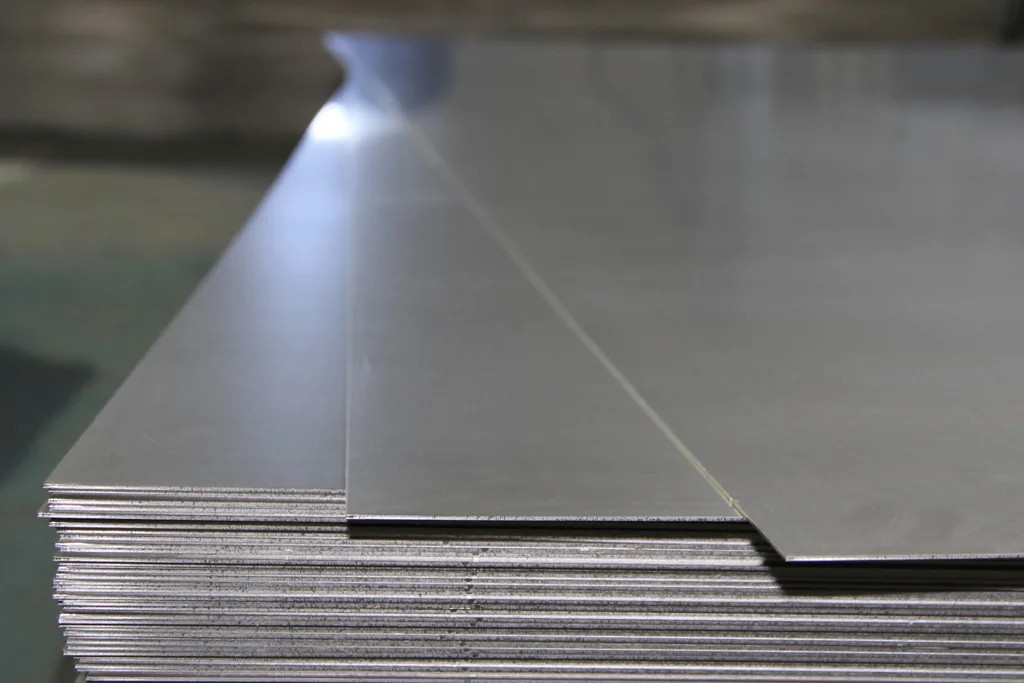
When industries require a material that combines excellent corrosion resistance, low weight, good ductility, and dependable fabrication characteristics, Titanium Grade 2 Plates are often considered for the application. This commercially pure titanium grade is widely used in chemical processing, marine equipment, desalination, heat exchangers, power generation, and specialized engineering systems.
Also identified as Ti Grade 2 and UNS R50400, Titanium Grade 2 is valued particularly for its resistance to seawater and many corrosive environments. Its combination of performance and relatively low density makes it an important material for applications where conventional metals may require more frequent maintenance or may not provide adequate corrosion resistance.
What Are Titanium Grade 2 Plates?
Titanium Grade 2 Plates are flat-rolled titanium products manufactured from commercially pure titanium. Grade 2 is one of the commercially pure titanium grades and offers a useful balance of corrosion resistance, strength, ductility, and formability.
Unlike alloyed titanium grades such as Grade 5, Titanium Grade 2 does not rely on significant additions of aluminium and vanadium to achieve its properties. Instead, it is commonly selected where corrosion resistance and fabrication characteristics are key considerations.
Depending on project requirements, Titanium Grade 2 Plates can be supplied in different thicknesses, widths, lengths, surface conditions, and specifications.
Why Is Titanium Grade 2 Used in Industry?
Titanium develops a stable oxide film on its surface when exposed to oxygen. This passive layer contributes significantly to its corrosion resistance.
As a result, Titanium Grade 2 can be suitable for environments involving:
- Seawater
- Chloride-containing media
- Selected chemical solutions
- Industrial process fluids
- Moist and corrosive environments
The exact suitability of the material depends on the chemical composition of the environment, temperature, concentration, pressure, and other operating conditions.
Important Properties of Titanium Grade 2 Plates
Excellent Corrosion Resistance
Corrosion resistance is one of the primary reasons industries select Titanium Grade 2. It can provide strong resistance to many corrosive environments and is particularly valued for marine and seawater-related applications.
Low Density
Titanium is significantly lighter than many conventional engineering metals. This makes Grade 2 plates useful where weight reduction is an important design consideration.
Good Strength-to-Weight Ratio
Although commercially pure Grade 2 titanium is not intended to compete with high-strength titanium alloys in every application, it provides a useful strength-to-weight balance for many industrial systems.
Good Ductility
Titanium Grade 2 offers good ductility compared with several other engineering materials. This can support forming and fabrication operations when suitable procedures are used.
Good Weldability
Grade 2 titanium can be welded using suitable processes and proper shielding. Contamination control during welding is especially important for maintaining material performance.
Resistance to Seawater
Titanium Grade 2 is well known for its resistance to seawater, which makes it attractive for selected marine, desalination, and heat-transfer applications.
Titanium Grade 2 Plate Manufacturing
The manufacturing process for titanium plates generally involves several controlled stages. Depending on the product specification and manufacturing route, these may include:
- Titanium material preparation
- Heating and hot working
- Rolling
- Heat treatment where specified
- Surface treatment
- Cutting and sizing
- Inspection
- Testing
- Packaging
The final product is manufactured according to the required dimensional and material specifications.
For critical applications, buyers should verify the manufacturing standard, material condition, testing requirements, and certification before placing an order.
Titanium Grade 2 Plate Specifications
Titanium Grade 2 Plates can be supplied according to applicable industry standards and customer requirements.
A commonly referenced specification is:
ASTM B265
Depending on the project, additional requirements may cover:
- Thickness
- Width
- Length
- Chemical composition
- Mechanical properties
- Surface condition
- Dimensional tolerances
- Testing
- Inspection
- Certification
For pressure equipment or specialized applications, the purchaser should specify all applicable standards and requirements before ordering.
Available Titanium Grade 2 Plate Sizes
Titanium Grade 2 Plates can be supplied in standard or customized dimensions depending on manufacturing capabilities.
Commonly specified dimensions include:
- Plate thickness
- Plate width
- Plate length
- Cut-to-size dimensions
- Customized sizes
Providing accurate dimensional requirements helps the manufacturer select an appropriate production and cutting process.
Applications of Titanium Grade 2 Plates
The unique characteristics of commercially pure titanium make Grade 2 plates suitable for various applications.
1. Chemical Processing Equipment
Chemical processing facilities often require materials capable of handling corrosive fluids. Titanium Grade 2 can be used in selected equipment where its corrosion resistance is appropriate.
Typical applications may include:
- Process equipment
- Tanks
- Heat exchangers
- Condensers
- Piping components
- Process vessels
2. Desalination Equipment
Desalination plants handle large quantities of seawater and concentrated saline solutions. Titanium Grade 2 can be used in selected heat-transfer and seawater-handling equipment because of its resistance to seawater.
3. Marine Applications
Marine environments can expose equipment to continuous seawater and chloride exposure. Titanium Grade 2 plates are therefore considered for selected marine components where long-term corrosion resistance is required.
4. Heat Exchangers
Titanium Grade 2 can be used in certain heat-exchanger applications, particularly where the process fluid or cooling medium creates a corrosive environment.
5. Power Generation
Selected power-generation systems use titanium materials in condensers, heat-transfer equipment, and cooling-water systems where the material's corrosion resistance provides an advantage.
6. Petrochemical Applications
Titanium Grade 2 can be considered for selected petrochemical equipment where the process conditions are compatible with the grade.
7. Engineering and Fabrication
The material's combination of corrosion resistance, ductility, and relatively low weight makes it suitable for specialized fabricated components and engineering projects.
Benefits of Titanium Grade 2 Plates
For suitable applications, Titanium Grade 2 Plates can offer several benefits:
- Excellent corrosion resistance
- High resistance to seawater
- Low material density
- Good strength-to-weight ratio
- Good ductility
- Good formability
- Good weldability
- Long service potential
- Suitable for demanding environments
- Reduced maintenance requirements in appropriate applications
Titanium Grade 2 vs Stainless Steel
Titanium Grade 2 and stainless steel are both used in corrosion-resistant applications, but they have different characteristics.
Titanium generally offers a lower density and exceptional corrosion resistance in many environments. Stainless steels, meanwhile, are available in a wide range of grades and can offer different combinations of strength, corrosion resistance, fabrication characteristics, and cost.
The choice between titanium and stainless steel should therefore be based on:
- Chemical environment
- Temperature
- Pressure
- Weight requirements
- Mechanical loads
- Fabrication requirements
- Expected service life
- Total project cost
Titanium Grade 2 vs Grade 5 Titanium
Titanium Grade 2 is commercially pure titanium, while Grade 5 is an alloy commonly known as Ti-6Al-4V.
The two grades are selected for different requirements.
Grade 2 Titanium is commonly valued for:
- Corrosion resistance
- Ductility
- Formability
- Weldability
Grade 5 Titanium is generally selected when higher mechanical strength is required.
Therefore, Grade 5 should not automatically be considered a replacement for Grade 2. Material selection should be based on the actual service conditions and engineering requirements.
How to Select Titanium Grade 2 Plates?
Before purchasing Titanium Grade 2 Plates, consider the following factors.
Material Grade
Confirm the required grade as Titanium Grade 2 / UNS R50400.
Dimensions
Specify the exact:
- Thickness
- Width
- Length
- Quantity
Operating Conditions
Evaluate the actual:
- Temperature
- Pressure
- Chemical concentration
- Chloride exposure
- Fluid composition
- Mechanical loading
Applicable Standard
Confirm the required ASTM, ASME, or project-specific specification.
Surface Condition
Specify the required surface finish or condition according to the fabrication and application requirements.
Certification
For industrial and critical applications, request appropriate material documentation such as material test certificates and inspection reports.
Choosing a Titanium Grade 2 Plates Supplier
Selecting an experienced Titanium Grade 2 Plates Manufacturer, Exporter, Supplier and Stockist can help ensure that the material supplied matches the required grade and dimensions.
Before purchasing, buyers should consider whether the supplier can provide:
- Material traceability
- Consistent dimensions
- Chemical composition certification
- Mechanical test results
- Material test certificates
- Customized plate sizes
- Appropriate packaging
- Export documentation
- Inspection support
These factors can be particularly important for industrial projects involving strict material specifications.
Fabrication of Titanium Grade 2 Plates
Titanium requires careful fabrication practices. During welding, cutting, forming, and machining, contamination and excessive heat exposure should be controlled appropriately.
Particular attention should be given to:
- Clean working surfaces
- Proper welding shielding
- Protection from atmospheric contamination
- Appropriate forming procedures
- Correct cutting methods
- Surface protection
- Suitable machining practices
Following suitable fabrication procedures helps preserve the desired properties of the titanium material.
Why Titanium Grade 2 Remains an Important Engineering Material
The continued use of Titanium Grade 2 is largely associated with its combination of properties rather than one individual characteristic.
A material that provides excellent corrosion resistance while also offering relatively low weight and good fabrication characteristics can provide significant advantages in applications where maintenance, material longevity, and operating conditions are important.
This makes Titanium Grade 2 a practical material option for chemical, marine, desalination, heat-transfer, and specialized engineering applications.
Conclusion
Titanium Grade 2 Plates are versatile commercially pure titanium products designed for applications where corrosion resistance, lightweight construction, ductility, and reliable fabrication characteristics are important.