- Introduction
In the rapidly evolving landscape of Cyber Security, there is a growing fear that Artificial Intelligence will render human roles obsolete. However, while AI Cybersecurity tools are powerful, they lack the nuanced intuition, ethical judgment, and complex problem-solving capabilities required for modern defense. This article outlines the essential roles where human oversight is irreplaceable, ensuring that any professional Cyber Security Solutions Company remains effective in a machine-driven world. As organizations scale their digital footprints, the need for a balanced approach between automated efficiency and human strategic oversight has never been more critical.
- The Human-in-the-Loop Philosophy
As we integrate advanced automation, we must remember that security is a human-centric endeavor. While automated systems can detect patterns, they often fail to understand the intent behind an attack. To maintain a robust security posture, organizations rely on professionals who can interpret Cyber Threat Intelligence within the context of their specific business objectives. Human analysts provide the "common sense" that AI lacks, ensuring that false positives are minimized and genuine threats are addressed with the appropriate level of urgency and business context.
- The Top 10 Irreplaceable Roles
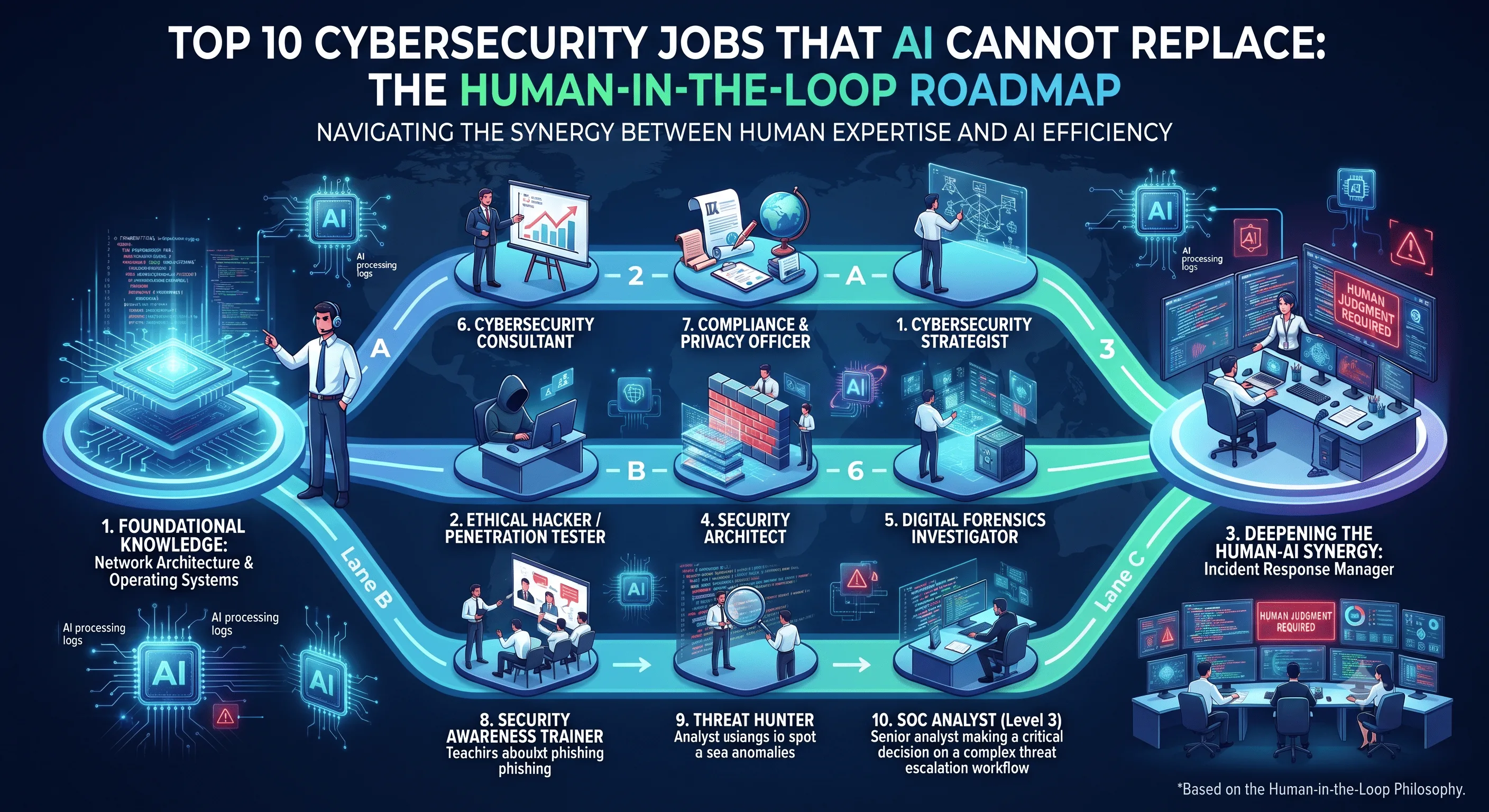
The following roles require the unique human ability to synthesize strategy, ethics, and technical skill.
- Cybersecurity Strategist: Designing high-level governance and risk management policies that align with corporate culture. AI cannot draft a strategy that balances risk with operational efficiency.
- Ethical Hacker / Penetration Tester: Using creative, non-linear thinking to find vulnerabilities AI might miss. Human hackers understand the "why" behind an exploit.
- Incident Response Manager: Coordinating crisis communications and human-team dynamics during a high-stakes breach. Empathy and calm leadership are exclusively human traits.
- Security Architect: Building complex, custom defenses tailored to unique infrastructure needs that are too granular for generic AI models.
- Digital Forensics Investigator: Navigating the legal and procedural requirements of criminal evidence, ensuring chain of custody is maintained.
- Cybersecurity Consultant: Translating complex technical risks into boardroom-level business strategy for non-technical stakeholders.
- Compliance and Privacy Officer: Navigating the gray areas of global law, ethics, and shifting regulatory requirements that require constant interpretation.
- Security Awareness Trainer: Teaching employees the psychological aspects of social engineering defense. AI cannot lecture or mentor staff effectively.
- Threat Hunter: Proactively seeking anomalies that do not follow established algorithmic signatures by connecting seemingly unrelated data points.
- SOC Analyst (Level 3): Managing complex escalation workflows within a Security Operations Center (SOC) where critical judgment is required to triage zero-day threats.
- Deepening the Human-AI Synergy
The future of the industry is not "AI versus Human," but rather "AI plus Human." AI excels at processing terabytes of logs in seconds, but it cannot decide the ethical implications of a containment action. For example, in a Managed Cyber Security Services environment, an AI might flag a legitimate user behavior as a threat based on a slight deviation in time; a human analyst immediately recognizes this as a valid, albeit rare, work habit. This human element is the final line of defense against adversarial machine learning, where attackers specifically try to "trick" automated systems.
- Roadmap for the Future
If you are pursuing a career in Managed Cyber Security Services, consider this roadmap to build a T-shaped skill set:
- Foundational Knowledge: Start by building a strong understanding of network architecture and operating systems.
- Skill Acquisition: Bridge the gap between theory and practice by leveraging resources like CompTIA and CyberSeek.
- Practical Application: Professionals often reference VAPT services for technical depth, compliance frameworks for governance, and comprehensive security audits to understand infrastructure assessment. Finally, see our section on human-in-the-loop dynamics or visit the main platform for broader insights.
- Conclusion
AI will continue to change the landscape, but it cannot replicate human wisdom, moral reasoning, or crisis management. By focusing on roles that require deep critical thinking, you position yourself as an indispensable asset in the future of Cyber Security. Remember to continuously update your technical and soft skills, as discussed in our detailed roadmap, and stay vigilant in your pursuit of professional excellence. The human element will always be the most vital component of the security chain.