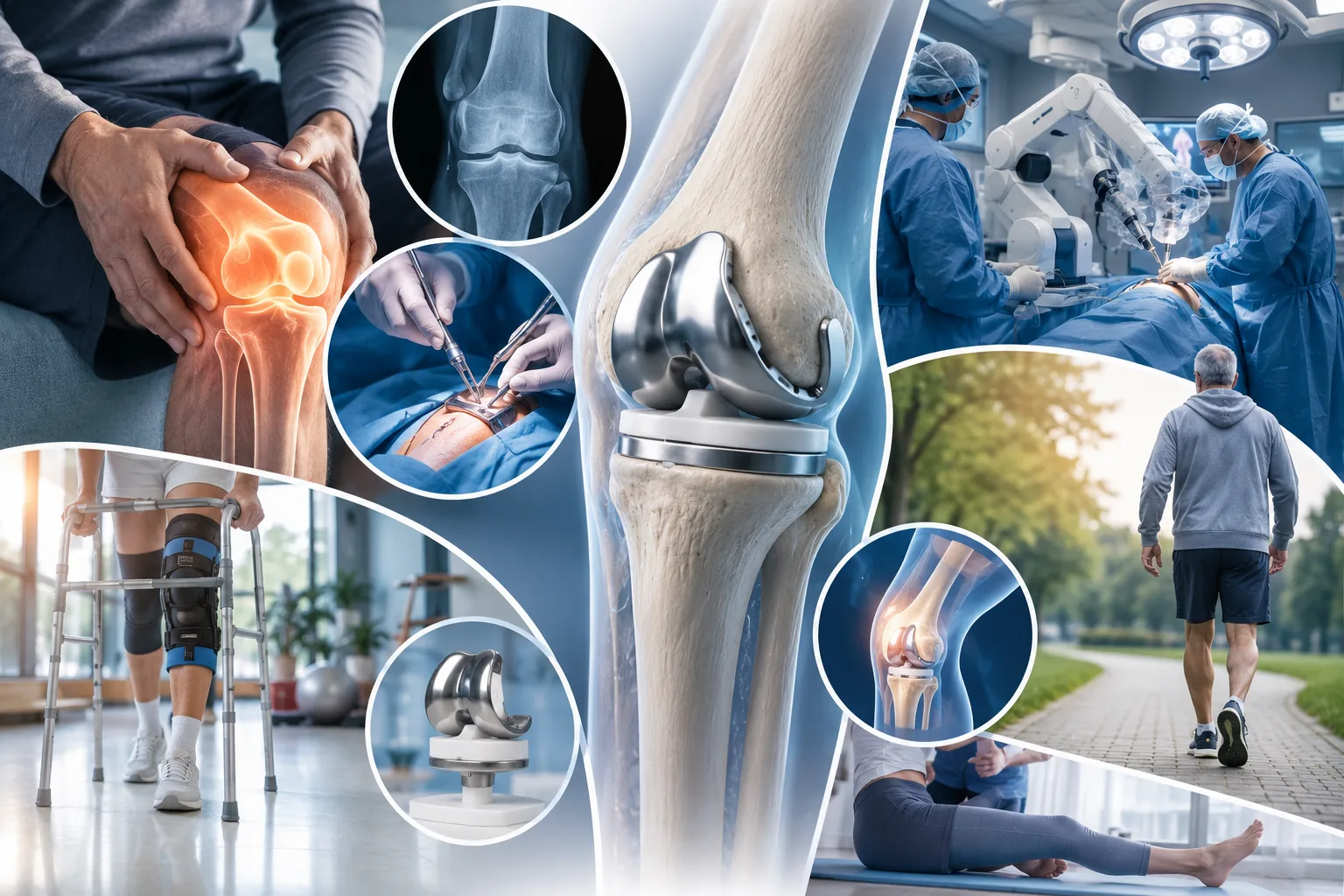
Knee pain is one of the most common orthopedic problems affecting people worldwide, especially older adults and individuals suffering from arthritis. When medications, physiotherapy, injections, and lifestyle modifications no longer provide relief, doctors may recommend Total Knee Replacement Treatment as a long-term solution. This advanced surgical procedure has helped millions of patients regain mobility, reduce pain, and return to their daily activities with confidence.
Modern orthopedic advancements have significantly improved surgical precision and patient outcomes, making knee replacement one of the most successful procedures in orthopedic medicine. Understanding the procedure, benefits, recovery process, and factors that influence success rates can help patients make informed decisions about their treatment.
What Is Total Knee Replacement Treatment?
Total Knee Replacement Treatment is a surgical procedure in which damaged portions of the knee joint are removed and replaced with artificial implants. These implants are designed to replicate the natural movement of the knee while reducing pain and improving function.
The procedure is commonly recommended for patients with severe joint damage that affects mobility and quality of life.
Parts of the Knee Replaced During Surgery
The surgeon typically replaces:
- Damaged femur (thigh bone) surface
- Damaged tibia (shin bone) surface
- Sometimes the underside of the kneecap
The artificial components are usually made of:
- Metal alloys
- Medical-grade plastic
- Ceramic materials
These implants are durable and designed to last for many years.
When Is Total Knee Replacement Recommended?
Not every patient with knee pain requires surgery. Doctors usually recommend knee replacement when conservative treatments fail to provide adequate relief.
Common Conditions Leading to Knee Replacement
OsteoarthritisThe most common reason for knee replacement surgery.
Rheumatoid ArthritisAn autoimmune condition causing chronic joint inflammation.
Post-Traumatic ArthritisArthritis resulting from previous injuries or fractures.
Severe Knee DeformitiesStructural abnormalities that affect walking and joint function.
Symptoms That May Indicate Surgery
- Persistent knee pain
- Difficulty walking
- Knee stiffness
- Swelling that does not improve
- Difficulty climbing stairs
- Reduced quality of life
Patients seeking Total Knee Replacement Treatment in Ghaziabad often consult specialists when these symptoms begin interfering with daily activities.
How Is Total Knee Replacement Performed?
The procedure is performed under spinal or general anesthesia and generally takes one to two hours.
Step 1: Preparation
The patient undergoes:
- Physical examination
- Blood tests
- X-rays
- ECG
- Medical clearance
Step 2: Surgical Procedure
The surgeon:
- Makes an incision over the knee.
- Removes damaged cartilage and bone.
- Reshapes the joint surfaces.
- Places artificial implants.
- Tests alignment and movement.
- Closes the incision.
Step 3: Postoperative Care
After surgery, patients are closely monitored and encouraged to begin movement under supervision.
Types of Knee Replacement Techniques
Orthopedic surgery has evolved significantly over the years.
Traditional Knee Replacement
Uses standard surgical methods with proven long-term results.
Minimally Invasive Knee Replacement
Requires smaller incisions and may lead to faster recovery.
Robotic-Assisted Knee Replacement
Uses advanced technology to improve implant positioning and surgical precision.
Computer-Navigated Surgery
Provides enhanced alignment accuracy during surgery.
Many centers offering Total Knee Replacement Treatment in Ghaziabad now utilize advanced technologies to improve patient outcomes.
Benefits of Total Knee Replacement Treatment
The procedure offers numerous benefits for patients suffering from severe knee damage.
1. Pain Relief
Most patients experience significant reduction in chronic knee pain.
2. Improved Mobility
Walking, climbing stairs, and daily activities become easier.
3. Better Joint Function
Patients regain a greater range of motion.
4. Enhanced Quality of Life
Improved independence and participation in social activities.
5. Long-Term Results
Modern implants can last 15–25 years or longer with proper care.
Because of these advantages, Total Knee Replacement Treatment remains one of the most effective orthopedic procedures available today.
Recovery After Knee Replacement Surgery
Recovery is a critical part of achieving successful outcomes.
First Few Days
Patients are encouraged to:
- Stand with assistance
- Walk short distances
- Begin physiotherapy exercises
First Six Weeks
The focus is on:
- Reducing swelling
- Increasing mobility
- Strengthening muscles
- Improving balance
Three Months
Most patients experience significant improvement and can resume many routine activities.
Six Months to One Year
The knee continues to strengthen and function improves further.
Following rehabilitation guidelines is essential for Improving your knee replacement success rate after surgery.
Physiotherapy and Rehabilitation
Physiotherapy plays a vital role in recovery.
Common Rehabilitation Exercises
- Ankle pumps
- Quadriceps strengthening
- Straight leg raises
- Knee bending exercises
- Walking programs
Benefits of Physiotherapy
- Faster recovery
- Better flexibility
- Improved strength
- Reduced stiffness
- Better implant function
Patients who actively participate in rehabilitation often achieve better outcomes.
Factors Affecting Success Rate
Several factors influence surgical success.
Positive Factors
- Good overall health
- Maintaining healthy weight
- Following rehabilitation protocols
- Proper implant positioning
- Early mobilization
Risk Factors
- Obesity
- Smoking
- Diabetes
- Poor compliance with physiotherapy
- Delayed rehabilitation
Understanding these factors is important for Improving your knee replacement success rate after surgery.
Success Rate of Total Knee Replacement
Knee replacement surgery has one of the highest success rates among orthopedic procedures.
Success Statistics
Research shows that:
- Over 90% of patients experience significant pain relief.
- Most patients report improved mobility.
- Modern implants often last 15–25 years.
- Patient satisfaction rates remain very high.
These outcomes make Total Knee Replacement Treatment a trusted solution for advanced knee arthritis.
Possible Risks and Complications
Although generally safe, every surgery carries some risks.
Potential Complications
- Infection
- Blood clots
- Implant loosening
- Joint stiffness
- Nerve injury
- Persistent pain
Fortunately, complications are relatively uncommon when surgery is performed by experienced orthopedic specialists.
Tips for Improving Recovery
Patients can take several steps to optimize recovery.
Follow Medical Advice
Attend all follow-up appointments and follow your surgeon's recommendations.
Maintain a Healthy Weight
Excess body weight places additional stress on the artificial joint.
Stay Active
Regular exercise supports joint health and muscle strength.
Complete Physiotherapy
Consistent rehabilitation significantly improves outcomes.
Avoid High-Impact Activities
Activities such as running and jumping may shorten implant lifespan.
These practices are highly effective for Improving your knee replacement success rate after surgery.
Life After Knee Replacement
Most patients return to a highly active lifestyle following recovery.
Activities Generally Allowed
- Walking
- Swimming
- Cycling
- Golf
- Light hiking
Activities Usually Discouraged
- Running
- Contact sports
- High-impact jumping activities
Maintaining a balanced and active lifestyle helps preserve knee function for many years.
Choosing the Right Orthopedic Specialist
Selecting an experienced surgeon is one of the most important decisions in the treatment journey.
Factors to Consider
ConsiderationImportanceSurgical ExperienceBetter outcomesAdvanced TechnologyImproved precisionRehabilitation SupportFaster recoveryPatient ReviewsInsight into care qualityHospital FacilitiesComprehensive treatmentPatients considering Total Knee Replacement Treatment in Ghaziabad should choose a center with experienced orthopedic surgeons and advanced surgical facilities.
Conclusion
Severe knee arthritis and chronic joint pain can significantly impact mobility, independence, and overall quality of life. Fortunately, Total Knee Replacement Treatment offers an effective solution for patients who no longer benefit from conservative therapies. By replacing damaged joint surfaces with advanced implants, the procedure provides long-lasting pain relief, improved mobility, and enhanced quality of life.
Successful outcomes depend not only on surgical expertise but also on proper rehabilitation, healthy lifestyle choices, and patient commitment to recovery. Whether considering surgery for osteoarthritis, rheumatoid arthritis, or post-traumatic joint damage, seeking expert care for Total Knee Replacement Treatment in Ghaziabad can help patients achieve excellent long-term results.
With modern surgical techniques and a focus on Improving your knee replacement success rate after surgery, patients can look forward to a more active, comfortable, and independent future.