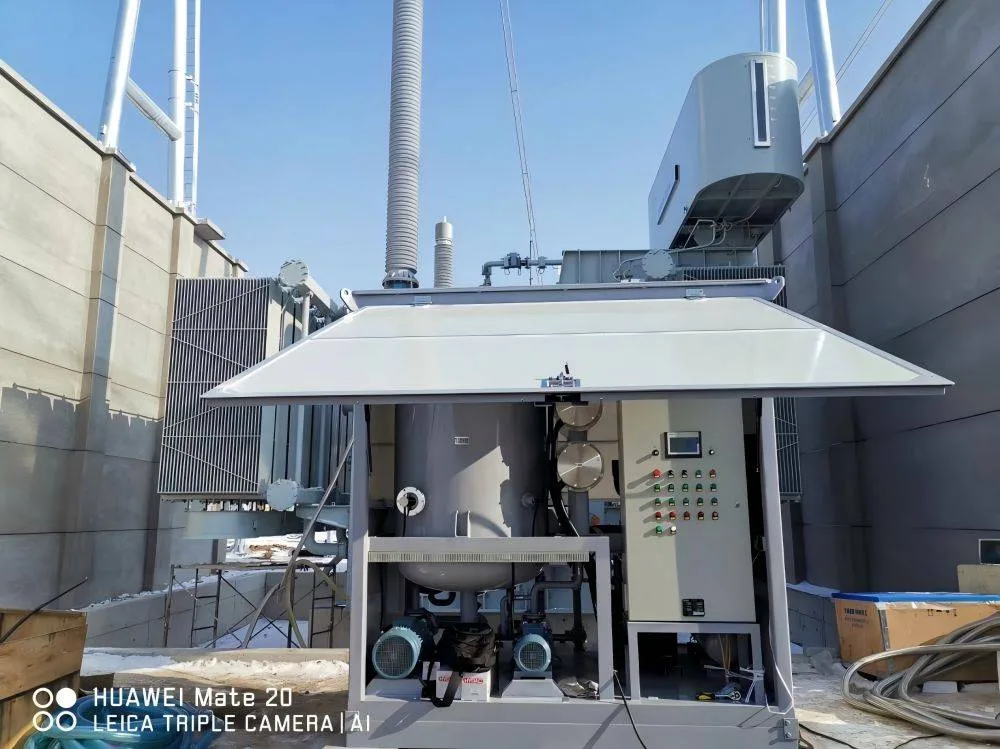
Used transformer oil is often treated as a disposal problem once its condition deteriorates. That approach can overlook an important option: some aged insulating oil can be reclaimed and returned to service after an appropriate assessment and treatment. Reclamation does not make every batch reusable, and it cannot repair damaged transformer insulation. However, when the oil remains suitable for treatment, it can reduce demand for replacement oil and lower the volume of material requiring disposal.
The distinction between purification and regeneration is central to this decision. Routine purification is intended mainly to remove physical contaminants such as free or dissolved moisture, gases, and suspended particles. It can improve dielectric performance when those contaminants are the main problem. It is not, by itself, a complete solution for oil that has undergone substantial chemical aging.
Oxidation can produce acidic compounds, sludge, varnish-forming materials, and other polar by-products. These compounds may affect acidity, interfacial tension, color, and the oil’s long-term stability. When laboratory results indicate that chemical deterioration is significant, transformer oil regeneration may be more appropriate than repeating ordinary filtration. The process uses adsorbent media, such as Fuller’s earth or other engineered materials, to capture selected degradation products.
A modern transformer oil regeneration plant may combine several treatment functions in one system. Heating and vacuum stages help remove moisture and dissolved gases. Filtration stages capture suspended solids. Adsorption columns then target acids and oxidation-related compounds that ordinary filters cannot adequately remove. The exact arrangement and media depend on the equipment design and the characteristics of the oil being treated.
A responsible reclamation decision starts with representative laboratory testing. Useful information may include breakdown voltage, water content, acidity, interfacial tension, dielectric dissipation factor, appearance, and other parameters required by the asset owner. The results should be considered together with transformer age, operating history, oil type, and any evidence of internal faults. Dissolved gas analysis also has a diagnostic role: abnormal gas patterns may point to an electrical or thermal problem that oil treatment alone cannot solve.
The next question is whether reclaimed oil can meet the required acceptance criteria. The asset owner should define those criteria before treatment begins, rather than assuming that every processed batch will become equivalent to new oil. Testing after treatment is essential. If the oil fails to meet the required specification, the team may need additional treatment, blending where permitted, or an alternative disposal decision. The transformer itself may also require inspection if the oil condition reflects an unresolved equipment issue.
Environmental performance depends on the whole process, not just on the amount of oil reused. A sound program considers the source and quality of adsorbents, handling of spent media, energy consumption, transport, sampling, and final waste classification. Some systems are designed to reactivate regeneration media, which can reduce the frequency of media replacement. Such a feature may improve operating economics, but users should examine the actual reactivation method, energy demand, emissions controls, maintenance requirements, and achievable reuse cycles.
For utilities with large transformer fleets, oil reclamation can be incorporated into a broader asset-management strategy. Instead of making decisions based only on oil age, maintenance teams can group assets by condition, prioritize the most degraded batches, and compare regeneration with replacement using laboratory evidence and lifecycle cost. A centralized treatment program may also improve traceability by creating consistent records for oil batches, treatment history, and final quality.
Equipment design is one part of that strategy. YUNENG supplies systems for vacuum purification and deeper oil reclamation, including a transformer oil regeneration and reclamation machine. Its product information describes integrated dehydration, degassing, filtration, and adsorption functions. More about the manufacturer’s wider oil-treatment equipment is available on the YUNENG website.
Reclamation should never be viewed as an automatic substitute for replacement. It is a condition-based option supported by testing, suitable technology, controlled operation, and verification after treatment. Used in that way, it can help utilities conserve a valuable insulating-fluid resource while maintaining the reliability standards expected of critical power assets.
Transformer Oil Reclamation: Turning an Aging Maintenance Liability into a Reusable Resource