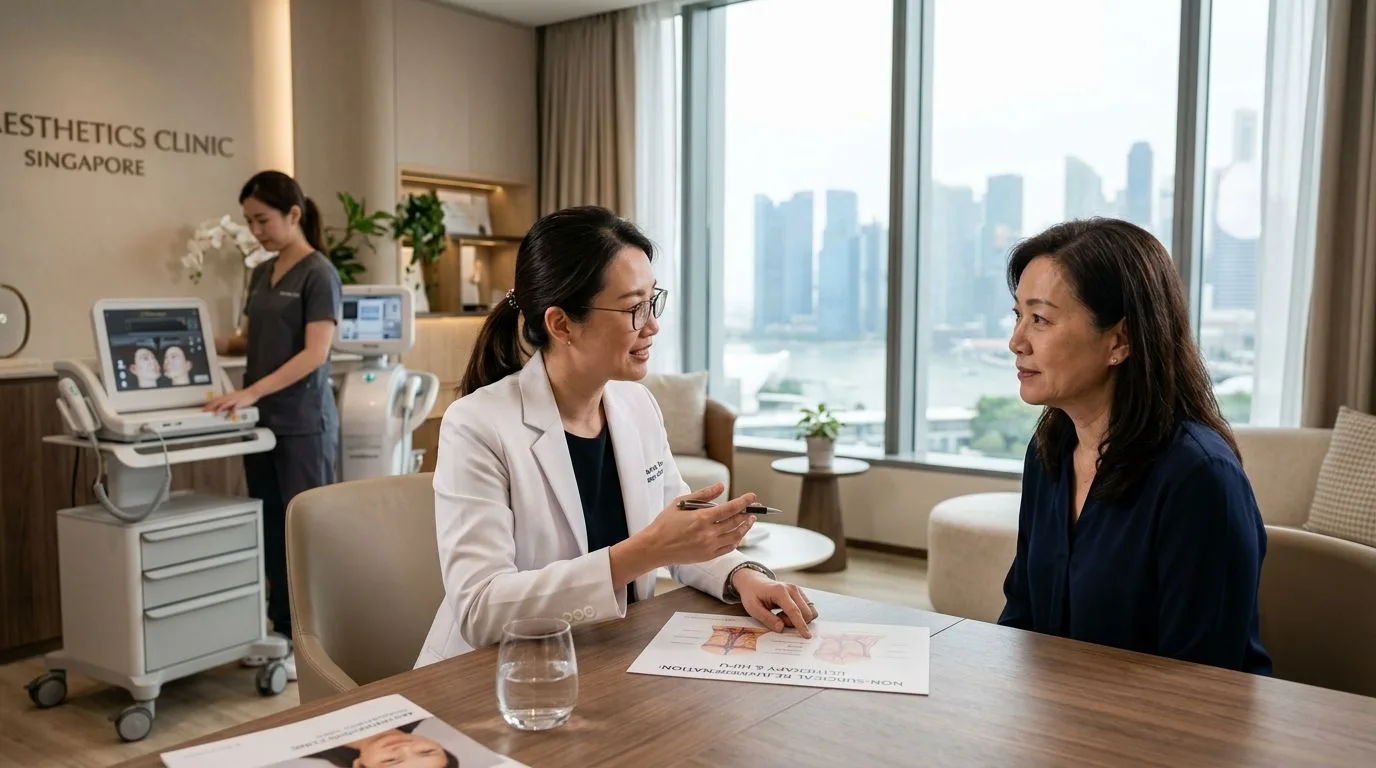
Before choosing a non-surgical skin tightening treatment in Singapore, most people ask the same question: Should I choose Ultherapy or HIFU? Both treatments promise firmer skin, improved facial contours, and a more youthful appearance without surgery. Yet the differences in technology, cost, treatment experience, and long-term results can be significant.
Recent Singapore aesthetic industry reports and clinic data show that both Ultherapy Prime and modern HIFU platforms, such as Ultraformer, remain among the most requested non-invasive lifting procedures in 2026. The biggest distinction is that Ultherapy includes real-time ultrasound visualisation technology, while most HIFU systems do not. This affects treatment precision, pricing, and often the longevity of results.
Understanding Non-Surgical Skin Tightening
As we age, collagen and elastin production naturally decline, causing the skin to lose firmness and elasticity. This often leads to sagging around the jawline, cheeks, neck, and lower face.
While surgical facelifts were once the primary solution for skin laxity, many people now prefer non-invasive options with little to no downtime. Treatments like Ultherapy and HIFU use ultrasound technology to target deeper skin layers and stimulate natural collagen production. Rather than delivering instant results, they gradually improve skin tightness and lift, creating subtle, natural-looking enhancements without surgery.
What Is Ultherapy?

Ultherapy is a non-invasive skin tightening treatment that uses Micro-Focused Ultrasound with Visualisation (MFU-V) technology to target deep skin layers, including the SMAS layer addressed during surgical facelifts. Its real-time imaging allows practitioners to deliver ultrasound energy with greater precision, making it a premium treatment option.
By creating controlled thermal points beneath the skin, Ultherapy stimulates collagen and elastin production. Over time, this process improves skin firmness, tightness, and lift, producing gradual, natural-looking results without surgery or downtime.
What Is HIFU?

HIFU (High-Intensity Focused Ultrasound) is a non-surgical skin tightening treatment that uses focused ultrasound energy to stimulate collagen production deep within the skin. It is widely chosen for its noticeable lifting effects and more affordable cost compared to Ultherapy.
Unlike Ultherapy, HIFU refers to a category of technologies offered by various manufacturers. The treatment works by heating targeted tissue layers, triggering collagen remodelling and skin tightening. Results develop gradually over two to three months, with minimal downtime, making it a popular option for patients seeking a convenient facial rejuvenation treatment. To understand what HIFU treatment involves in more detail, including the different types and who it suits best, a dedicated guide can help you explore further before making a decision.
Ultherapy vs HIFU: Key Differences

Treatment Precision
The most important difference between Ultherapy and HIFU lies in visualization technology. Ultherapy provides live ultrasound imaging during treatment, allowing practitioners to see exactly where energy is being delivered. Most HIFU devices operate without this visualisation feature. As a result, Ultherapy is generally viewed as the more precise treatment option.
Comfort During Treatment
Neither treatment is completely painless. Patients commonly describe sensations of warmth, tingling, or brief discomfort during energy delivery. Modern HIFU systems often incorporate treatment modes designed to improve comfort and reduce procedure time. Individual pain tolerance, treatment intensity, and the experience of the practitioner all influence the overall experience.
Number of Sessions Required
One of Ultherapy's advantages is that many patients achieve satisfactory results with a single treatment session annually. HIFU often requires multiple sessions or maintenance treatments to maintain optimal results, depending on the device used and the patient's skin condition.
Result Longevity
Research and clinical observations suggest that Ultherapy results may last between 12 and 18 months for suitable candidates. HIFU results commonly last between 6 and 12 months, although this varies according to age, lifestyle, skin quality, and treatment protocol.
Cost Comparison in Singapore (2026)
One of the biggest deciding factors for most patients is cost.
TreatmentAverage Cost Range (SGD)Sessions Typically NeededHIFU Small Areas$500 – $900MultipleHIFU Jawline & Neck$1,200 – $2,000MultipleHIFU Full Face$1,800 – $3,0001–3HIFU Face + Neck$2,500 – $4,0001–3Ultherapy$2,500 – $6,000+Usually 1These figures vary based on clinic reputation, treatment area, number of shots delivered, device version, and practitioner expertise. Premium Ultherapy Prime treatments generally command higher pricing because of the technology involved and the precision offered by real-time visualisation.
At first glance, HIFU appears significantly cheaper. However, when maintenance treatments and multiple sessions are considered, the long-term cost difference may become smaller than expected.
Results Comparison
Both Ultherapy and HIFU deliver gradual, natural-looking improvements by stimulating collagen production rather than providing the dramatic lifting effects of surgery.
Most patients notice initial changes within four to eight weeks, with optimal results appearing between two and six months. Common benefits include a more defined jawline, firmer cheeks, reduced neck laxity, and improved facial contours. Those looking to enhance definition specifically along the lower face and neck may also find that a non-invasive Neck & Jaw Lifting treatment pairs well as part of a broader skin tightening plan.
Results vary based on skin condition, with individuals experiencing mild to moderate skin laxity typically achieving the best outcomes. Those with more advanced sagging may benefit from combination treatments or surgical options for more significant improvement.
Who Is a Good Candidate for Ultherapy?
Ultherapy is often recommended for people who:
- Have mild to moderate skin laxity
- Want longer-lasting results
- Prefer a single treatment session
- Are willing to invest in premium technology
- Need precise targeting of deeper tissue layers
Patients in their late thirties, forties, and fifties often see the greatest benefit. The treatment is particularly popular among professionals who want subtle rejuvenation without looking "overdone."
Who Is a Good Candidate for HIFU?
HIFU may be ideal for people who:
- Want a more affordable entry point
- Have early signs of ageing
- Prefer gradual improvements
- Are you comfortable with maintenance sessions
- Need mild contouring around the jawline and lower face
Many younger patients in their late twenties and thirties choose HIFU as a preventive collagen-stimulating treatment before more noticeable skin laxity develops.
Risks, Side Effects & Recovery
Risks
Ultherapy and HIFU are generally safe when performed by qualified professionals. However, improper treatment techniques or unsuitable candidates may increase the risk of uneven results or prolonged discomfort.
Side Effects
Most side effects are mild and temporary, including redness, swelling, tenderness, or tingling in the treated area. These reactions typically subside within a few hours to a few days.
Recovery
Both treatments require little to no downtime, allowing patients to resume normal activities shortly after the procedure. Following aftercare instructions can help support healing and optimise results. Incorporating a targeted product such as a Face & Neck Lifting Serum into your daily routine after treatment can further support skin firmness and help maintain the lifting benefits between sessions.
How to Choose the Right Clinic in Singapore
Choosing the right clinic may be even more important than choosing the treatment itself. Consider the following factors:
- Verify that the clinic uses authentic devices.
- Check practitioner qualifications and experience.
- Request before-and-after photographs.
- Ask about the number of treatment shots included.
- Understand realistic expectations before proceeding.
- Ensure a detailed consultation is performed before treatment.
A reputable Aesthetic Clinic in Singapore will take the time to assess your facial structure, skin quality, degree of skin laxity, and aesthetic goals before recommending a personalised treatment plan.
Conclusion
When comparing Ultherapy vs HIFU in Singapore in 2026, there is no universal winner. Both technologies use ultrasound energy to stimulate collagen production and tighten the skin without surgery. The primary differences lie in precision, treatment experience, longevity, and cost.
Ultherapy remains the premium choice thanks to its real-time imaging technology, strong clinical backing, and potentially longer-lasting outcomes. HIFU continues to be an attractive option for patients seeking effective skin tightening at a lower cost.
The best treatment is ultimately the one that aligns with your skin condition, expectations, lifestyle, and budget. A consultation with an experienced aesthetic doctor can help determine which approach is most likely to deliver the results you want.
Information
Website: https://skincreationsg.com/
Email: office@skincreationsg.com
Phone Num: +65 90178905
Address: 371 Beach Rd, B1–09/10, Singapore 199597