Feeling dizzy, unsteady, or as though the room is moving can make everyday activities feel difficult and sometimes frightening. Problems with balance can affect walking, climbing stairs, turning the head, getting out of bed, or participating in activities you normally enjoy.
For people in Port Credit, Mississauga, and nearby communities, Vestibular Rehabilitation can be an important part of managing certain balance and dizziness-related conditions. This specialized form of physiotherapy focuses on improving the way the body and brain work together to maintain balance, stabilize vision, and coordinate movement.Health Conditions
Understanding how vestibular rehabilitation works, what conditions it may help, and what to expect from treatment can help you make informed decisions about your health.
What Is the Vestibular System?
The vestibular system is part of the inner ear and plays an important role in balance and spatial orientation. It works together with information from your eyes, muscles, joints, and brain to help you understand where your body is in relation to its surroundings.
When the vestibular system is not functioning properly, the brain may receive conflicting information about movement and position. This can contribute to symptoms such as dizziness, vertigo, imbalance, and difficulty walking.
What Is Vestibular Rehabilitation?
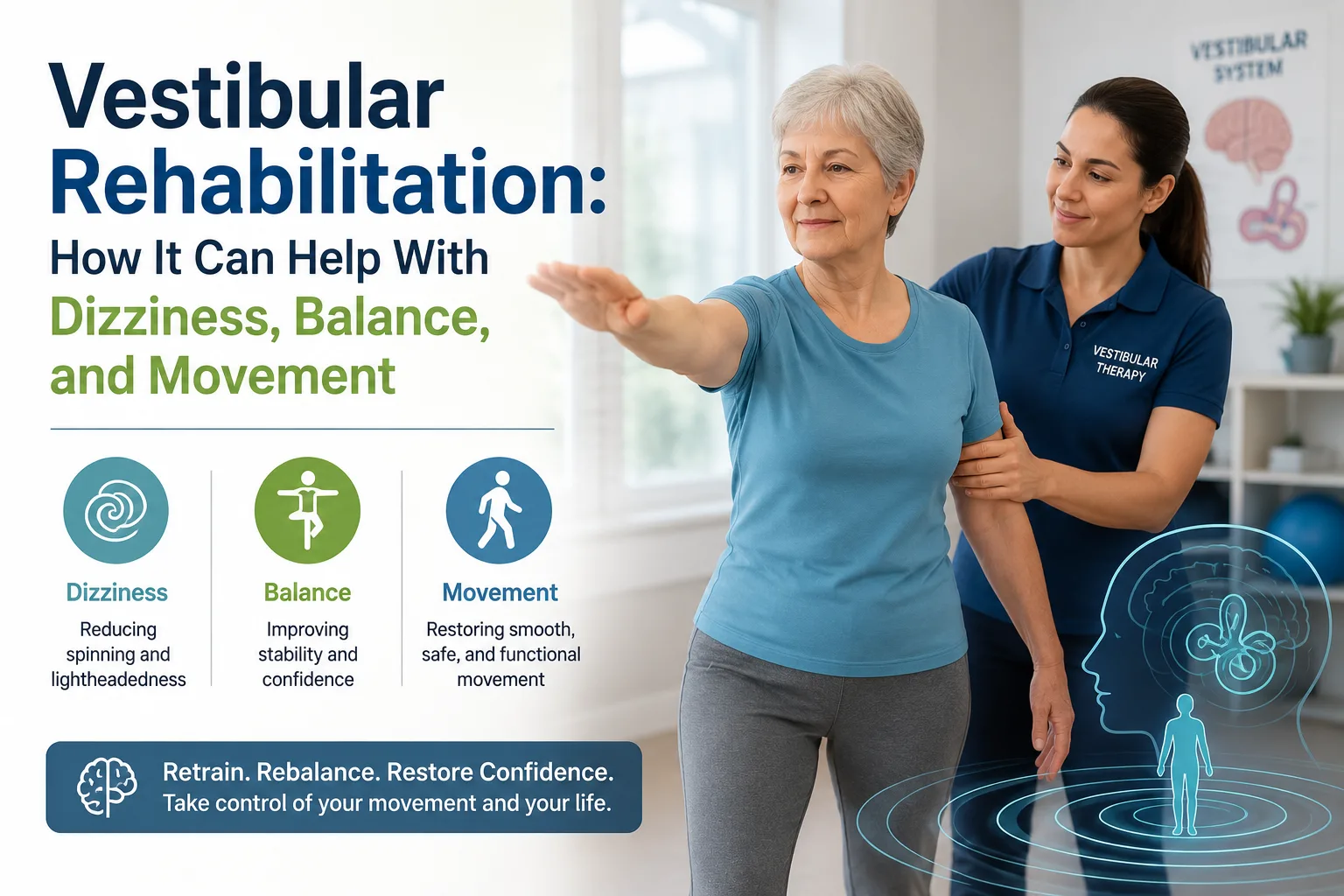
Vestibular rehabilitation is a specialized type of physiotherapy designed to address dizziness, balance problems, and movement difficulties associated with vestibular disorders.
The treatment involves exercises selected according to the individual’s symptoms and physical findings. Depending on the condition, a physiotherapist may work on:
- Improving balance and stability
- Reducing dizziness triggered by movement
Common Symptoms of Vestibular Problems
Vestibular disorders can produce different symptoms from one person to another. Common symptoms include:
- A spinning sensation or vertigo
- Feeling lightheaded or unsteady
- Difficulty maintaining balance
Conditions That May Benefit From Vestibular Rehabilitation
Vestibular rehabilitation can be used as part of treatment for several conditions affecting balance and the vestibular system.
Benign Paroxysmal Positional Vertigo
Benign paroxysmal positional vertigo, commonly called BPPV, is one of the common causes of positional vertigo.
It occurs when small calcium carbonate particles inside the inner ear move into an area where they interfere with normal balance signals.
Vestibular Hypofunction
Vestibular hypofunction occurs when one or both sides of the vestibular system provide reduced information to the brain.
Balance Problems
Balance difficulties can develop for many reasons, including vestibular problems, reduced strength, changes in vision, neurological conditions, aging, or previous injuries.
How Vestibular Rehabilitation Works
One important component is gaze stabilization. These exercises may involve keeping the eyes focused on a target while moving the head. The purpose is to improve the ability to maintain clear vision during head movement.
What Can You Expect During Treatment?
Vestibular rehabilitation is usually individualized. Some people may need only a small number of sessions, while others with more complex or persistent problems may require a longer rehabilitation program.
Exercises are generally introduced gradually. It is normal for certain exercises to produce mild, temporary symptoms because the treatment may challenge the systems responsible for balance and movement.
Final Thoughts
Dizziness and balance problems can affect much more than physical stability. They can influence confidence, independence, exercise, work, and participation in everyday activities.
Vestibular Rehabilitation provides a structured approach to improving balance, gaze stability, movement tolerance, and functional mobility for people with appropriate vestibular conditions.
Original Source: https://latestversion.pro/vestibular-rehabilitation-how-it-can-help-with-dizziness-balance-and-movement/