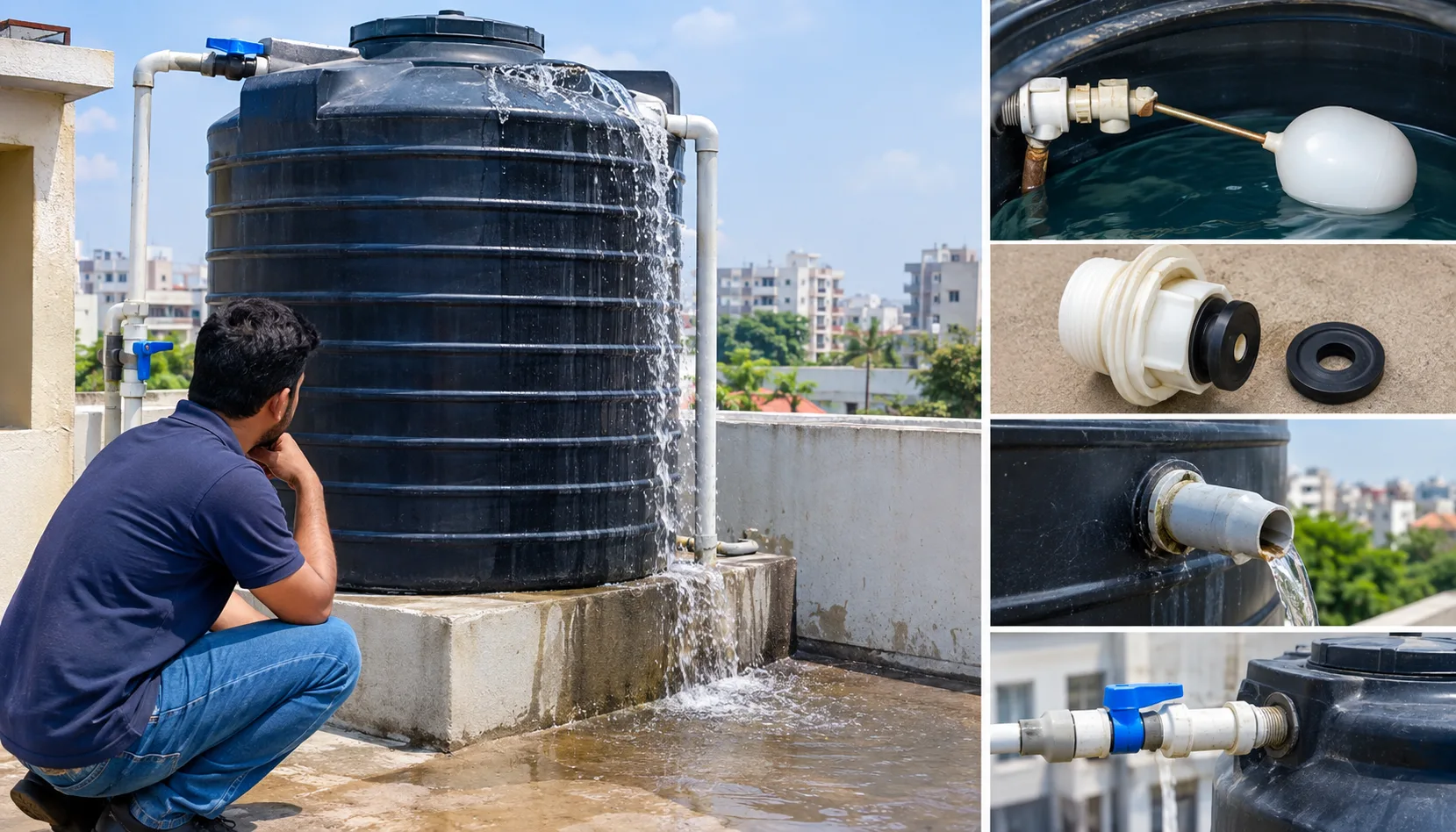
The sound of water rushing across the terrace is easy to ignore—until it reaches the staircase, dampens the ceiling, or starts staining the exterior walls. A tank that overflows regularly is not just wasting water. It can also increase electricity use, weaken surrounding surfaces, create slippery areas, and leave your family searching for a solution every few days.
Many households first assume the motor is the problem. However, the actual cause is often a faulty float valve, a poorly adjusted inlet, a blocked overflow pipe, or a plumbing connection that cannot handle the incoming flow. The good news is that most Water Tank Overflow Fixes begin with a simple inspection and a few practical checks.
Why Does an Overhead Tank Overflow?
An overhead tank is designed to fill until the float valve shuts off the water supply. As the water level rises, the float also rises and pushes the valve closed. If any part of this mechanism fails, water continues entering the tank and eventually escapes through the overflow outlet.
The most common reasons include:
- A damaged or waterlogged float ball.
- A worn-out rubber washer inside the valve.
- Dirt, grit, or scale preventing the valve from sealing.
- A bent float arm or incorrect height adjustment.
- Excessive inlet pressure.
- A blocked, undersized, or badly positioned overflow pipe.
- Loose or damaged inlet and outlet fittings.
In some homes, the overflow is noticed only during the night or when the family is away. This makes the problem particularly frustrating because a small fault can waste a considerable amount of water before anyone notices it.
Start with These Water Tank Overflow Fixes
Begin by switching off the pump and closing the inlet isolation valve. This immediately stops additional water from entering the tank and gives you time to inspect the system safely. Do not climb onto a wet or slippery tank platform without proper support.
Next, observe the water level. If water continues to enter after the pump is switched off, the issue may be connected to the mains supply or a float valve that is not closing properly. If the flow stops with the pump, the pump control, sensor, or automatic switch may require attention.
Open a tap below the tank for a short period if the tank is nearly full. Lowering the level makes it easier to inspect the float, valve, and connections without allowing more water to spill over the sides.
Inspect the Float Valve and Inlet
The float valve is usually the first component to examine. Lift the float gently by hand. If the water stops immediately, the valve may still be functional but incorrectly adjusted. The float may be sitting too low, allowing the tank to fill beyond the safe level.
A float ball should remain buoyant. If it contains water, has a crack, or feels unusually heavy, it may not rise high enough to shut off the valve. Replace a damaged float instead of trying to seal it temporarily.
Also inspect the float arm. A bent arm can change the closing position, while a loose joint may prevent consistent movement. On adjustable valves, use the adjustment screw according to the manufacturer’s instructions. The valve should close before the water reaches the overflow outlet.
Check for a Worn Washer or Valve Seal
Sometimes the float rises correctly, but water continues to trickle through the inlet. This usually indicates a worn washer, damaged diaphragm, or debris around the valve seat. Hard water deposits and fine particles can stop the seal from closing completely.
After isolating the supply, clean the accessible valve area carefully. If the rubber component has hardened, torn, or lost its shape, replacement is generally more reliable than repeated adjustment. Use a suitable, quality-rated replacement that matches the inlet size and plumbing arrangement.
Do not force a stiff valve or over-tighten plastic threads. Excessive force can damage the fitting and create a second leak. If the valve is old, corroded, or repeatedly failing, replacing the complete assembly may be the more practical option.
Examine the Overflow Pipe and Tank Fittings
The overflow pipe is an important safety outlet. It should carry excess water away from the tank and building walls without obstruction. A blocked outlet can cause water to rise over the rim, while a loose connection can send water down the side of the tank or onto the terrace.
Check whether the pipe is bent, clogged, disconnected, or directed toward a wall. Remove visible dirt from the opening, but avoid pushing debris deeper into the plumbing. The overflow route should discharge at a safe location where leakage can be noticed and controlled.
Inspect the inlet, outlet, and overflow fittings for cracks or loose threads. Plastic fittings can become stressed when pipes are forced into alignment. A small crack may appear only when the tank is full, making it seem like the tank itself is overflowing.
Ori-Plast water tanks include built-in inlet and overflow plumbing facilities, along with features such as ventilators and hoist hooks. Selecting a properly designed tank and compatible fittings can make inspection, maintenance, and future Water Tank Overflow Fixes easier.
Consider Water Pressure and Pump Operation
A float valve may work correctly under normal conditions but leak when inlet pressure is high. Strong pressure can force water past a weak or partially worn seal. If the overflow occurs mainly during certain hours, pressure variation may be contributing to the problem.
The pump may also be running longer than necessary because of a faulty float switch, timer, or automatic controller. In such cases, the tank receives more water than required even though the float mechanism appears normal.
Ask a qualified plumber to check:
- Whether the pump switches off at the correct level.
- Whether the inlet valve is suitable for the pressure.
- Whether the pipe diameter matches the water flow.
- Whether the tank has a stable, level base.
- Whether the overflow outlet is correctly sized and positioned.
These checks are especially useful in apartment buildings, commercial properties, and locations where water pressure changes throughout the day.
Prevent Overflow from Returning
A repair is only effective when the underlying cause is addressed. Clean the tank and inspect its fittings at regular intervals, especially before and after the monsoon season. Leaves, insects, sediment, and dirt can affect both water quality and valve performance.
Keep the tank lid properly closed but ensure that ventilation is not blocked. Avoid storing heavy objects on the tank. Confirm that the base is even and strong enough to support a full tank. A tank filled with water places significant load on its support structure, so any visible crack, movement, or unevenness should be inspected professionally.
You can also reduce future wastage by installing a reliable automatic pump controller or high-level alarm. Such devices provide an additional layer of protection if the float valve fails or someone forgets to switch off the motor.
When to Call a Plumber
Call a professional if water continues flowing after the inlet valve is closed, the tank or fittings are cracked, the support structure appears unstable, or electrical wiring near the wet area has been exposed. Do not attempt electrical repairs with wet hands or while standing in pooled water.
Professional help is also advisable when the same overflow returns after replacing the float valve. Repeated failure may point to high pressure, unsuitable components, incorrect installation, or a damaged pipe connection.
A Small Repair Saves More Than Water
An overflowing overhead tank may look like a minor household inconvenience, but it can quietly waste water, raise pumping costs, and damage the property. A quick response—switching off the supply, inspecting the float, checking the valve seal, and examining the overflow pipe—often prevents a larger repair.
The right tank, compatible fittings, regular maintenance, and a dependable shut-off system work together to protect your water supply. Keep these Water Tank Overflow Fixes in mind the next time you hear water spilling from the terrace. A few minutes of diagnosis can restore control, prevent waste, and help your plumbing system perform reliably for years.