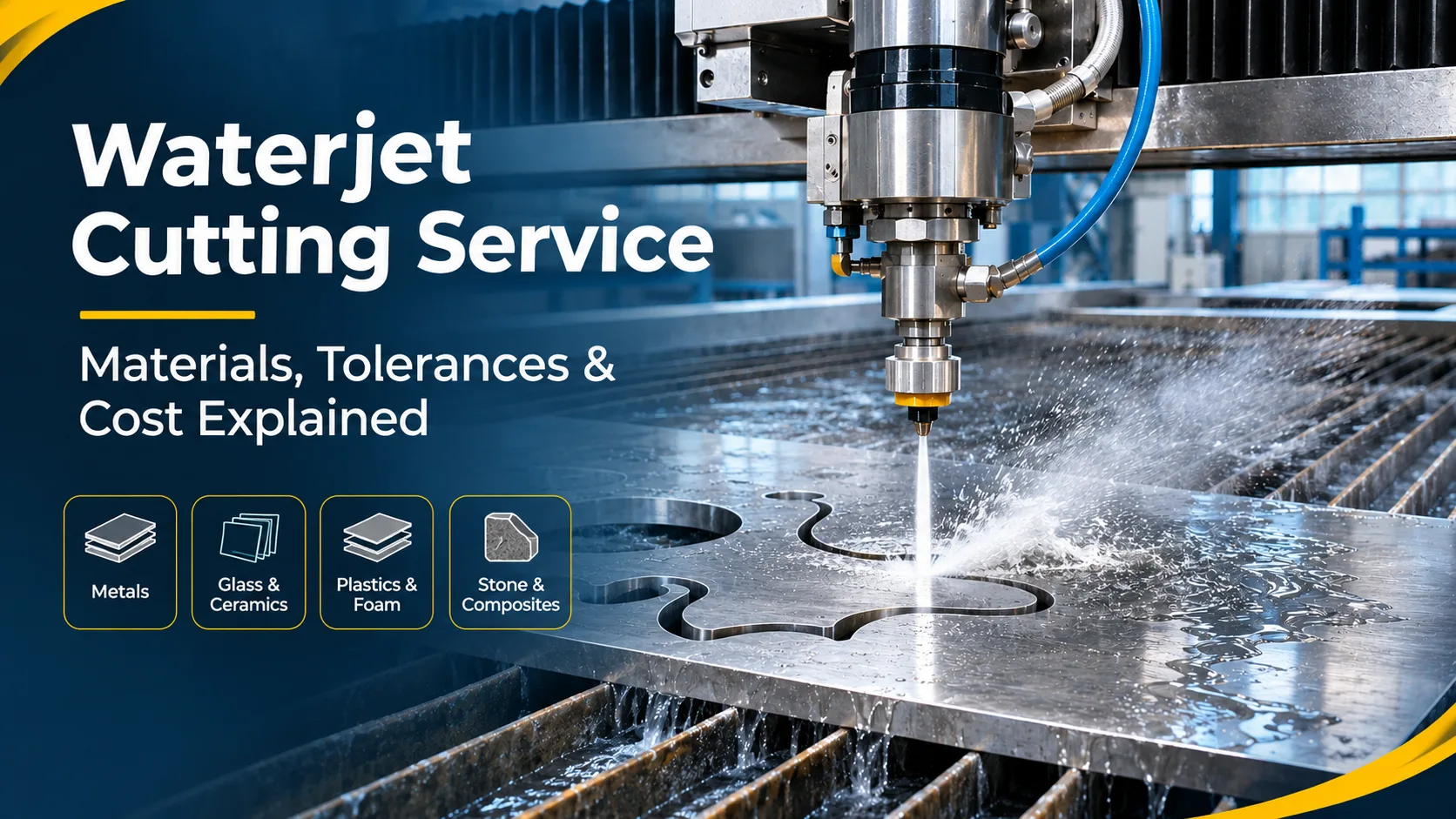
Modern manufacturing requires cutting solutions that deliver accuracy, flexibility, and consistent results across different materials. From metal fabrication and automotive production to aerospace components and architectural applications, manufacturers need processes that can handle complex designs without compromising material quality. A waterjet cutting service offers an effective solution by using a high-pressure stream of water, often combined with abrasive particles, to cut materials into precise shapes and dimensions.
Unlike conventional thermal cutting methods, waterjet technology uses a cold-cutting process. This makes it suitable for applications where heat-related distortion, material discoloration, or changes in material properties must be avoided. Understanding the materials, cutting tolerances, and cost factors involved can help businesses select the right manufacturing process for their projects.
What Is a Waterjet Cutting Service?
Waterjet cutting is a computer-controlled manufacturing process that uses an extremely high-pressure stream of water to cut materials. Depending on the material being processed, the cutting system may use pure water or abrasive waterjet technology.
Pure waterjet cutting is commonly used for softer materials such as rubber, foam, and certain plastics. Abrasive waterjet cutting combines water with abrasive particles, typically garnet, allowing the machine to process harder materials such as stainless steel, aluminum, titanium, glass, and stone.
The cutting head follows a programmed design to produce the required shape. Operators can use digital design files to create intricate profiles, holes, curves, and other detailed geometries.
Because the process does not rely on heat to remove material, it is particularly useful for components that require clean edges and minimal thermal impact.
Materials That Can Be Cut Using Waterjet Technology
One of the biggest advantages of waterjet cutting is its ability to process a wide variety of materials. Manufacturers can use the same basic technology for different applications by adjusting the cutting method, abrasive flow, pressure, and operating parameters.
1. Stainless Steel and Carbon Steel
Waterjet cutting is widely used for steel components in industrial machinery, automotive manufacturing, construction, and fabrication. It can produce complex shapes and profiles while avoiding the heat-affected zones associated with thermal cutting processes.
2. Aluminum
Aluminum is commonly used in transportation, aerospace, electronics, and industrial equipment. Waterjet cutting can process aluminum sheets and plates without introducing significant thermal distortion.
3. Titanium and Specialized Alloys
Titanium and other high-performance alloys are used in applications where strength, durability, and weight considerations are important. Waterjet cutting provides a useful option for shaping these materials without conventional heat-based cutting.
4. Glass and Ceramics
Architectural manufacturers and decorative product designers use waterjet technology to create custom shapes in glass, ceramic, and other suitable brittle materials. Proper machine settings and material support are important to reduce chipping and breakage.
5. Rubber, Foam, and Plastics
Pure waterjet cutting is suitable for many soft materials. It is frequently used to manufacture gaskets, seals, insulation components, packaging inserts, and customized plastic parts.
6. Stone and Composite Materials
Waterjet systems can also process granite, marble, engineered stone, and selected composite materials. This makes the technology useful for architectural designs, industrial components, and specialized fabrication projects.
Understanding Waterjet Cutting Tolerances
Tolerance refers to the permitted variation between the specified dimensions of a component and its actual manufactured dimensions. It is an important consideration when ordering precision-cut parts.
Waterjet cutting accuracy depends on several factors, including material type, thickness, machine condition, cutting speed, nozzle quality, abrasive characteristics, and machine calibration.
A few important factors influence the final cutting tolerance.
Material Thickness: Thicker materials may require slower cutting speeds and careful parameter adjustments. The cutting stream can also create a slight taper through the material.
Machine Accuracy: CNC positioning accuracy, mechanical condition, and calibration influence how closely the cutting head follows the programmed design.
Cutting Speed: Faster cutting may reduce production time but can affect edge quality and dimensional consistency. Complex geometries may require slower cutting speeds.
Nozzle and Abrasive Condition: Worn components and inconsistent abrasive flow can affect cutting performance.
Part Geometry: Small holes, sharp corners, narrow slots, and intricate shapes may require specialized cutting strategies.
Manufacturers should avoid assuming that every waterjet machine delivers the same tolerance. They should communicate their dimensional requirements before production and request sample cuts or inspection reports when necessary.
How Much Does a Waterjet Cutting Service Cost?
The cost of waterjet cutting varies according to project requirements. There is no single price that applies to every material, thickness, design, or production quantity.
Understanding the main cost components helps businesses prepare realistic manufacturing budgets.
1. Material Type
Different materials require different cutting approaches. Harder materials may require abrasive cutting, while softer materials can often be processed using pure waterjet technology. Material availability and purchasing costs also influence the overall project price.
2. Material Thickness
Thicker materials generally require more cutting time and may involve higher operating costs. Cutting parameters must be adjusted according to the material's thickness and properties.
3. Design Complexity
Simple profiles are generally easier to program and cut than intricate designs containing multiple holes, curves, sharp corners, or detailed patterns. Complex geometries can increase machine time and programming requirements.
4. Production Quantity
The number of parts required affects setup costs and production efficiency. Larger production runs may offer better cost efficiency when the same design can be repeated.
5. Machine Operating Costs
Waterjet machines require high-pressure pumps, cutting nozzles, maintenance, electricity, and, for abrasive cutting, consumable abrasive materials. These expenses contribute to the service provider's pricing.
6. Finishing and Additional Operations
Some projects require deburring, surface finishing, drilling, machining, or inspection after cutting. These additional services can increase the final project cost.
Waterjet Cutting vs. Traditional Cutting Methods
Choosing the right cutting process depends on the material and final application.
Laser cutting is effective for many sheet metal applications requiring speed and precision. However, because it uses heat, it may not be suitable for every heat-sensitive material or application.
Plasma cutting is commonly used for electrically conductive metals, particularly thicker metal plates. It can be a cost-effective option for applications where its edge quality and dimensional capabilities meet project requirements.
Mechanical cutting methods are useful for many standard production requirements but may involve tool contact, mechanical stress, or additional finishing operations.
Waterjet cutting stands out because it can process a broad range of materials without introducing a conventional heat-affected zone. It is particularly useful when material versatility and thermal control are important considerations.
How to Choose the Right Waterjet Cutting Partner
Selecting a suitable service provider is just as important as choosing the cutting technology. Businesses should evaluate the supplier's equipment, experience, quality control procedures, and ability to meet project specifications.
Consider these factors before placing an order:
- Material capabilities: Confirm that the provider can process your required material and thickness.
- Tolerance requirements: Discuss dimensional accuracy and inspection procedures before production.
- Equipment capabilities: Review machine capacity, cutting table size, and available cutting technology.
- Quality assurance: Ask about measurement methods, sample inspections, and production consistency.
- Pricing transparency: Request a detailed quotation covering materials, cutting, finishing, and delivery.
- Production capacity: Ensure the provider can meet your required quantity and delivery schedule.
Wootz provides useful manufacturing insights for businesses exploring modern cutting technologies and fabrication requirements. Reviewing its guide on waterjet cutting service, materials, tolerance, and cost can help buyers understand important technical and commercial considerations before requesting a quotation.
Conclusion
Waterjet cutting is a versatile manufacturing solution for businesses that require precise shapes, material flexibility, and minimal thermal impact. Its ability to process metals, plastics, rubber, glass, stone, and composites makes it suitable for numerous industrial applications.
However, choosing the right service requires careful consideration of material properties, cutting tolerances, design complexity, production quantity, and overall costs.
By evaluating these factors and working with an experienced manufacturing partner, businesses can make informed decisions, improve production efficiency, and achieve consistent component quality. Understanding the capabilities of waterjet technology is an important step toward selecting the most suitable cutting solution for modern manufacturing requirements.