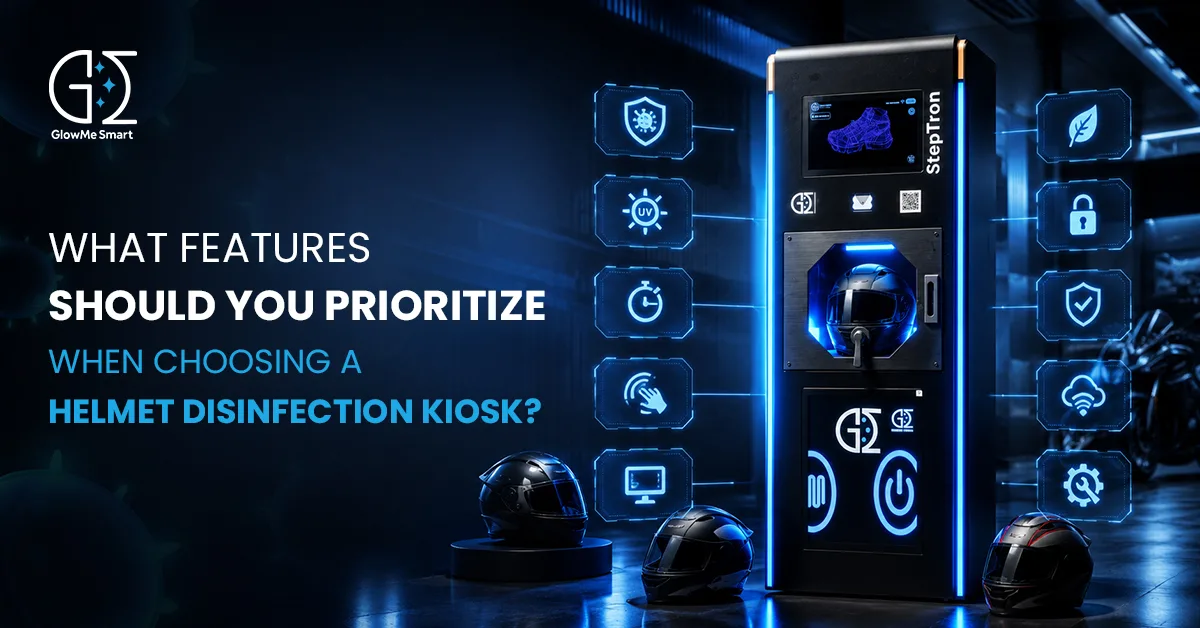
It is no longer a dream to have a helmet cleaning machine at petrol stations, delivery hubs, bike rentals, campuses, factories, and other mobility spaces. Shared helmets get dirty and have miserable smells that include sweat, dust, hair oil, skin particles, and pretty much everything that gets left behind. Because of this, Helmet Disinfection Kiosk Features have to be looked at in terms that exceed its looks, cabinet size, or a quick sales demo. A proper kiosk is expected to sanitize effortlessly and constantly, minimize the time that employees spend, help in storing the helmet materials with no harm, and boost confidence to be as high as possible.
What Hygiene Cycle Should Buyers Check First?
One should not expect a good kiosk to provide a single shortcut. Often, customers inquire if the machine is operated by UV ozone steam, or drying. In fact, they should be wondering how the helmet disinfection methods are combined.
A properly engineered kiosk must provide:
- Sterilization coverage: Helmet inner liner straps cheek pads, visor edges, and shell areas should be exposed.
- Disinfection consistency: Instead of manual wiping, every cycle must be the same process.
- Deodorization support: Since users first judge a helmet by the smell, odor reduction is very important.
- Drying control: Helmets should not be taken out, damp, sticky, overheated or uncomfortable to wear.
GlowMe Smart HelmeTron is a concept for a full helmet hygiene cycle, which includes sterilization, disinfection, deodorization, and drying.
Why Should Businesses Choose Automated Helmet Sanitization?
An automated helmet sanitization system is useful because helmet-sharing hygiene breaks down when it all relies on the staff discipline. Occupied attendants, rental crews or fleet managers seldom have the time to spay wipe dry and check each helmet.
Automation takes care of it by making it a repeatable, user-friendly operation.
- Utilization of self-service: Users are required to put the helmet on, start the cycle and take it at the end without staff assistance.
- Defined cycle timings: Should set a standard time for the cycle to run so that, in locations with large crowds, the machine can be used efficiently.
- Low-touch operation: Contact points are minimal and reduce the handling of kiosk.
- Straightforward directions: Easy-to-understand instructions ensure a user completes the process correctly for the first time. For commercial sites, automation makes helmet hygiene a working system, not just a plan of action.
What Chamber Design Works Best for Shared Helmets?
Helmet disinfection kiosk technology depends heavily on chamber design. A cramped cabinet may miss key surfaces. A generic multipurpose box may not hold the helmet correctly. A purpose-built helmet chamber is better because it treats headgear as the primary item, not an afterthought.
Look for these features of a helmet cleaning machine:
- Helmet-specific placement: The helmet should sit securely without blocking airflow or disinfection exposure.
- Internal reach: The system should reach the liner and padding where sweat buildup is highest.
- Material-safe treatment: The process should avoid damaging foam, padding, visor coating, adhesives, or shell finish.
- Easy loading: Users should place full-face, open-face, and scooter helmets without awkward handling.
Are UV-Only Helmet Disinfection Methods Enough?
UV-C is useful, but UV-only systems may not solve every helmet hygiene concern. UV works best when surfaces are directly exposed. Helmet interiors have curves, padding, straps, and shaded areas. That is why layered helmet disinfection methods are more practical.
A stronger kiosk combines multiple functions so the process can address odor, moisture, and surface contamination.
Useful layered technologies include:
- UV-C exposure: Supports surface-level sanitization when directed properly.
- Ozone penetration: Helps reach areas where light exposure may be limited.
- Steam or mist action: Assists with deeper hygiene, where compatible with the machine design.
- Drying function: Helps return helmets fresh, dry, and ready for reuse.
GlowMe Smart positions its helmet and gear hygiene systems around layered technologies, including UV-C, ozone, steam, deodorization, and drying.
Where Should Businesses Install Helmet Disinfection Kiosks?
The best kiosk for a premium office may not be the same as the best kiosk for a petrol station. A delivery hub may need speed and durability. A rental counter needs user confidence, while factories and campuses need reliability and low supervision.
Use cases should guide the purchase.
- Petrol stations: Need quick cycles, visible hygiene, and simple self-service.
- Bike rentals: Need odor control and reassurance for tourists or daily commuters.
- Delivery fleets: Need continuous use across riders, shifts, and shared helmet storage.
- Corporate parking zones: Need a neat, low-maintenance solution for employee helmet care.
Choosing a Helmet Disinfection Solutions Company in India should therefore include product fit, service availability, training, and support.
What Helmet Disinfection Price Factors Should Buyers Compare?
Helmet disinfection price should not be judged only by the upfront purchase amount. A cheap machine can become expensive if it needs frequent repairs, special consumables, heavy staff handling, or replacement parts that are hard to source.
Ask practical questions before buying:
- What is included? Check installation, training, warranty, service, and consumables.
- How often is maintenance needed? Daily operations should not become complicated.
- What happens if the machine fails? Service response matters in commercial environments.
- Can it support revenue? Some locations may recover cost through pay-per-use cycles.
The right price fits real usage, not just the quotation sheet.
Why Choose a Helmet Disinfection Solutions Company in India?
A helmet disinfection kiosk is part of a hygiene experience. The supplier should understand footfall, user behavior, placement, service needs, and business goals. GlowMe Smart, as a Helmet Disinfection Solutions Company in India, focuses on dedicated hygiene kiosks for helmets, shoes, and belongings.
A strong partner should offer:
- Clear product guidance: Buyers should be informed which vending machine is suitable for their place and the way they want to use it.
- Reliable support: It should be quite simple to arrange the installation, dispatch, refilling, and troubleshooting of the vending machines.
- Business model flexibility: Sales, rental, refill, franchise, or fleet models may suit different operators.
- Public-ready design: The vending machine should have a professional look suitable for locations where it is exposed to customers.
Which Helmet Disinfection Kiosk Helps Businesses Build User Trust?
The best helmet disinfection kiosk will not be the one packed with the longest feature list. Instead, it should be the one that effectively addresses real helmet hygiene issues daily. You should emphasize a complete hygiene cycle, automated operation, chamber design made in particular for helmets, multi-layered disinfection, safe drying, high service reliability, and reasonable pricing. GlowMe Smart HelmeTron is a device that offers petrol stations fleets rental counters, campuses, and commercial spaces a simple way to enhance shared helmet hygiene without increasing manual labor. Opt for the kiosk that will keep helmets cleaner, users will be more confident, and running the business will be easier.
Reach out to GlowMe Smart to choose a reliable helmet disinfection kiosk that improves shared helmet hygiene and user trust.