Rice cultivation is one of the most important agricultural activities in India. Traditionally, rice seedlings were transplanted manually, which required a large workforce, significant time, and considerable effort. However, advancements in agricultural technology have introduced modern equipment that simplifies the planting process. One such innovation is the rice planter, a machine designed to improve efficiency and productivity in paddy farming.
As labor costs continue to rise and farmers seek ways to maximize yield, the demand for the rice planter has grown rapidly. A modern rice planter machine helps farmers complete planting operations faster while ensuring uniform seedling placement. This not only saves time but also contributes to healthier crop growth and better harvests.
What is a Rice Planter?
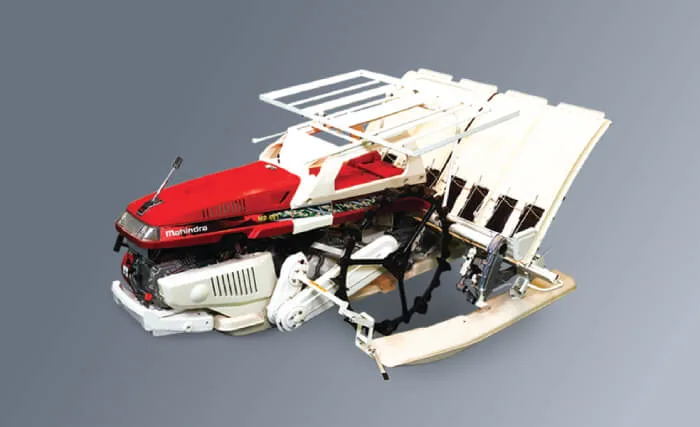
A rice planter is a specialized agricultural machine used to transplant rice seedlings into prepared paddy fields. Instead of manually planting seedlings one by one, farmers can use a rice planter machine to perform the task efficiently and accurately.
The primary purpose of a rice planter is to reduce labor dependency while improving planting consistency. Modern machines are designed to maintain proper spacing between seedlings and ensure uniform planting depth, which are essential factors for achieving higher crop yields.
Today, many farmers are switching to mechanized farming solutions such as the rice planter to improve productivity and reduce operational costs. Advanced models are specifically engineered to handle different field conditions and support large-scale rice cultivation.
How Does a Rice Planter Work?
The working process of a rice planter is simple yet highly effective. Farmers first prepare rice seedlings in nursery trays. Once the seedlings reach the appropriate stage for transplantation, they are loaded into the machine.
The rice planter machine moves through the paddy field and automatically picks seedlings from the trays. The machine then places them into the soil at predetermined intervals and depths. This ensures that every seedling receives adequate space for growth and access to nutrients.
A modern rice planter uses a precision planting mechanism that allows accurate row spacing and uniform seedling distribution. The machine's wheels or floating mechanisms are specially designed to operate efficiently in muddy and waterlogged paddy fields.
Because the rice planter machine automates the transplantation process, farmers can complete large planting areas in a fraction of the time required for manual transplantation.
Key Benefits of Using a Rice Planter
1. Saves Time
One of the biggest advantages of a rice planter is its ability to cover large areas quickly. A rice planter machine significantly reduces the time required for transplantation, allowing farmers to complete planting operations within the ideal cultivation window.
2. Reduces Labor Costs
Manual rice transplantation requires a large number of workers. By using a rice planter, farmers can reduce labor requirements and lower overall farming expenses. This makes the rice planter machine a cost-effective solution for modern agriculture.
3. Ensures Uniform Planting
Uniform spacing is crucial for healthy crop development. A rice planter maintains consistent row spacing and planting depth throughout the field. This precision planting improves nutrient distribution and supports better crop growth.
4. Improves Productivity
A rice planter machine enables faster and more efficient planting operations. Timely transplantation helps crops establish stronger root systems and contributes to improved productivity at harvest time.
5. Supports Sustainable Farming
Modern farming practices focus on maximizing efficiency while minimizing resource wastage. The rice planter helps farmers achieve these goals by ensuring optimal seedling placement and better field management.
Why Farmers Are Choosing Rice Planter Machines
The increasing adoption of mechanized farming has made the rice planter machine an essential tool for rice growers. Farmers appreciate the machine's ability to save labor, improve efficiency, and increase profitability.
Advanced models such as the Mahindra Rice Planter are specifically designed for Indian farming conditions. These machines offer reliable performance, easy operation, and precision planting capabilities that support successful rice cultivation.
Farmers looking for a high-quality rice planter can explore the Mahindra Rice Planter range here: https://mahindrafarmmachinery.com/products/mahindra-rice-planter
In addition to rice planting solutions, farmers can discover a wide range of modern agricultural equipment and farming innovations through Mahindra Farm Machinery: https://mahindrafarmmachinery.com/
Conclusion
A rice planter is a revolutionary agricultural machine that has transformed modern rice cultivation. By automating the transplantation process, a rice planter machine helps farmers save time, reduce labor costs, and achieve more consistent crop growth. Its ability to provide precise seedling placement and efficient field coverage makes it an invaluable tool for today's rice farmers.
As agriculture continues to evolve, investing in a reliable rice planter can help farmers improve productivity and profitability while adopting smarter farming practices. With advanced solutions like the Mahindra rice planter machine, farmers can confidently move toward a more efficient and sustainable future in rice cultivation.