
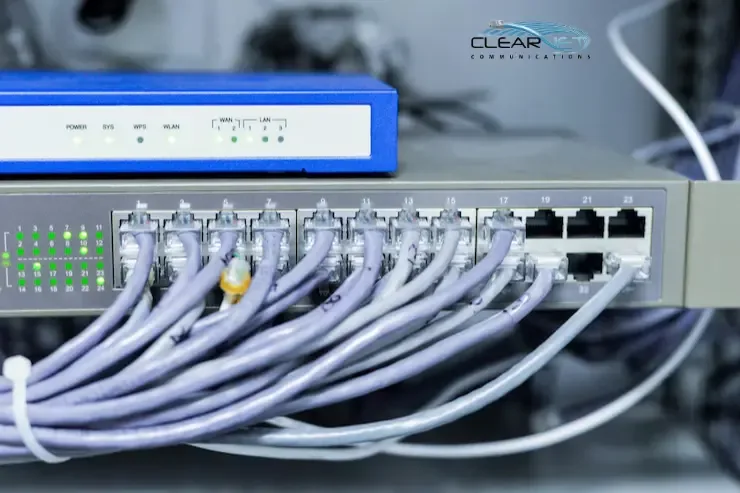
Every time you send an email, join a video call, or stream a movie, you're relying on a system you probably never think about: network infrastructure. It's the invisible backbone that keeps homes, offices, and entire cities connected. But what actually makes up this backbone, and why should anyone outside of IT care about it?
Let's break it down.
What Is Network Infrastructure?
Network infrastructure refers to the hardware, software, and services that allow devices to communicate with each other and access shared resources like the internet. Think of it as the roads, bridges, and traffic signals of the digital world. Without them, data has no way to travel from point A to point B.
At a basic level, network infrastructure includes:
- Routers and switches – devices that direct data traffic between networks and connected devices
- Cables and wireless access points – the physical or wireless pathways data travels through
- Servers – machines that store and serve data, applications, or services
- Firewalls and security appliances – tools that protect the network from unauthorized access
- Software systems – protocols and management tools that keep everything running smoothly
Whether it's a small home network or a sprawling corporate system spanning multiple continents, the same basic principles apply: infrastructure exists to move information reliably, securely, and quickly.
Why Does Network Infrastructure Matter?
It's easy to take connectivity for granted until something breaks. A single failed switch or a misconfigured router can bring an entire office to a standstill. For businesses, downtime isn't just an inconvenience, it can mean lost revenue, frustrated customers, and damaged trust.
Good infrastructure also plays a quiet but critical role in things like:
- Scalability – can the network handle more users, devices, or data as the organization grows?
- Security – is sensitive information protected from outside threats?
- Performance – are applications loading quickly, or are employees waiting on a sluggish connection?
- Reliability – can the business function without unexpected outages?
As more organizations shift toward cloud computing, remote work, and IoT devices, the demands placed on network infrastructure only continue to grow. A network built for the needs of a decade ago simply isn't equipped to handle today's traffic.
Understanding Clearnet in the Context of Networking
You may have come across the term "clearnet" while researching internet infrastructure or online privacy. So what does it actually mean?
Clearnet, sometimes called the "surface web," refers to the portion of the internet that is indexed by standard search engines and accessible through regular browsers without any special software. This is different from the "deep web," which includes content not indexed by search engines (like private databases or subscription-only content), and the "dark web," which requires specific tools like Tor to access.
In practical terms, when you browse a news website, check your email through a standard webmail portal, or shop online through a typical retailer, you're operating on the clearnet. It's the version of the internet most people interact with every single day.
Understanding this distinction matters because network infrastructure has to be designed differently depending on what kind of traffic it's supporting. Clearnet traffic is generally straightforward to manage from a routing and security standpoint, since it follows standard web protocols. However, the growing volume of clearnet traffic still puts pressure on infrastructure to remain fast, available, and secure against common threats like DDoS attacks or data breaches.
What Does IDF Mean in Networking?
Another term that often comes up when discussing network infrastructure, especially in the context of physical building design, is IDF Room.
IDF stands for Intermediate Distribution Frame. It's a structured wiring point within a building that connects end-user equipment, like computers, phones, and printers, back to a central hub known as the MDF, or Main Distribution Frame.
Think of the MDF as the central nervous system of a building's network, while IDFs act as regional relay points spread across different floors or sections. This setup helps reduce cable runs, improves signal quality, and makes it easier to manage and troubleshoot network issues in larger facilities.
For example, in a multi-story office building, you might find an MDF in the main server room on the ground floor, with an IDF on each subsequent floor. Each IDF connects local devices to the network and then links back to the MDF, creating an organized and scalable wiring structure.
Without properly planned IDFs, larger buildings would face longer cable runs, weaker signals, and far more complicated troubleshooting whenever something goes wrong. That's why IDF planning is a foundational part of designing solid, dependable network infrastructure, especially for schools, hospitals, office complexes, and other large facilities.
Bringing It All Together
Network infrastructure isn't just a technical backend detail, it's the foundation that determines how well an organization functions day to day. From the physical wiring points like IDFs to the broader distinction between clearnet and other layers of the internet, every piece plays a role in how information moves, how secure it stays, and how reliable the overall system is.
For businesses and individuals alike, understanding these basics helps demystify what's actually happening behind the scenes every time a device connects to a network. And as technology continues to evolve, whether through faster wireless standards, growing cloud dependency, or increasingly complex security needs, the importance of well-planned, well-maintained network infrastructure will only keep increasing.
Whether you're setting up a small home office or managing an enterprise-level system, the fundamentals stay the same: solid infrastructure, thoughtful design, and a clear understanding of how everything connects.