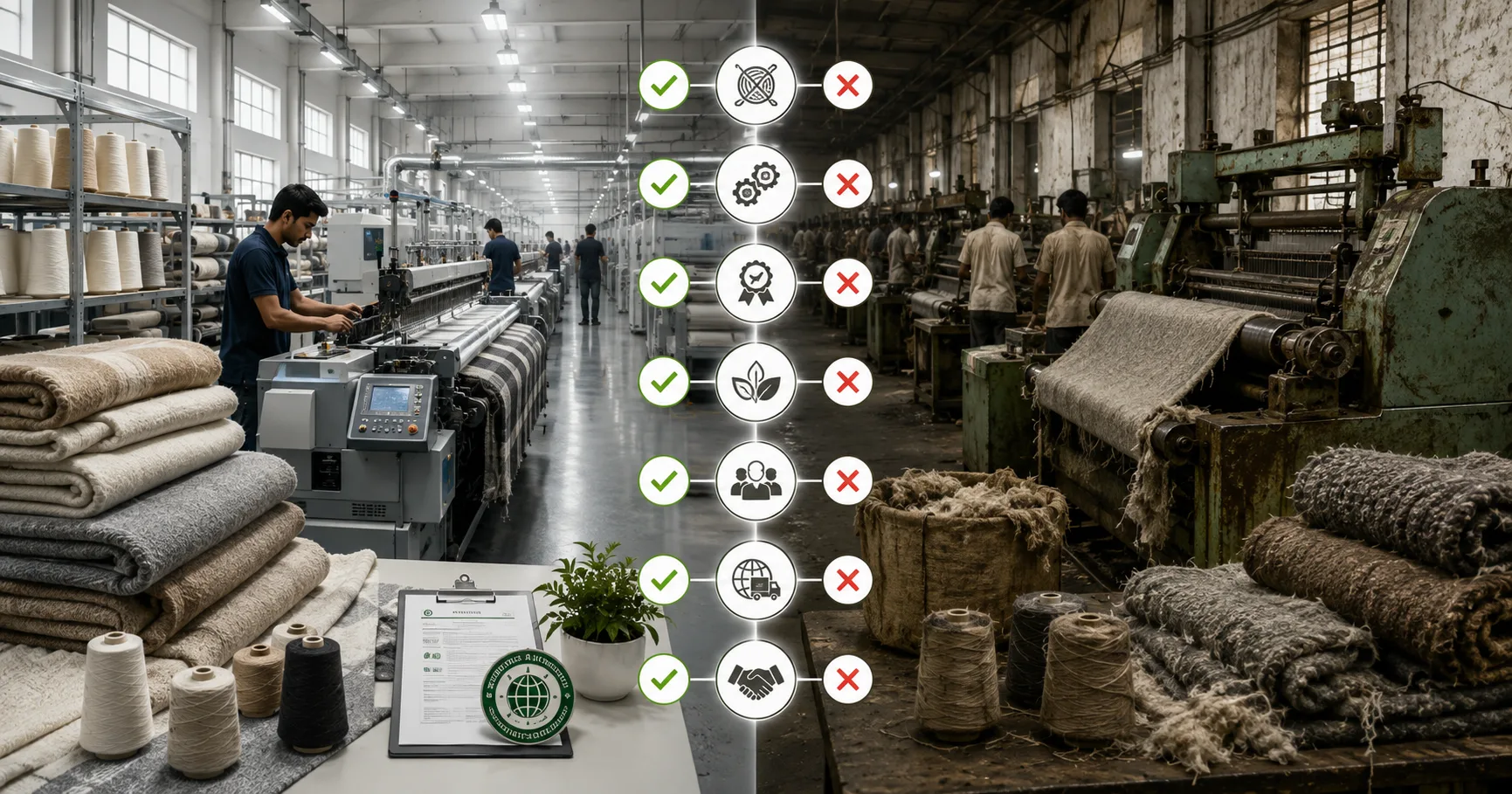
Choosing the right manufacturing partner is one of the most important decisions for businesses that rely on premium fabrics. Whether you're a fashion brand, home furnishing company, hospitality supplier, or international distributor, the manufacturer you choose directly affects product quality, customer satisfaction, and long-term business success.
At first glance, many companies may appear to offer similar products. However, when you look beyond product catalogs and pricing, the differences become clear. Manufacturing expertise, quality control, sustainability, production capacity, customization, and export experience all play a role in setting one supplier apart from another.
For businesses evaluating wool textile manufacturers, understanding these differences can help build a stronger and more reliable supply chain.
The Foundation Begins with Raw Material Selection
Every high-quality wool fabric starts with carefully selected raw materials. Manufacturers that invest in superior wool fibers produce fabrics with better softness, durability, warmth, and appearance.
The quality of raw wool influences:
- Fabric strength
- Surface texture
- Color consistency
- Comfort
- Longevity
- Performance after repeated washing
Manufacturers that maintain strict sourcing standards create products that consistently meet customer expectations.
Manufacturing Experience Makes a Difference
Textile manufacturing is a process that requires precision at every stage. Experienced companies understand how to manage production efficiently while maintaining quality across large volumes.
Successful manufacturers focus on:
- Fiber preparation
- Spinning
- Weaving or knitting
- Dyeing
- Finishing
- Inspection
- Packaging
Each stage contributes to the final fabric's appearance and performance.
Technology Improves Product Consistency
Modern textile production combines skilled craftsmanship with advanced machinery.
Today's leading manufacturers invest in:
- Automated weaving equipment
- Digital quality inspection
- Precision dyeing systems
- Advanced finishing technologies
- Fabric testing laboratories
These investments reduce production errors while improving consistency from one production batch to the next.
Quality Control Separates the Best Manufacturers
Quality isn't something that's checked only at the end of production. Reliable manufacturers inspect products throughout the manufacturing process.
Professional testing may include:
- Fabric weight verification
- Shrinkage testing
- Color fastness
- Tear strength
- Tensile strength
- Surface inspection
- Dimensional stability
- Stitch quality (for finished products)
These inspections reduce defects before products reach customers.
Why Product Consistency Matters?
International buyers rarely place just one order. Most businesses look for suppliers that can deliver identical quality over months or years.
Consistency helps businesses:
- Protect their brand reputation
- Reduce customer complaints
- Simplify inventory planning
- Build customer trust
- Lower replacement costs
This reliability often becomes more valuable than the lowest price.
Customization Creates Competitive Advantages
Modern businesses increasingly require products that match their own brand identity.
Leading manufacturers often provide:
- Custom fabric weights
- Unique color options
- Exclusive patterns
- Private labeling
- Custom packaging
- Brand-specific specifications
Customization allows companies to differentiate themselves in competitive markets.
Sustainability Is Becoming a Business Requirement
Environmental responsibility has become an important factor when selecting manufacturing partners.
Many businesses actively seek eco-friendly textiles because customers increasingly value responsible production practices.
Manufacturers committed to sustainability often invest in:
- Energy-efficient machinery
- Responsible water management
- Waste reduction systems
- Better resource utilization
- Responsible sourcing practices
These improvements support both environmental goals and long-term operational efficiency.
The Growing Importance of Sustainable Wool Production
Demand for sustainable wool fabrics continues to grow across fashion, hospitality, interior design, and retail industries.
Businesses now evaluate suppliers based on:
- Material traceability
- Responsible manufacturing
- Reduced environmental impact
- Production transparency
- Long-term sustainability initiatives
Companies that embrace these practices are often better positioned for future market growth.
Production Capacity Supports Business Growth
Choosing a manufacturer isn't only about today's order volume.
Growing businesses need partners capable of scaling production without sacrificing quality.
Reliable manufacturers can support:
- Seasonal demand increases
- Large wholesale orders
- Ongoing production schedules
- International expansion
- New product launches
Scalable production provides greater flexibility as businesses grow.
Export Experience Reduces Risk
International trade involves much more than manufacturing.
Experienced textile exporters understand:
- Export documentation
- Customs compliance
- International packaging standards
- Container optimization
- Shipping coordination
- Delivery timelines
This expertise helps buyers avoid unnecessary delays and operational challenges.
Communication Builds Strong Partnerships
Good communication is often overlooked during supplier selection.
Professional manufacturers provide:
- Clear quotations
- Accurate production timelines
- Regular order updates
- Transparent pricing
- Quick issue resolution
Strong communication creates trust and strengthens long-term business relationships.
Why India's Textile Industry Continues to Grow?
India remains one of the world's most respected textile manufacturing destinations.
Many textile manufacturers in India combine traditional craftsmanship with modern production technology to serve domestic and international markets.
Key strengths include:
- Skilled workforce
- Integrated supply chains
- Competitive manufacturing
- Product diversity
- Strong export infrastructure
- Continuous technological investment
These advantages help Indian manufacturers compete successfully worldwide.
Wholesale Manufacturing for Global Buyers
Large retailers, hospitality groups, institutional buyers, and distributors often require dependable high-volume production.
Experienced wholesale wool textile manufacturers provide:
- Large production capacity
- Consistent fabric quality
- Flexible order quantities
- Custom specifications
- Reliable delivery schedules
These capabilities help buyers manage inventory while maintaining consistent product quality.
The Value of Innovation
Innovation isn't limited to machinery.
Modern manufacturers continually improve:
- Fabric performance
- Dyeing techniques
- Finishing processes
- Design development
- Production efficiency
- Sustainability initiatives
Continuous improvement allows manufacturers to respond to changing customer expectations.
Choosing a Long-Term Manufacturing Partner
Price matters—but it shouldn't be the only consideration.
A dependable supplier offers value through:
- Reliable production
- Consistent quality
- Product innovation
- Technical expertise
- Customer support
- Flexible manufacturing
- Export knowledge
Businesses that prioritize long-term partnerships often experience fewer supply chain disruptions and stronger customer satisfaction.
JTI (Jindal Textile Industries Ltd): A Manufacturing Partner Built on Quality
Among India's respected textile companies, JTI (Jindal Textile Industries Ltd) has earned recognition through its commitment to manufacturing excellence, product consistency, and customer-focused service.
By combining modern production technology with experienced textile professionals, JTI develops premium wool textile solutions for businesses across domestic and international markets. The company emphasizes quality assurance, customization, efficient manufacturing, and dependable delivery while supporting customers with products that meet evolving industry requirements.
Supporting Global Buyers with Reliable Textile Solutions
International buyers increasingly look beyond simple product sourcing. They seek manufacturers that understand commercial requirements, quality expectations, and long-term business goals.
Professional wool textile suppliers invest in strong manufacturing systems, responsive customer service, and flexible production capabilities to meet these expectations.
For many businesses, selecting the right commercial wool fabric supplier means gaining a partner that can deliver consistent quality, dependable lead times, and scalable production as demand grows.
Manufacturing That Meets International Expectations
As global markets continue to evolve, businesses require products that balance performance, durability, sustainability, and value.
Reliable manufacturers produce export-quality wool textiles by maintaining strict quality standards throughout sourcing, production, finishing, inspection, and packaging. This comprehensive approach strengthens buyer confidence and supports long-term business relationships across international markets.
Looking Beyond Products
The strongest manufacturers don't simply produce fabric—they help businesses grow.
A trusted wool textile company supports customers through innovation, quality assurance, customization, sustainable manufacturing, and dependable service. These qualities create lasting partnerships rather than one-time transactions.
Conclusion
The difference between manufacturers isn't defined by price alone. It is reflected in the quality of raw materials, manufacturing expertise, technology, sustainability, communication, production consistency, customization, and export capabilities.
Businesses that take time to evaluate these factors are more likely to build reliable supply chains and deliver better products to their own customers. As the textile industry continues to evolve, manufacturers that invest in innovation, responsible production, and customer partnerships will remain the preferred choice for global buyers.
Frequently Asked Questions
1. What makes wool textile manufacturers different from one another?
The biggest differences lie in raw material quality, production technology, quality control, customization options, sustainability practices, export experience, and customer support.
2. How do I choose the right wool textile manufacturer?
Evaluate manufacturing capacity, product quality, certifications, production consistency, customization capabilities, communication, and international supply experience before making a decision.
3. Why is quality control important in wool textile manufacturing?
Quality control ensures consistent fabric performance, reduces defects, improves durability, and helps businesses maintain customer satisfaction.
4. What industries use wool textiles?
Wool textiles are widely used in fashion, home furnishings, hospitality, commercial interiors, healthcare, corporate gifting, and institutional applications.
5. Are sustainable manufacturing practices important when selecting a supplier?
Yes. Sustainable manufacturing supports responsible production, reduces environmental impact, and aligns with growing customer expectations for environmentally responsible products.
6. Why do international buyers prefer textile manufacturers in India?
India offers skilled craftsmanship, advanced manufacturing, competitive pricing, scalable production, and strong export infrastructure for global buyers.
7. Can wool textile manufacturers provide customized products?
Yes. Many manufacturers offer customized colors, fabric weights, patterns, private labeling, packaging, and product specifications to meet specific business requirements.
8. What should businesses ask before choosing a textile manufacturer?
Ask about production capacity, quality assurance, certifications, lead times, customization, export experience, sustainability initiatives, and after-sales support.
9. How does JTI (Jindal Textile Industries Ltd) support textile buyers?
JTI (Jindal Textile Industries Ltd) focuses on quality manufacturing, dependable production, customization, modern technology, and reliable service for domestic and international customers.
10. Why are wool textiles still in high demand?
Growing interest in premium materials, durability, comfort, sustainable manufacturing, and long-lasting fabric performance continues to drive demand for wool textiles across global markets.