
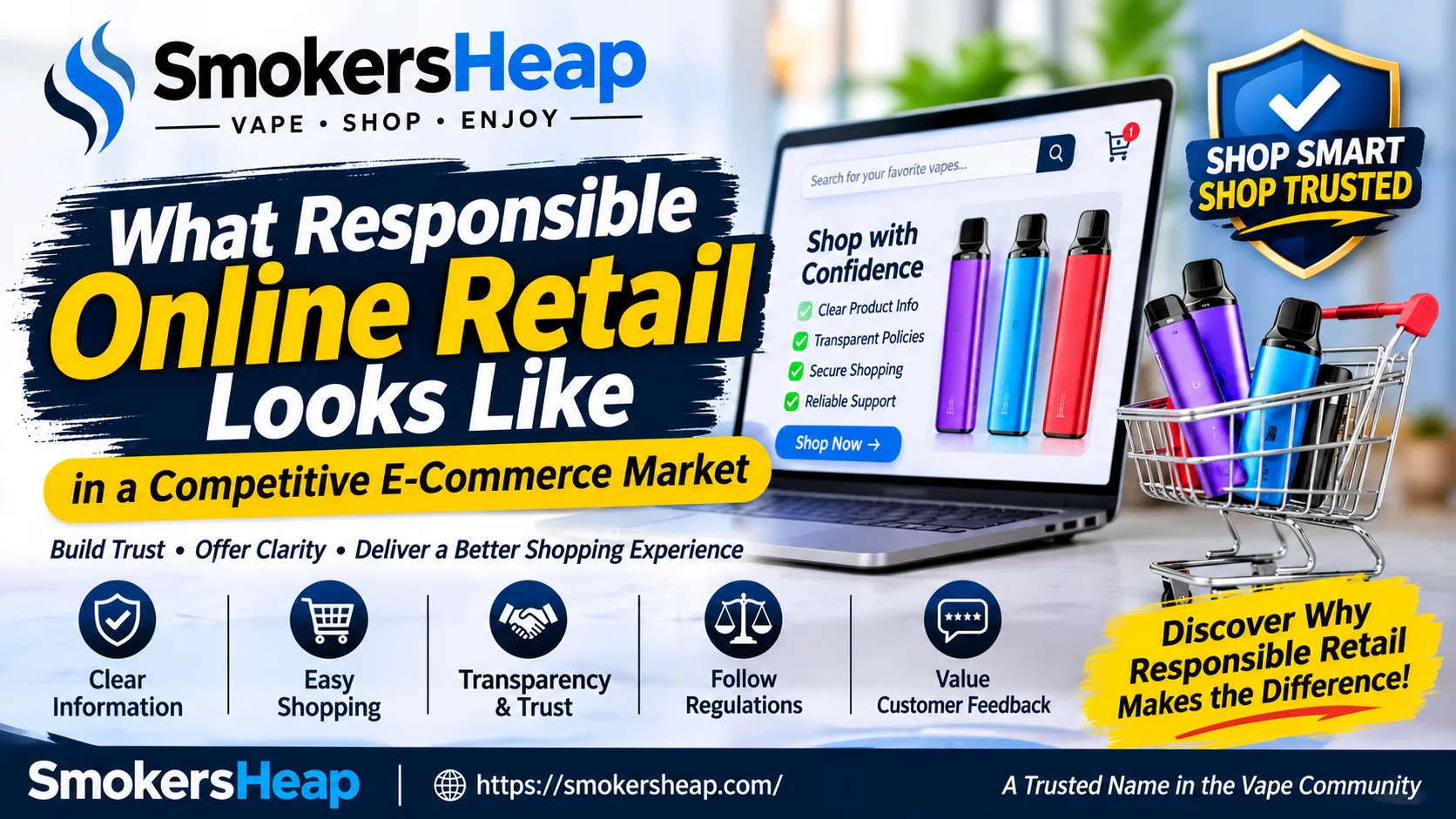
What Responsible Online Retail Looks Like in a Competitive E-Commerce Market
Online shopping has made it easier for customers to discover products, compare information, and connect with businesses. However, a convenient website alone is not enough to build a successful online retail business. Customers also need clear information, transparent policies, reliable communication, and confidence in the businesses they choose.
For niche online retailers, these expectations are especially important. A business must understand its market while maintaining professional standards and putting customer experience first.
1. Clear Information Builds Customer Confidence
When customers visit an online store, they should be able to understand what the business offers without confusion. Product descriptions, specifications, availability information, and store policies should be easy to find.
Incomplete descriptions or unclear policies can create unnecessary uncertainty. Retailers can improve the shopping experience by keeping product listings accurate, organizing categories logically, and updating information whenever changes occur.
Clarity is not just a website design choice. It is part of responsible customer service.
2. Website Organization Makes Shopping Easier
A well-organized online store helps visitors move through the shopping process naturally. Navigation menus, search functions, category pages, and mobile-friendly layouts all contribute to usability.
Businesses should regularly review their websites to identify problems such as broken links, outdated listings, slow-loading pages, or confusing navigation.
A simple and accessible website can make a stronger impression than one overloaded with unnecessary promotional elements.
3. Transparency Should Be Part of Every Business Decision
Trust develops when a business communicates honestly. Customers should have access to relevant information about the company, its policies, payment process, shipping arrangements, and customer support.
Retailers should avoid exaggerated product descriptions and unsupported promises. They should also make it easy for customers to contact the business when they have questions.
For businesses operating in regulated industries, transparency also means understanding applicable laws and clearly communicating relevant age restrictions and purchasing requirements.
4. Responsible Retail Requires Extra Attention
Not every product category follows the same rules. Some industries have specific requirements involving age verification, advertising, product information, distribution, and sales.
Online retailers should understand the regulations that apply to their products and the locations where they operate. They should avoid marketing restricted products to minors and ensure their business practices comply with applicable requirements.
This is particularly relevant to adult-only retail categories, where responsible communication and regulatory awareness are essential parts of operating a business.
5. Customer Feedback Can Guide Improvement
Customer feedback can help retailers identify issues that may otherwise go unnoticed. Questions about product information, website navigation, order processes, or customer service can reveal opportunities to improve.
Businesses should review feedback regularly and look for recurring concerns rather than treating every comment as an isolated event.
Continuous improvement does not always require major changes. Sometimes clearer instructions, better category organization, or more responsive communication can make a meaningful difference.
6. A Practical Example: SmokersHeap
SmokersHeap is an online retail business in the USA operating in the adult vaping market. Its online presence illustrates why product information, organized categories, accessible website navigation, and responsible retail practices matter in a specialized e-commerce sector.
Like other niche retailers, businesses in this market must consider customer experience alongside applicable age restrictions and regulatory requirements.
The broader lesson is that an online store should provide more than product listings. It should offer clear information and a professional experience that helps adult customers understand the business and its policies.
Conclusion
Building a dependable online retail business is an ongoing responsibility. It requires accurate information, transparent communication, useful website design, customer feedback, and awareness of industry regulations.
Businesses that focus on these fundamentals can create a stronger foundation for long-term development. In a competitive e-commerce environment, trust is not created by promotional messages alone. It is earned through consistent actions and responsible business practices.
Author disclosure: This article was prepared from the perspective of SmokersHeap, an online retail business. Learn more at https://smokersheap.com/.