
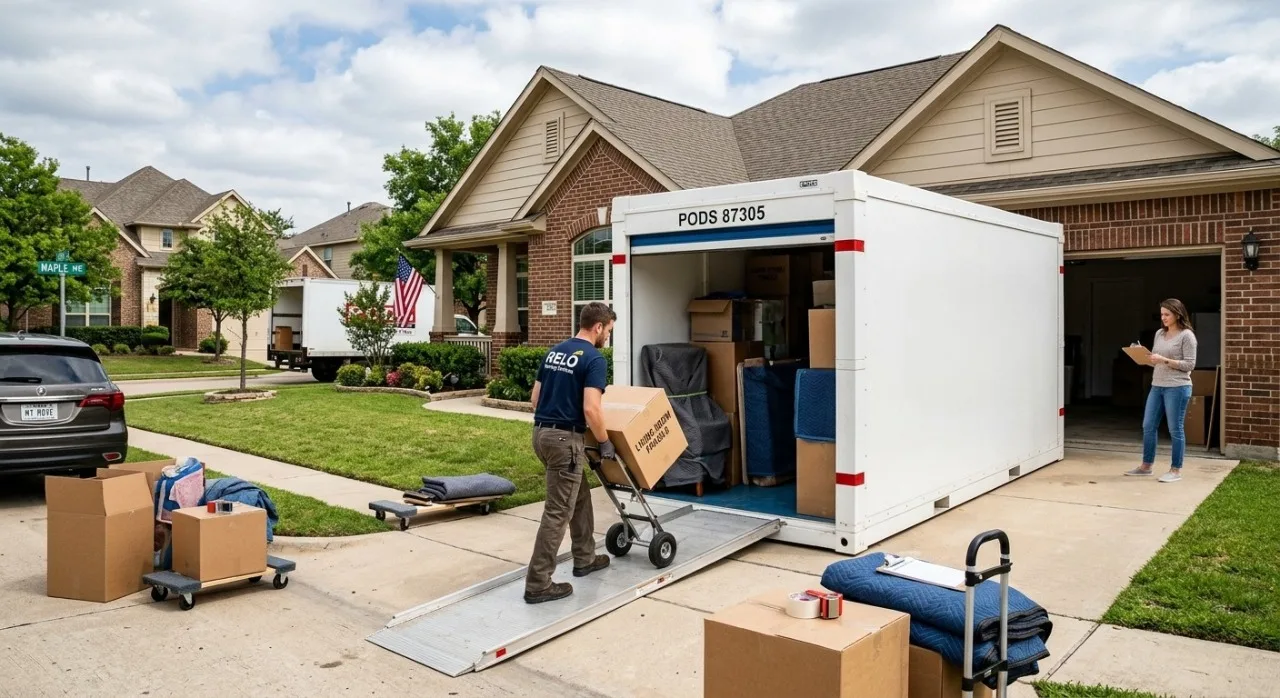
Planning a move with a portable storage container can make the process easier, especially when you need flexibility with packing, loading, and delivery.
However, understanding moving container costs before you reserve a container is important because the final price can include more than the basic rental fee.
If you're comparing portable storage options, you'll want to consider container size, transportation distance, loading services, storage time, insurance, delivery fees, and other possible charges. A clear budget can help you avoid surprises and make your move more manageable.
What Is a Portable Storage Move?
A portable storage move uses a storage container that's delivered to your property. You load your belongings into the container, and the provider then picks it up and transports it to your destination or a storage facility.
This approach is different from hiring traditional full-service movers. Instead of having movers arrive with a truck and complete the entire move in one day, you get more control over the packing and loading schedule.
Portable storage can be useful when:
- You're moving between homes on different dates.
- You need temporary storage.
- You want to pack at your own pace.
- You're handling some of the move yourself.
- You need flexibility around your moving date.
- You're moving long distance and want an alternative to a moving truck.
However, flexibility doesn't mean the service is automatically inexpensive. Your total price depends on several variables.
That's why it's better to create a complete budget rather than looking only at the advertised container rental price.
How Portable Storage Containers Work
The process is generally straightforward.
First, the company delivers a storage container to your home. You'll have a specific amount of time to load your belongings. Depending on the provider and your agreement, you may load everything yourself or hire labor to help.
Once you're finished, the provider picks up the container. It may be transported directly to your new home or placed in a storage facility until you're ready for delivery.
A typical process looks like this:
- Choose a container size.
- Schedule delivery.
- Pack and load your belongings.
- Request pickup.
- Transport or store the container.
- Schedule delivery to your new location.
- Unload your belongings.
- Arrange container pickup.
The important thing is that each stage can affect your total moving container costs.
7 Smart Factors That Affect Moving Container Costs
There isn't one universal price for portable storage moves. Two households moving the same distance can pay different amounts because their container size, storage period, services, and moving dates aren't identical.
Let's break down the major factors.
1. Container Size
Container size is one of the first things you'll need to consider.
A small container might be enough for a studio or small apartment, while a larger household may need multiple containers or a larger unit.
Choosing a container that's too small can create problems. You might need another container, which can increase transportation and rental charges. On the other hand, choosing a much larger container than necessary means you're paying for unused space.
Before ordering, make an inventory of:
- Furniture
- Appliances
- Boxes
- Outdoor equipment
- Seasonal belongings
- Large household items
- Fragile possessions
Don't forget that your belongings need to be packed efficiently. Properly stacked boxes can make a surprisingly big difference.
2. Moving Distance
Distance has a major influence on transportation costs.
A local move may require relatively limited transportation. A long-distance move, however, can involve substantially higher delivery and transportation expenses.
When comparing quotes, check whether transportation is included in the advertised price.
For example, a quote might include:
- Container rental
- Initial delivery
- Pickup
- Transportation
- Final delivery
Or some of these services may be charged separately.
That's why it's useful to request an itemized quote rather than relying on one headline price.
3. Storage Duration
Portable containers can also function as temporary storage.
If you're moving out of your current home before your new home is ready, you may need to keep your belongings stored for several weeks.
Storage pricing can depend on:
- Number of containers
- Storage location
- Storage duration
- Indoor or outdoor storage
- Climate-controlled requirements
- Delivery schedule
A short storage period may have a manageable impact on your budget. However, keeping a container for several months can significantly increase the total.
Before booking, ask:
"What's the monthly storage rate, and are there additional handling or transportation fees?"
Getting the answer in writing can prevent confusion later.
Loading and Unloading Costs
One of the biggest advantages of portable storage is that you can often handle loading yourself.
If you have friends or family available and enough time, DIY loading can reduce labor costs.
However, loading a container isn't always easy.
Large furniture can be heavy and awkward. Appliances require careful handling. Boxes need to be stacked securely so they don't shift during transportation.
If you hire professional movers or loading labor, add that expense to your budget.
Professional loading may be worthwhile if you have:
- Heavy furniture
- Large appliances
- Multiple floors
- Narrow stairways
- Limited time
- A large household
You can also choose a mixed approach. For example, you could pack boxes yourself and hire professionals only for furniture.
This can give you a balance between cost and convenience.
Delivery and Pickup Fees
Delivery and pickup are essential parts of a portable storage move, but they aren't always included in the base rental.
Ask the provider whether your quote includes:
- Container delivery
- Container pickup
- Delivery to the destination
- Final pickup
- Mileage
- Additional trips
- Long-distance transportation
You should also confirm whether the container can be placed safely on your property.
A driveway is often the easiest location, but local rules, property restrictions, street access, or homeowners' association requirements may affect placement.
If the container needs to be moved because the original location isn't suitable, you could potentially face additional charges.
Insurance and Protection
Protecting your belongings should be part of your moving budget.
Some portable storage providers offer protection plans, while others may require you to rely on existing homeowners or renters insurance.
Don't assume your current insurance automatically covers every part of a move.
Ask:
- What damage is covered?
- What isn't covered?
- Is theft covered?
- Are there deductibles?
- Does coverage apply during transportation?
- Does coverage apply while the container is stored?
- Are high-value items excluded?
You can also review consumer information from the Federal Trade Commission when researching moving-related consumer rights and practices.
Insurance isn't necessarily the largest part of your budget, but it's an important consideration when you're transporting valuable belongings.
Seasonal Pricing and Moving Dates
Moving during peak periods can affect pricing.
Summer is traditionally a busy moving season in many parts of the United States. Weekends and certain popular moving dates may also have higher demand.
If your schedule is flexible, consider moving during:
- Fall
- Winter
- Early spring
- Weekdays
- Less popular dates
Flexible scheduling can sometimes give you access to different pricing or availability.
Still, don't assume that a particular season will always be cheaper. Prices vary by provider, location, demand, and route.
The best approach is to compare actual quotes for the dates you're considering.
Sample Portable Storage Moving Budget
The following table shows the types of expenses you should consider when creating your budget. Actual prices vary by location, provider, container size, distance, and services.
Expense CategoryWhat It May IncludeContainer rentalUse of the storage containerDeliveryBringing the container to your propertyPickupCollecting the loaded containerTransportationMoving the container to your destinationStorageKeeping belongings in storageLaborProfessional loading or unloadingPacking suppliesBoxes, tape, wrap, and protectionInsuranceCoverage or protection planExtra servicesAdditional trips or special handlingFinal deliveryBringing the container to your new homeThis approach is more useful than setting aside money for the container alone.
How to Build a Moving Container Budget
A practical budget starts with your household inventory and moving timeline.
Step 1: Estimate Your Belongings
Determine how much you're taking with you.
If you've accumulated belongings over many years, consider decluttering before ordering your container.
Selling, donating, or recycling unwanted items can reduce the amount of space you need.
Step 2: Estimate Container Requirements
Use your inventory to determine an appropriate container size.
If you're unsure, ask providers what container size they recommend for your household.
Don't automatically choose the biggest option.
Step 3: Calculate Transportation
Distance matters, so provide the exact pickup and destination addresses when requesting a quote.
Also ask whether transportation charges are fixed or based on mileage.
Step 4: Add Storage
If there's a gap between moving out and moving in, include storage in your calculations.
Calculate the expected number of storage days or months.
Step 5: Add Labor
Decide whether you'll load and unload yourself.
If professional help is required, get labor estimates separately.
Step 6: Include Supplies
Don't overlook packing materials.
Your list may include:
- Moving boxes
- Bubble wrap
- Packing paper
- Furniture pads
- Stretch wrap
- Tape
- Labels
- Mattress covers
Step 7: Add a Contingency
It's wise to keep some extra money available for unexpected costs.
A small contingency fund can help cover additional storage days, extra supplies, or unexpected labor.
How to Reduce Moving Container Costs
There are several practical ways to keep your moving budget under control.
Declutter Before Moving
Every item takes up space.
If you don't need something, moving it hundreds of miles may not make financial sense.
Go room by room and separate belongings into:
- Keep
- Sell
- Donate
- Recycle
- Dispose
Pack Efficiently
Efficient packing allows you to make better use of your container.
Use similarly sized boxes where possible and place heavier boxes near the bottom.
Fill empty spaces carefully without creating unstable stacks.
Compare Multiple Quotes
Don't accept the first quote you receive.
Compare several providers and check what each quote actually includes.
A lower advertised price isn't necessarily cheaper if transportation, storage, or delivery fees are added later.
Be Flexible With Dates
If possible, ask providers about multiple moving dates.
A few days of flexibility can make it easier to find available containers and potentially different pricing.
Handle Simple Tasks Yourself
If you're comfortable packing boxes and preparing furniture, DIY work can reduce labor expenses.
You can then reserve professional assistance for heavy or complicated tasks.
Comparing Portable Storage Providers
When evaluating providers, don't focus only on price.
Consider the complete service.
QuestionWhy It MattersWhat's included in the base price?Reveals the true starting costHow long can I keep the container?Helps with planningWhat are storage fees?Prevents long-term surprisesIs transportation included?Important for long-distance movesAre there delivery fees?Helps calculate total costWhat protection is available?Helps protect belongingsCan I change my delivery date?Adds scheduling flexibilityAre there cancellation fees?Important if plans changeWhat size options are available?Helps avoid paying for excess spaceReading the terms carefully is worth the extra few minutes.
Portable Storage vs. Traditional Moving
Portable storage isn't the only option available.
Traditional full-service moving companies typically handle more of the physical work, while portable storage gives customers greater control over packing and timing.
FeaturePortable StorageFull-Service MovingPackingUsually customer-managedOften availableLoadingDIY or hired laborMovers handle itTransportationProviderMoving companyStorageOften availableMay be availableSchedulingOften flexibleScheduled moving dayCustomer involvementHigherLowerConvenienceModerate to highHighCost structureContainer + servicesLabor + transportation + servicesNeither approach has the same cost structure.
Your best budget will depend on how much work you want to handle yourself and how much flexibility you need.
Hidden Charges to Watch For
The phrase "hidden fees" can sound alarming, but many unexpected charges are simply expenses that weren't included in an initial estimate.
Before signing an agreement, ask about:
- Extra storage days
- Additional containers
- Delivery changes
- Pickup changes
- Long-distance transportation
- Additional mileage
- Difficult placement
- Extra labor
- Cancellation
- Rescheduling
- Insurance or protection
- Special handling
Request a written estimate that clearly identifies included and excluded services.
That way, you're comparing apples to apples rather than comparing a basic advertised rate with a complete quote from another provider.
Frequently Asked Questions About Moving Container Costs
What are moving container costs based on?
Moving container costs are generally influenced by container size, transportation distance, rental duration, storage requirements, delivery and pickup services, labor, and additional services.
Your location and moving date can also affect the final quote.
Is portable storage cheaper than hiring movers?
It depends on the move.
Portable storage can reduce labor costs when you pack and load yourself. However, transportation, storage, and other services can increase the total.
The best way to compare is to request complete quotes for both options.
Can I use a portable container for long-distance moving?
Yes. Portable storage containers are commonly used for long-distance moves.
However, transportation charges can become a major part of the budget as distance increases.
Can I keep a moving container at my house?
Depending on the provider and local requirements, a container may be kept at your property for a specified period.
Before scheduling delivery, confirm that your driveway or other placement area is suitable.
How can I lower my portable storage moving costs?
Start by decluttering, packing efficiently, comparing multiple quotes, choosing an appropriate container size, and being flexible with your moving dates.
You can also reduce costs by handling packing or loading yourself if you're comfortable doing so.
Should I include storage in my moving budget?
Yes. If there's any possibility that your belongings will need to remain in storage, include storage charges in your initial budget.
This helps prevent a low initial estimate from becoming much more expensive later.
What should I ask before booking a storage container?
Ask for the complete price and request details about container rental, transportation, delivery, pickup, storage, insurance, cancellation, rescheduling, and additional fees.
A written estimate is always helpful.
Conclusion: Plan Your Portable Storage Budget Carefully
Portable storage can give you useful flexibility during a move, but understanding moving container costs is essential before making a reservation.
The container itself is only one part of the equation.
Transportation distance, storage duration, container size, labor, packing materials, delivery, insurance, and additional services can all influence your final expense.
The good news is that you can make the process easier by planning ahead.
Create an inventory, estimate the space you need, compare complete quotes, ask about additional fees, and keep a small emergency budget.
If you're comparing portable storage with traditional moving services, platforms such as My Good Movers can help you research moving options and better understand the services available.
With a clear plan and realistic budget, you can approach your portable storage move with greater confidence and fewer financial surprises.