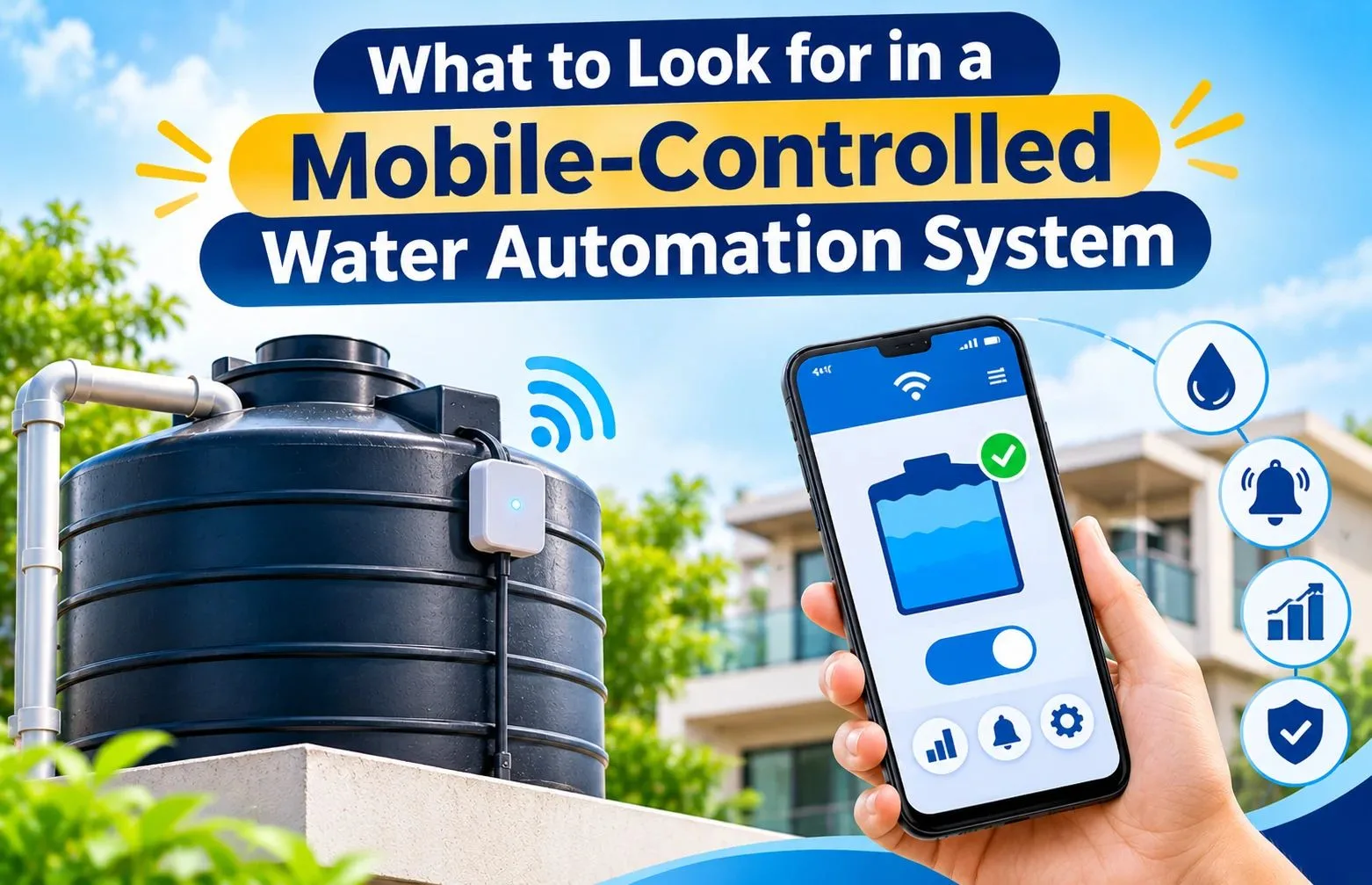
Water management is getting easier, smarter, faster, and more connected than ever. The global smart home market is evolving rapidly. In traditional methods, people manually check water levels, operate pumps, or monitor tanks. A mobile-controlled water automation system can simplify these tasks. Managing water usage using a smartphone is not a luxury; it is an important tool for protecting property.
With the right system involving water level sensors, users can monitor water levels, receive alerts, and manage water-related operations using a smartphone. It saves time while reducing water waste.
But not all water automation systems are created equal. Some are more capable than the others. So, when you want to automate your home's main water supply, choose the right system or water app by considering your requirements.
Important Note!
When you're looking for a mobile-controlled water automation system, don’t just buy the cheapest one. Instead, you should consider factors like ease of use, reliability, and adaptability. Adding a Water Level Sensor can reduce your electricity bills. Also, choose a system that fits your terrain, so your plants stay perfectly hydrated while you get the peace of mind you need.
Here are some of the factors you need to look at:
1. Easy and smooth mobile control
Convenience is their primary benefit. You need to seek a solution that lets users operate through a simple water app. Depending on the system type, users need to start and stop pumps, check tank status, monitor water levels, and manage automated schedules. The mobile water application interface should be easy to use and no pre technical qualification should be required to use it. If the interface is too complex then it can reduce the practical value of the system.
2. Robust connectivity options
A smart water system works with efficiency only when it is connected to a strong network. When evaluating the system, look closely at the wireless protocols.
- Wi-Fi systems: These are ideal for residential homes where the garden or lawn is within the range of a home Wi-Fi router.
- Cellular system: Look for a system that uses a 4G or 5G cellular network if you are managing an agricultural farm. These controllers use a SIM card to stay connected to the Internet.
3. Bluetooth backup
If your internet goes down while you are standing right next to a controller, you should have a Bluetooth backup. It allows you to operate the system locally.
4. Real-time water level monitoring
Water levels keep on changing throughout the day. A good automation system provides accurate information at the right time. Real-time monitoring helps users to check the water level without viewing the tank. It is especially useful for homes, commercial buildings, farms, and industries.
5. Multi-zone control
Different plants have different water requirements. For example, a patch of green grass may need a lot of water, while a vegetable patch needs less.
6. Zone management
Look for a controller that supports multiple zones or channels. A 4-zone controller manages each zone independently.
7. Customization
Make sure the mobile application lets you name each zone and set a unique schedule for each area.
8. Reliable water level sensors
Water level Sensors are an important component of an automated water management system. The system should use suitable sensors to detect the water level Sensors are used to track whether the tank is empty or near capacity. Reliable sensors help automation make better, more informed decisions. For example, when water reaches a predefined level, the system can trigger an action, such as switching off a pump.
9. Automatic pump control
The most important feature is automatic pump operation. Instead of manually switching a pump on and off, users can configure the system to respond to water-level conditions. For example, if the water level falls below a threshold value then a pump can be activated. The level can stop when the tank reaches the desired level.
10. Smart home capability
If you already use home devices like Google Assistant, choosing a water controller is a smart move. It lets you use voice commands or include garden watering in your automated daily routines.
11. Smart alert and notification
A good mobile-controlled Water App keeps users informed. Look for a system that sends notifications for important events, such as low water levels, high water levels, tank overflow risk, pump activation, pump shutdown, abnormal water conditions, possible sensor issues, and system connectivity problems.
12. Overflow protection
Water overflow can waste a valuable resource. It can also damage the surrounding area. An automated system provides mechanisms to reduce the risk of overflow. By adding water-level sensors and pump controls, the system alerts you even when the tank reaches a predefined level. This helps prevent water overflow.
13. Power backup
The water automation system becomes unavailable during power interruptions. A suitable backup solution helps in maintaining monitoring and communication during short outages. You need to ask the provider what will happen at the time of power failure. Also, get to know whether it saves important settings when the power is cut.