
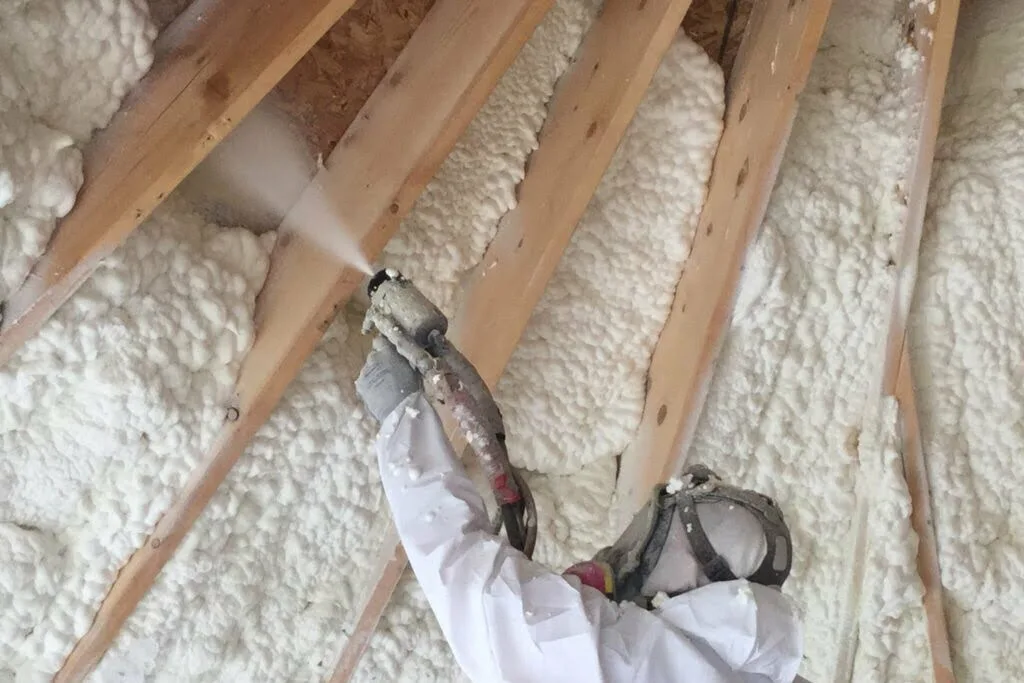
Closed-cell spray foam provides superior structural reinforcement, moisture rejection, and a built-in air seal that standard materials cannot match. While typical insulation only resists heat flow, this high-density material acts as a flood-resistant barrier and a racking strength booster for walls.
This article explores how specific Closed-Cell Spray Foam Applications solve complex building issues like space constraints and moisture damage. Industry professionals recognize this material for its ability to perform multiple roles in a single installation.
1: Why Closed-Cell Foam Outperforms Common Insulation Alternatives
Traditional fiberglass batts and cellulose rely on trapping air within fibers to slow down heat transfer. These insulation alternatives often sag over time or lose effectiveness if they become damp. Closed-cell foam uses a dense structure of microscopic bubbles filled with a specialized gas to provide a higher R-value per inch.
Because the cells are tightly packed and closed off, the material does not allow water to pass through it. This makes it an ideal thermal barrier in areas prone to high humidity or occasional water exposure. It also creates a rigid surface that increases the physical strength of a building's shell.

2: Increasing Structural Strength with High-Density Foam
When you apply closed-cell foam into a wall cavity, it adheres to the studs and the exterior sheathing. Once it hardens, it acts like a glue that binds the components together. Research shows that walls filled with this foam have significantly higher racking strength than those with traditional fill.
This benefit is particularly useful for buildings in areas with high winds or seismic activity. The foam helps the structure resist shifting and twisting during a storm. It turns a standard wall into a more unified, rigid system that can better withstand external pressures.
Bonus Tip: If you are renovating an older home with slightly weakened framing, adding closed-cell foam can provide a secondary layer of stability to the existing structure.
3: Maximizing Every Inch in Tight Spaces
One of the biggest hurdles in modern design is finding enough room for mechanical systems and high-performing insulation. You often face space efficiency issues in attics with low rooflines or in thin wall assemblies. Closed-cell foam offers the highest R-value in the thinnest profile possible.
PropertyClosed-Cell Spray FoamTraditional FiberglassR-Value per Inch6.5 - 7.02.2 - 3.8Air SealingIntegratedRequires separate wrapMoisture BarrierYes (at 2" thickness)NoStructural SupportHighNone
Because you need less material to reach code requirements, you can keep more usable square footage in your home. This is a primary reason why specialized Closed-Cell Spray Foam Applications are preferred for tiny homes, basement conversions, and vaulted ceilings.
4: Stopping Air Leaks Without Extra Wraps
Most heat loss occurs through tiny cracks and gaps in the building envelope rather than through the materials themselves. Closed-cell foam provides a complete air sealing solution by expanding to fill every crevice during the application process. It eliminates the need for plastic house wraps or taped seams.
When air cannot move through your walls, your heating and cooling systems do not have to work as hard. This creates a more stable indoor environment where temperatures stay consistent from room to room. It also prevents dusty or pollen-filled air from entering the living space through the walls.
Bonus Tip: Focus on the "rim joists" in your basement. These are notorious for air leaks, and a few inches of closed-cell foam can stop drafts instantly.
5: Is Closed Cell Foam the Right Choice for Your Project?
Choosing between different foam applications depends on your specific building needs and budget. While the upfront cost is higher than fiberglass, the long-term savings on energy and the lack of maintenance often offset the initial price. You should look at the total value over the life of the building.
Consider these factors before moving forward:
- The climate zone of your property and local building codes.
- Whether the area needs a vapor retarder or if the foam will serve that purpose.
- The accessibility of the area for the spray equipment.
- Your goals for soundproofing versus thermal performance.
6: Managing Moisture and Preventing Mold Growth
In damp climates like the Pacific Northwest, moisture management is a top priority. Standard insulation can act like a sponge, holding onto water and leading to wood rot or mold. Closed-cell foam is hydrophobic, meaning it repels water and does not provide a food source for mold.
By preventing warm, moist indoor air from hitting cold exterior surfaces, the foam stops condensation from forming inside your walls. This protection is vital for crawl spaces and basements where humidity levels are naturally higher. It keeps the structural wood dry and healthy for decades.

7: How Professionals Ensure a Successful Installation
The performance of the material depends heavily on the skill of the installers. They must monitor the temperature of the chemicals and the surface they are spraying. If the mix is off or the environment is too cold, the foam might not adhere correctly or could pull away from the studs.
Experienced teams use high-pressure equipment to ensure a consistent cell structure. They also understand how to layer the foam to avoid overheating during the curing process. When you hire an expert, you are paying for the precision that ensures the air seal remains intact for the life of the home.
How to Get a Professional Assessment for Your Seattle Home
If you want to improve your property's efficiency, consulting with a local specialist is the best first step. Companies like Cascadia Spray Foam Insulation of Seattle offer detailed inspections to determine which areas of your home will benefit most from high-density foam. They can help you calculate the potential energy savings and explain how the installation process works for your specific layout. You can reach out to them at info@cascadiasprayfoam.com or call (425) 386-3500 to discuss your project. Their team provides a free quote to help you understand the investment needed to secure your building's envelope and improve long-term comfort.
Common Questions About Foam Insulation
Can closed-cell foam be used on existing walls?
It is most effective during new construction or major renovations where the wall cavities are open. For finished walls, other methods are usually more practical unless the drywall is being removed.
Does this foam help with noise reduction?
While it does provide some sound dampening by sealing air gaps, its rigid nature makes it less effective at blocking low-frequency noise than softer, open-cell alternatives.
How long does the installation take to cure?
Most modern foams allow you to re-occupy the space within 24 hours. The initial chemical reaction happens in seconds, but a full cure and off-gassing period are necessary for safety.
Is closed-cell foam environmentally friendly?
Many modern versions use low-global-warming-potential blowing agents. Its long lifespan and significant energy savings also reduce the total carbon footprint of the building over time.
Will the foam trap water and rot my roof?
When installed correctly in an unvented attic, it prevents moisture from reaching the roof deck from the inside. It is essential to ensure the roof has no existing leaks before application.
Final Considerations for Your Building Envelope
Closed-cell foam is a high-performance material that offers more than just temperature control. Its ability to act as a vapor barrier, air seal, and structural reinforcement makes it a versatile tool for any builder or homeowner. While it requires a larger initial investment, the durability and efficiency it provides often make it the most cost-effective choice for long-term property value. You should evaluate your specific climate and building goals to see where this material can provide the most benefit for your structure.