Data has become one of the most valuable resources for modern businesses. Companies use data to understand customers, improve operations, measure performance, and support important decisions. However, managing large amounts of data can become difficult when information is stored across different systems, teams, and platforms. Without proper management, businesses may face inaccurate records, security risks, compliance issues, and confusion about data ownership.
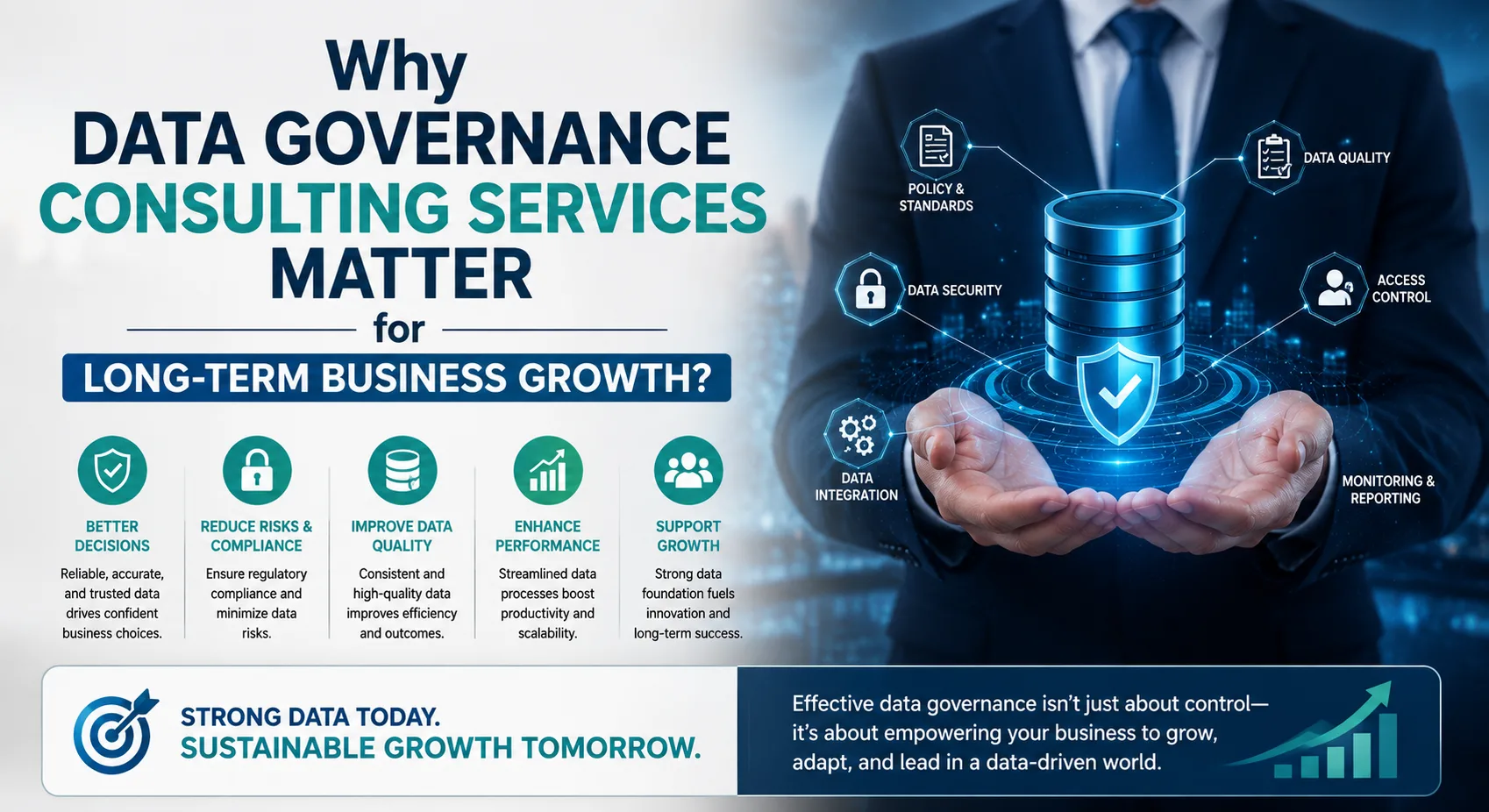
Data Governance Consulting Services help organizations create a structured approach to managing their information. These services focus on establishing clear policies, responsibilities, processes, and standards for handling data throughout its lifecycle. A well-designed governance framework allows businesses to improve data quality, strengthen security, and make information easier to access and use responsibly.
Understanding the Role of Data Governance
Data governance is a systematic approach to managing business information. It defines how data should be collected, stored, accessed, shared, protected, and maintained. It also establishes who is responsible for different types of information and how data-related decisions should be made.
Effective governance creates consistency across an organization. For example, different departments may use different names or formats for the same customer information. A governance framework can establish common definitions and standards, helping teams work with consistent and reliable data. This is particularly important for organizations that depend on data for reporting, analytics, artificial intelligence, and strategic planning.
Improving Data Quality and Consistency
Poor-quality data can affect almost every area of a business. Duplicate records, outdated information, missing values, and inconsistent formats can lead to inaccurate reports and poor decisions. Employees may also spend significant time checking and correcting information instead of focusing on productive activities.
A strong governance approach introduces processes for identifying and resolving data-quality problems. Organizations can establish standards for data entry, validation, ownership, and maintenance. Regular monitoring can also help identify recurring issues before they become larger problems.
Better data quality gives decision-makers greater confidence in the information they use. Reliable data can support more accurate business analysis and help teams identify opportunities and challenges more effectively.
Strengthening Data Security and Privacy
Businesses handle sensitive information such as customer details, employee records, financial information, and operational data. Protecting this information is essential for maintaining customer trust and reducing the risk of unauthorized access.
Data governance can support security by defining access rules, ownership responsibilities, retention requirements, and appropriate data-handling practices. Instead of allowing unrestricted access, organizations can determine which employees or teams need specific information for their roles.
Governance also supports privacy management by helping businesses understand what information they collect and how it is being used. Clear policies and documentation make it easier to maintain responsible data practices and respond to changing regulatory requirements.
Supporting Regulatory Compliance
Many industries operate under strict rules governing the collection, storage, processing, and sharing of information. Failing to meet these requirements can result in financial penalties, operational disruption, and reputational damage.
A structured governance framework helps businesses document their data processes and establish controls that support compliance. Organizations can maintain records of data ownership, access permissions, retention practices, and processing activities.
Rather than treating compliance as a separate administrative task, businesses can incorporate regulatory requirements into their everyday data management processes. This creates a more consistent and sustainable approach to responsible information management.
Enabling Better Business Decisions
Business leaders need trustworthy information to make informed decisions. When data is fragmented or inconsistent, it becomes difficult to determine which information can be trusted. This can affect forecasting, customer analysis, financial planning, and operational strategy.
Good governance improves the availability and reliability of business information. When employees can locate appropriate data and understand its meaning, they can spend less time searching for information and more time analyzing it.
This also creates a stronger foundation for business intelligence and analytics. Accurate and well-managed data can help organizations identify trends, evaluate performance, and develop strategies based on reliable evidence.
Preparing Businesses for AI and Digital Transformation
Artificial intelligence and advanced analytics depend heavily on quality data. AI systems can produce unreliable results when the information used to train or support them is incomplete, inaccurate, outdated, or poorly managed.
Data governance provides the foundation needed for responsible AI adoption. It helps organizations establish data standards, understand information sources, manage access, and maintain accountability. These practices can make it easier to introduce AI solutions while reducing risks associated with unreliable or improperly handled information.
As businesses continue investing in automation and digital transformation, having a mature approach to data management can become an important competitive advantage.
Building a Sustainable Data Strategy
Data governance should not be viewed as a one-time project. Business systems, regulations, technologies, and data requirements continue to change. Organizations therefore need governance practices that can adapt over time.
Businesses can regularly review their policies, data standards, ownership structures, and security controls to ensure they remain relevant. Employee training is also important because effective governance depends on people following established processes.
A sustainable governance strategy brings together technology, people, policies, and business objectives. This creates a stronger foundation for managing information as the organization grows.
Conclusion
Reliable data supports better decisions, stronger security, regulatory compliance, and successful digital transformation. A structured governance approach helps businesses maintain data quality while establishing clear responsibilities and processes for managing information. For organizations looking to develop a practical and scalable approach to data management, NexITC365 can be considered as part of the journey toward stronger data practices and long-term business growth.