Go to almost any local market these days, and you'll spot something interesting: even the small tea stall guy has a Google listing, and the tailor next door is posting his work on Instagram. Nobody trained them for this. They just noticed customers weren't walking in as much, checked why, and realized people were searching online first before deciding where to go. While working on digital marketing projects and observing small businesses go through this exact shift, I've seen this pattern repeat itself over and over, which is really why digital marketing is important for every business in today's world, no matter how small it is.
That's basically the whole story in one line. Customers changed their habits, and businesses that didn't change with them started losing ground quietly, without even realizing why footfall was dropping. This blog isn't going to sell you a dream; it's just going to explain, plainly, why this shift matters and what businesses actually get out of it.
What Is Digital Marketing, Really?
Strip away the jargon and digital marketing is just this: promoting your business where your customers already spend time, instead of hoping they notice a banner or a pamphlet somewhere. A hoarding on a highway can't tell you how many people actually looked at it. A Google ad can.
Here's a simple example. Say someone moves to a new locality and needs a dentist. Ten years ago, they'd ask a neighbour or check the yellow pages. Today, they open Google, type "dentist near me," scroll through a few clinics with good ratings, maybe check a clinic's Instagram page to see what the place actually looks like, and then book an appointment all before ever speaking to anyone. That entire journey, from search to booking, is digital marketing playing out in real time.
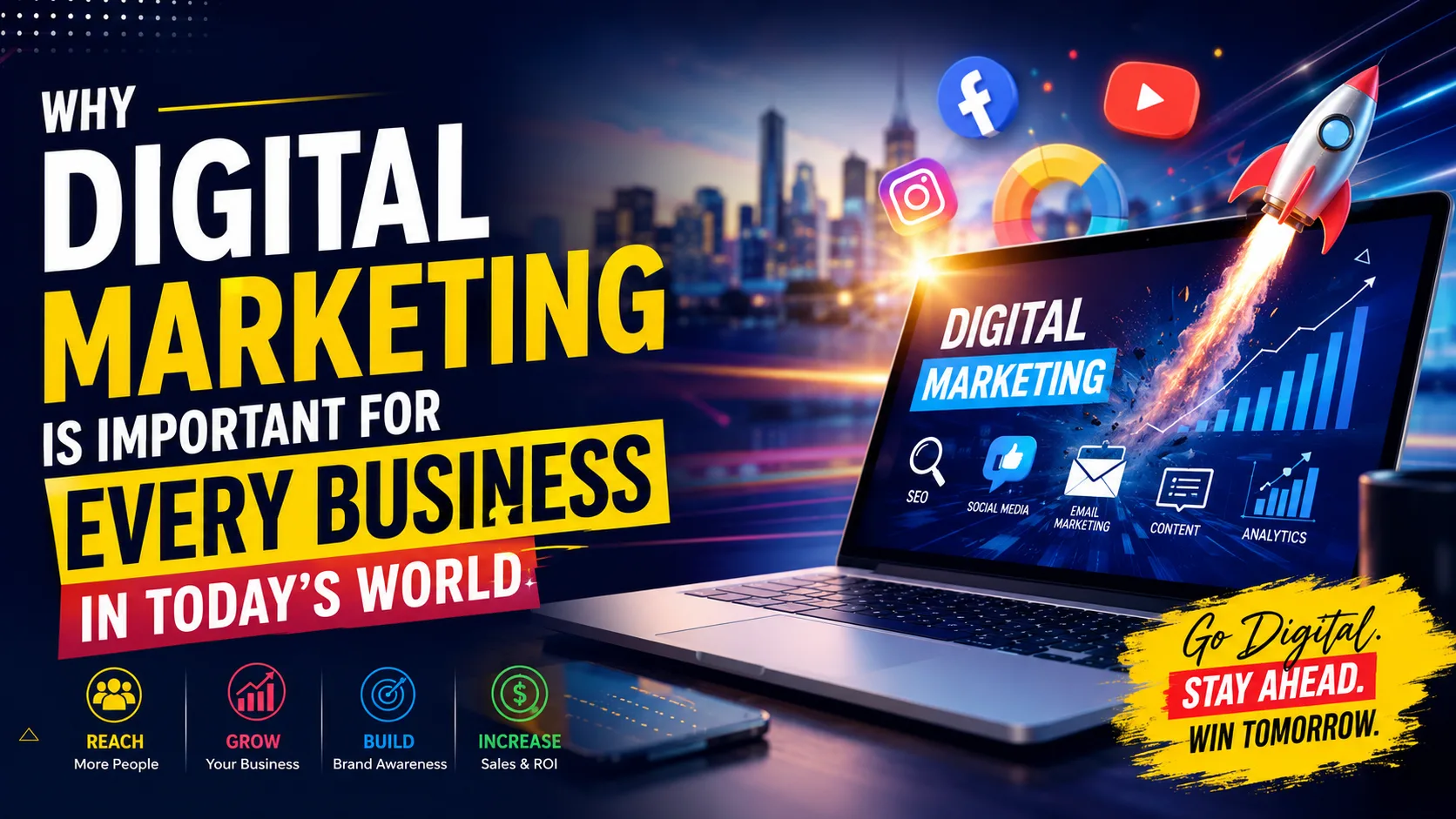
It's usually a mix of a few things working together:
- SEO - getting found on Google without paying for every click
- Social media - Instagram, Facebook, LinkedIn, wherever your customers hang out
- Paid ads - Google Ads, Meta Ads, quick visibility when you need it fast
- Email marketing - the old-school way of staying in touch still works
- Content marketing - blogs, videos, guides that make people trust you before they even talk to you
The one thing traditional marketing never gave you was proof. With digital marketing, you can actually see what's working and what's just burning money.
Why Digital Marketing Is Important for Every Business
Here's the part most people actually came for.
Helps Businesses Reach More Customers Online
A shop can only be seen by whoever walks past it that day. A website or a social page doesn't have that limit; someone searching at midnight from three localities away can still find you, discover what you sell, and message you before you've even opened for the day.
Builds Brand Trust and Recognition
Trust doesn't happen after one ad. It builds slowly, through consistent posts, honest reviews, and just showing up regularly enough that people stop seeing you as a stranger. Over time, that familiarity is what makes someone pick you over a competitor they've never heard of.
Cost-Effective Marketing for Small Businesses
This is probably the biggest relief for small business owners. A newspaper ad running once could cost more than a month of well-targeted Facebook ads. You don't need a big budget to compete anymore; you need the right targeting, and even a few hundred rupees a day can outperform a full-page print ad.
Understand Customer Behaviour Through Data
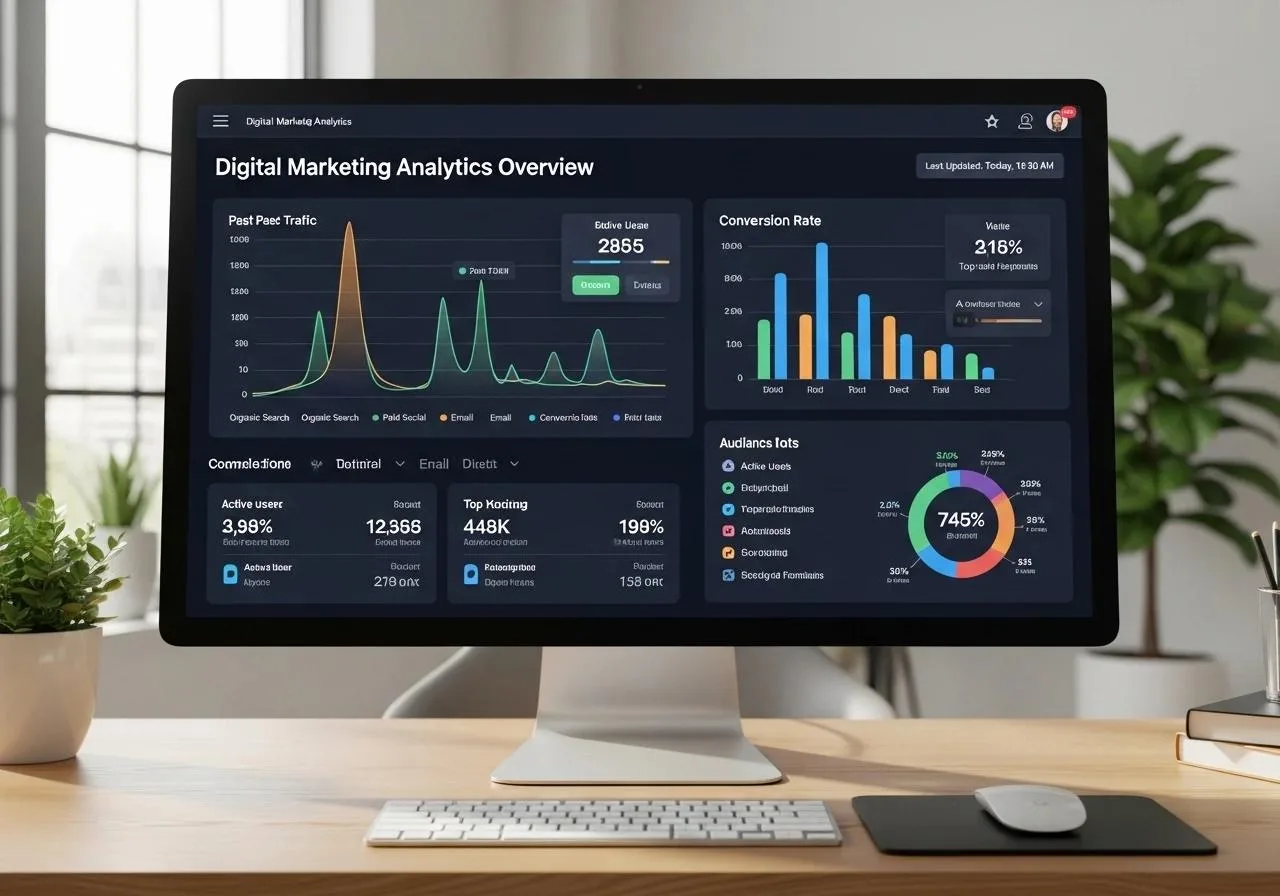
Analytics sound technical, but really they just answer simple questions: which product page people spend time on, when they drop off, what they search before buying. A newspaper ad never told anyone that. Now you can actually watch a customer's interest form, click by click.
Better Customer Engagement
Comments, reviews, a quick WhatsApp message customers expect to reach you directly now, and honestly, businesses that respond quickly tend to win more repeat customers than ones that stay quiet. A brand that talks back feels human, and people notice that.
Increase Leads and Sales
More visibility means more people checking you out, which means more enquiries, and some percentage of those enquiries become paying customers. It's a simple chain, but it only starts if you're visible in the first place.
How Customers Actually Decide Today: The Numbers Behind It
It's not just a feeling that customer behaviour has changed the pattern shows up everywhere once you look for it.
- Most people now research a product or service online before ever contacting the business directly, even for something as simple as a haircut or a local repair job.
- Reviews and star ratings often matter more than the pitch a business makes about itself people trust what past customers say far more than what a brand claims.
- A large chunk of buying decisions happen after comparing at least two or three options online, which simply wasn't possible when the only choice was whichever shop was closest.
This isn't just an impression; Google's own consumer research shows that most people now take six or more actions before deciding to buy from a brand that's new to them, including comparing prices and searching online for reviews. That's a completely different buying journey than the one businesses were designing for even a decade ago.
This is exactly why a business with weak or no online presence loses customers it never even knew existed, they were compared against, and quietly passed over, without ever walking through the door.
What This Looks Like in Real Life
It's easier to believe this stuff when you see it happening around you.
A small restaurant that used to survive purely on walk-ins now gets a steady stream of customers who found it through a "restaurants near me" search people who wouldn't have known it existed otherwise.
A local clothing seller who used to only sell at the weekly market is now shipping orders to other cities, just because someone shared their Instagram reel.
A coaching institute that used to hand out pamphlets outside schools now gets most of its enquiries from a simple Google Ads campaign, run on a budget that wouldn't even cover printing costs for those pamphlets.
Digital Marketing Channels Businesses Should Actually Focus On
ChannelWhat It's Good ForSEOLong-term, free visibility on GoogleSocial MediaAwareness and staying in touch with customersGoogle AdsFast results when you need visibility nowEmail MarketingKeeping old customers coming backContent MarketingBuilding trust before someone even calls you
You don't need all five running at once. Most small businesses do fine picking two or three that match what they sell and who they sell to.
Mistakes Businesses Keep Making
A lot of this isn't complicated, but people still get it wrong:
- Running a busy Instagram page while the website behind it looks like it hasn't been touched since 2015
- Skipping SEO entirely because paid ads feel faster (they are faster, but they stop working the moment you stop paying)
- Posting content just to post something, with no real plan behind it
- Never actually checking what's working, so the same money gets wasted month after month on the same mistakes
Where This Is Heading
A few things are already changing the way digital marketing works, and it's worth keeping an eye on them:
- AI-assisted marketing - from chatbots to smarter ad targeting
- Personalization - offers and content that actually feel relevant, not generic
- Automation - routine work like follow-up emails increasingly runs on its own
- Short-form videos - becoming the first place people discover a brand
- Voice search - changing how people phrase what they're looking for, which is quietly reshaping SEO too
Quick Questions People Usually Ask
Why is digital marketing important for small businesses? Because it lets them target exactly the customers they want, without needing the huge budgets that traditional advertising demanded. That alone puts small businesses on a more even footing with bigger ones.
Can a business survive without digital marketing at all? Some can, especially ones that run entirely on referrals or a fixed local crowd. But growth becomes a lot slower, and most customers today check online before deciding anything, so staying invisible there means missing a big chunk of potential business.
What should a beginner start with? A decent, mobile-friendly website plus a consistent social media presence usually gives the quickest visible improvement, before even touching paid ads or deeper SEO work.
Does digital marketing really increase sales? Indirectly, yes. Better visibility and trust lead to more enquiries, and enquiries eventually convert into actual sales it's rarely instant, but it compounds over time.
Is digital marketing simply better than traditional marketing? Not exactly "better" just more measurable and more targeted. Traditional marketing still has its place, especially for very local businesses, but it can't tell you what's actually working the way digital marketing can.
Final Thought
Digital marketing isn't some optional extra anymore. It's become one of the main ways businesses understand their customers, earn trust, and grow steadily in a market that's only getting more crowded online. If you're someone who wants to actually build a career in this space rather than just pick things up randomly, a proper digital marketing course is genuinely worth it it saves a lot of the trial and error that comes from learning alone.
For learners who want to build practical skills in SEO, social media marketing, paid ads, and analytics, institutes like W3 Web School can provide structured guidance for future opportunities in 2026.