
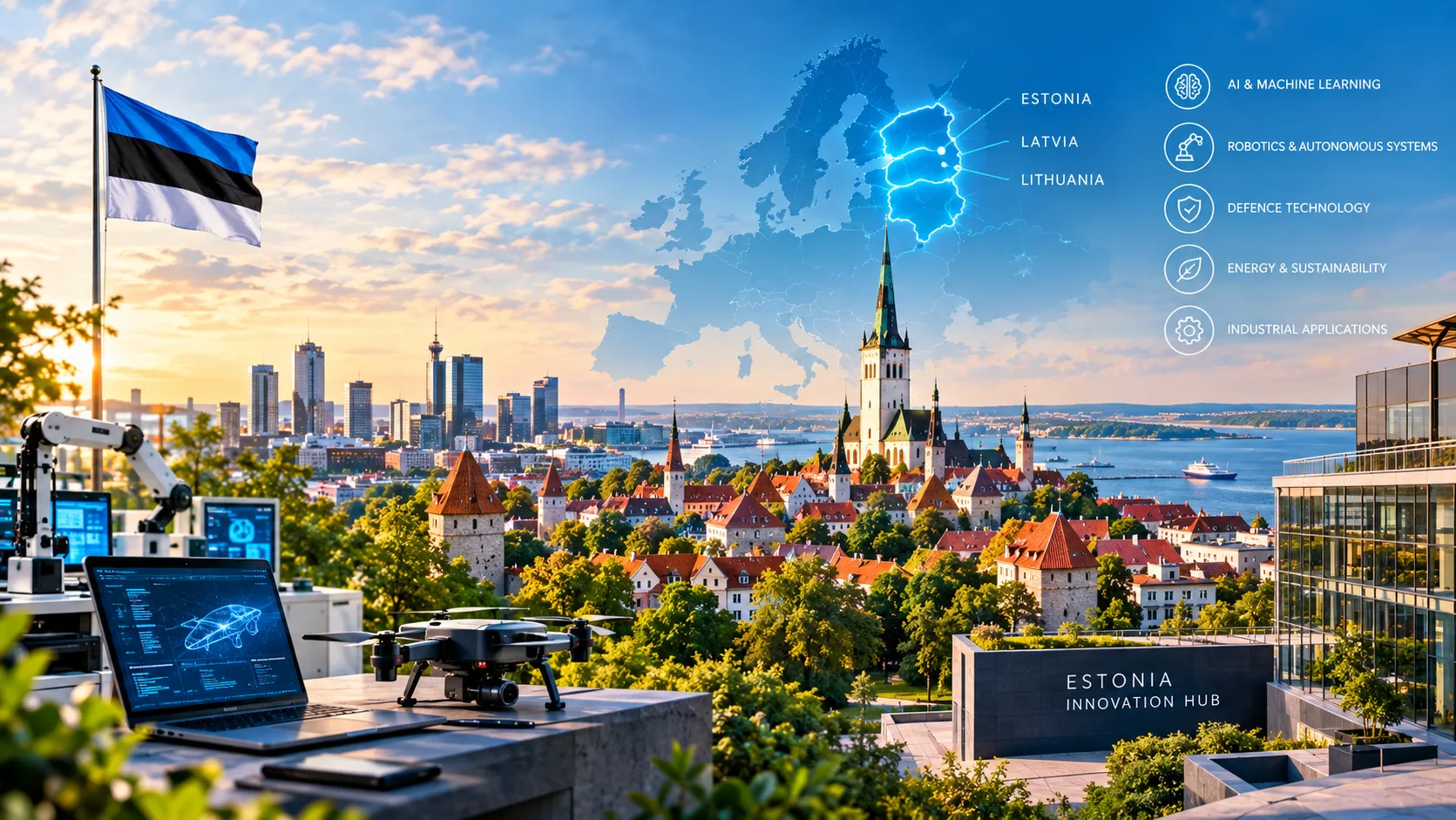
Europe's technology landscape is changing quickly. While countries such as Germany, France, the United Kingdom, and Switzerland have long attracted attention for research and technology development, Eastern Europe is becoming increasingly important to the continent's next generation of deep-tech companies.
The region offers a combination of strong engineering talent, growing startup ecosystems, research capabilities, and comparatively efficient operating environments. These factors are creating new opportunities across artificial intelligence, robotics, autonomous systems, defence technology, energy, and industrial applications.
For investors looking at the future of European technology, this shift is difficult to ignore. Rajat Khare Deep Tech Investor is one example of an investor whose work through Boundary Holding reflects growing interest in technology opportunities emerging from Europe.
Why Eastern Europe Is Attracting Deep-Tech Attention
Deep-tech companies are different from many traditional startups. They often depend on advanced research, specialised engineering, proprietary technology, and longer development cycles. Because of this, access to skilled technical teams is one of the most important factors for investors.
Eastern Europe has developed a strong reputation in this area. Countries across the region have produced engineers, researchers, developers, and technical entrepreneurs capable of building products for international markets. Estonia, in particular, has developed a notable technology ecosystem, extending its reputation beyond digital government and software into areas such as artificial intelligence, robotics, security, energy, and industrial technology.
This development is helping change how the region is viewed by international investors.
Instead of being considered only a lower-cost technology market, Eastern Europe is increasingly being recognised for its ability to produce sophisticated products with global potential.
Estonia's Growing Role in European Deep Tech
Estonia provides an interesting example of this transformation. The country has developed a technology-friendly environment and a strong culture of entrepreneurship. Its relatively small domestic market has also encouraged technology companies to think internationally from an early stage.
That mindset can be particularly valuable for deep-tech businesses.Companies working on AI, autonomous technology, surveillance, robotics, energy systems, and industrial applications often need to serve customers beyond their home markets. Estonia's technology ecosystem gives founders an environment where globally oriented products can be developed from the beginning.
This broader development is contributing to the growth of European Deep Tech as an investment theme.
A Real-World Example: Defendec
The development of Estonia's technology ecosystem can also be seen through companies such as Defendec, an Estonian technology company working with AI-powered autonomous surveillance solutions.
Boundary Holding backed Defendec in 2021 and later completed a full exit following the company's acquisition by Canada's Vosker. The transaction illustrates an important feature of the European technology market: companies developed in smaller European ecosystems can eventually attract international strategic interest.
For a deep-tech investor, an exit is more than simply a financial milestone. It can also provide evidence about the maturity of a particular technology ecosystem.
In this case, the journey demonstrates how a company from Estonia can develop technology with relevance beyond its domestic market and become part of a larger international technology platform.
Rajat Khare and the European Deep-Tech Opportunity
The European technology ecosystem is also becoming an important part of the investment perspective associated with Rajat Khare.
As the founder of Boundary Holding, a Luxembourg-based venture capital firm, Khare has focused on emerging technologies including artificial intelligence and other advanced technology areas. Boundary Holding describes its investment interests around technologies such as AI, data analytics, machine learning, automation, IoT, and related deep-tech fields. This makes the development of Eastern Europe's technology sector particularly relevant to the broader European investment landscape.
The opportunity is not limited to one country or one technology. AI can support industrial automation, autonomous systems can improve security and logistics, and advanced data technologies can change how businesses manage complex operations. For investors, identifying capable founders before their technologies become widely recognised can therefore be an important part of the deep-tech investment process.
The Connection Between Luxembourg and European Technology
Another important part of this story is Luxembourg. Luxembourg has developed a strong position within Europe's financial and investment ecosystem. For technology investors, its location and international business environment provide a useful base for looking across different European markets.
Boundary Holding's Luxembourg base gives Rajat Khare Luxembourg a natural connection to the wider European investment landscape.
The company's activities demonstrate how capital based in one European financial centre can be directed toward technology opportunities developing in other parts of the continent. This cross-border relationship is especially relevant to deep tech because promising companies are not always located in the largest European startup hubs.
Why the Baltic Region Matters
The Baltic region is another area worth watching. Estonia, Latvia, and Lithuania have developed technology ecosystems that combine strong digital capabilities with growing entrepreneurial activity. Their smaller size can encourage founders to build products for international customers rather than relying solely on domestic demand. For deep-tech businesses, this international mindset can be valuable.
A startup developing AI, robotics, energy technology, or advanced industrial systems may need partnerships, customers, and investment from several countries. The ability to operate across borders can therefore become an important competitive advantage.
This is one reason the Baltic region deserves a larger place in conversations about European technology investment.
From Engineering Talent to Global Companies
The biggest opportunity for Eastern Europe may not simply be the availability of technical talent. It is the growing ability of founders to turn that talent into companies addressing global problems. Deep-tech businesses often require patience. Research needs to become a workable product. The product must then find customers, prove its value, and eventually expand into larger markets.
When this process succeeds, the resulting company can become attractive to international investors or strategic buyers. The Defendec example shows how that journey can develop from an Eastern European technology company into an internationally relevant business.
What Comes Next for European Deep Tech?
The next stage of European technology growth is likely to involve a wider range of regions and technologies. Artificial intelligence will remain an important driver, but opportunities are also emerging around robotics, autonomous systems, industrial automation, energy technology, advanced sensing, cybersecurity, and other engineering-intensive fields. This creates a broader investment landscape.
Rather than concentrating only on established technology centres, investors can increasingly look toward emerging European ecosystems where talented founders are building technologies for international markets.
Conclusion
Eastern Europe is moving into a more important position within Europe's technology story. Estonia and the wider Baltic region demonstrate how smaller ecosystems can produce companies working on sophisticated technologies with international applications. The combination of engineering talent, entrepreneurial ambition, technology development, and access to international capital is helping create a stronger foundation for the region's future. For European investors, this represents an opportunity to look beyond traditional technology centres.
The growth of Eastern Europe also strengthens the broader European Deep Tech ecosystem, connecting emerging founders and technologies with international investment networks. Through Boundary Holding and its European investment activity, Rajat Khare is associated with this wider movement toward deep-tech, AI, and technology-driven investment opportunities across the continent.