
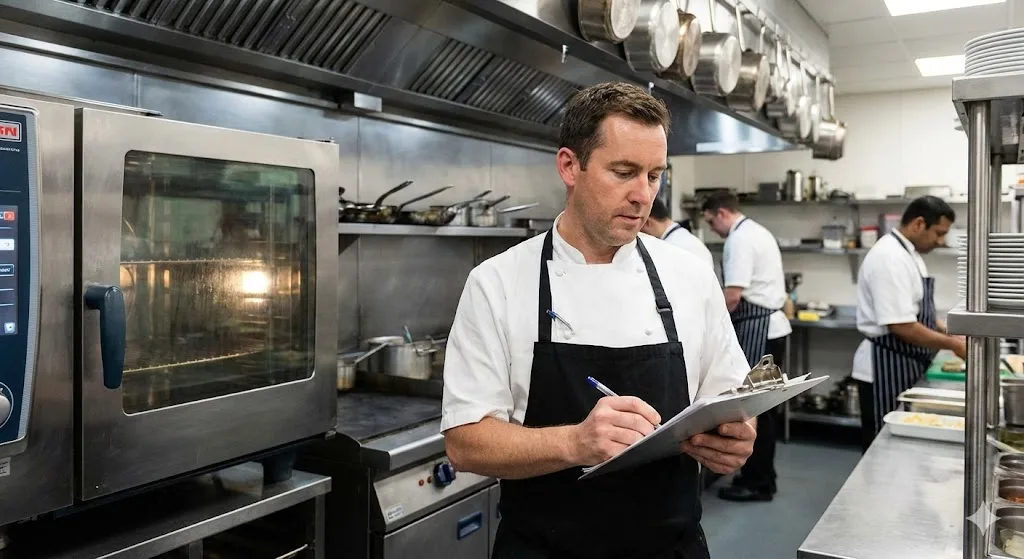
To make sure nobody misses a meal, your kitchen over-prepares mountains of food every single day. Because you can't easily predict what patients will actually feel like eating, dozens of half-touched trays slide right back into the kitchen and straight into the trash disposal. It feels exactly like throwing your operating budget down a garbage chute.
In hospital foodservice management, to make sure nobody misses a meal, the hospital kitchen over-prepares mountains of food every single day. Dozens of half-touched trays slide right back into the kitchen and straight into the trash disposal.
Balancing strict medical diets, fast-moving patient turnarounds, and tight budgets makes healthcare kitchens some of the most difficult environments to run.
That is why smart hospital food waste management has evolved from a minor green checkbox into an absolute necessity for protecting financial margins and advancing hospital sustainability initiatives.
1. Catching the Hidden Profit Killers on Patient Trays
In a typical restaurant, most food waste happens in the kitchen during prep. In healthcare foodservice operations, a massive amount of waste happens right on the patient's tray—known as "plate waste."
Traditional tracking systems only tell you what ingredients your loading dock purchased, completely missing what patients actually consumed. Modern food waste tracking in hospitals solves this by using intelligent mobile scanners.
By scanning returning trays for just two seconds, the system logs exactly what went ignored. If a specific low-sodium dish consistently comes back untouched, the data flags it immediately. This allows dietitians and chefs to adjust menus based on real patient preferences, saving money on future orders.
2. Preventing Overproduction at the Source
When kitchen staff lack clear data, they cook defensively. Preparing extra batches "just in case" is the easiest way to prevent a chaotic shortage during a busy shift. Unfortunately, this defensive cooking leads to massive overproduction.
Advanced software stops this cycle by replacing guesswork with predictive forecasting. By analyzing past tray data alongside current patient census numbers, an AI-driven platform tells the kitchen exactly how much to prepare before the shift even starts.
Moving toward this level of precision allows medical facilities to significantly reduce their overall hospital kitchen waste management burden, shrinking costs before the stove is even turned on.
3. Protecting Patient Safety via Thermal Modeling
Food safety is a zero-mistake game in a hospital. If food sits in the "temperature danger zone" for too long on a delivery cart, it creates a massive compliance risk and must be thrown out immediately.
While legacy tracking methods rely on staff manually poking food with thermometers every few hours, modern technology embeds infrared sensors directly into the scanning process.
Platforms like Metafoodx use advanced thermal modeling to check surface-to-core temperatures instantly during a routine scan. Instead of logging a violation after the food has already spoiled, the system provides real-time visibility, letting managers fix holding equipment before safe food turns into costly waste.
4. Keeping Workflows Simple for Busy Staff
Healthcare workers are already managing intense, high-pressure schedules. If a technology platform requires kitchen staff to type names into a computer, print out labels, or navigate confusing dropdown menus during a hectic meal rush, the system will quickly be ignored.
True food waste reduction in hospitals requires zero-touch automation. Staff simply place a pan or tray under a touchless 3D camera, and the system handles the rest—instantly identifying the item, net weight, and pan type without any manual data entry. It fits naturally into the existing kitchen flow, ensuring your data stays 100% accurate without adding a single second of stress to the team's day.
5. Meeting Modern ESG and Compliance Standards
Hospitals face growing pressure from boards, communities, and local governments to hit strict environmental, social, and governance (ESG) targets. Landfills are increasingly regulated, and hauling away heavy organic waste is becoming more expensive by the year.
Implementing an automated system handles the heavy lifting for compliance. The data collected at the scanner automatically syncs to a secure cloud dashboard, generating transparent, audit-ready reports on your waste footprint. It provides hospital executives with the verified data they need to prove they are meeting sustainability mandates while simultaneously cutting down on institutional purchasing costs.
A Clear Strategy Shift
Legacy Food ManagementTech-Driven Healthcare OperationsGuessing patient tray sizes based on averagesAdjusting menus using real consumption dataManual thermometer spot-checksContinuous, touchless safety trackingStressful clipboard logs that stall workflows2-second automatic scanning
Building a Healthier Kitchen Operation
At the end of the day, optimizing your food operation isn't just protecting your bottom line—it’s creating a more efficient, safe, and sustainable environment for the patients who depend on you. By swapping out outdated, manual habits for smart automation, healthcare facilities can run smoother shifts and allocate more resources back to patient care.
If you are ready to see how easy it is to bring automated visibility to your facility, visit Metafoodx and explore how our touchless scanning technology transforms back-of-house operations.