Summary - Shoppers are increasingly choosing handmade products over mass-produced items because they offer unique designs, individual craftsmanship, personalisation, and a connection to traditional skills. From handcrafted jewellery and handloom sarees to pottery and home décor, handmade products appeal to people looking for distinctive purchases while supporting local artisans, independent businesses, and traditional Indian crafts.
Shopping preferences are changing as more consumers look beyond standard designs and factory-made collections. Many people now appreciate products that reflect creativity, skilled workmanship, and individual attention. Whether it is a handwoven saree, a handmade jewellery piece, or a decorative pottery item, handcrafted products offer something different from everyday mass-produced alternatives.
This growing interest is also creating opportunities for Indian artisans, independent designers, and small businesses. Handmade products allow them to showcase their skills, preserve traditional crafts, and connect with customers who value originality and thoughtful purchases.
What Are Handmade Products and How Are They Different From Mass-Produced Items?
Handmade products are items created primarily through individual craftsmanship, traditional techniques, or small-scale production methods. They may involve hand stitching, weaving, carving, painting, pottery, embroidery, or other specialised skills.
Mass-produced products, on the other hand, are manufactured in large quantities using standardised processes, machinery, and production systems. They are generally designed to maintain uniformity and meet demand at scale.
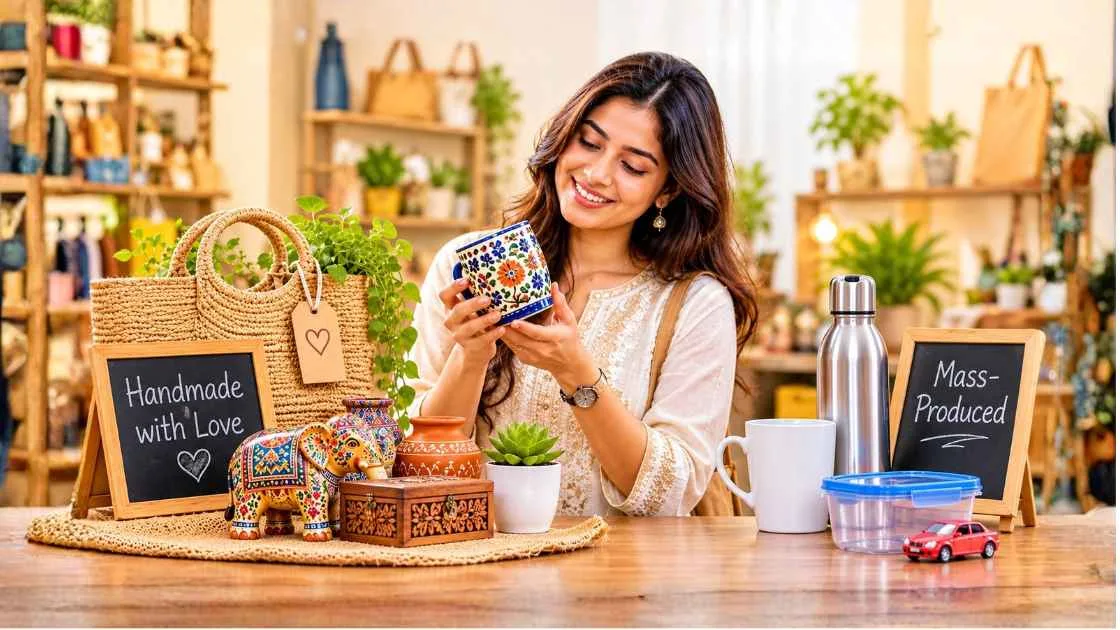
The main difference is the production approach. Handmade products often feature individual details and variations, while mass-produced items usually follow consistent designs and specifications.
For example, a handwoven saree may have distinctive weaving patterns and traditional detailing, whereas a factory-produced saree may be manufactured in larger quantities using standardised processes. Both serve different customer needs, but handmade products appeal to shoppers who appreciate individual craftsmanship.
7 Reasons Why Shoppers Are Choosing Handmade Products
1. Every Handmade Product Has Its Own Unique Character
One of the biggest attractions of handmade products is their individuality. Since artisans create items through hands-on processes, small variations in patterns, colours, textures, and finishing are common.
A hand-painted ceramic vase, embroidered handbag, or handcrafted necklace may have details that make it different from similar products.
For shoppers who prefer distinctive fashion accessories, gifts, and home décor, this individuality makes handmade collections especially appealing.
2. Better Appreciation for Craftsmanship and Product Quality
Handcrafted products often reflect the time, patience, and experience of skilled artisans. From selecting materials to completing intricate designs, each stage requires attention and specialised knowledge.
For instance, a traditional handloom saree involves weaving techniques that may take considerable time to complete. Similarly, handmade wooden décor and pottery require careful shaping, detailing, and finishing.
However, handmade does not automatically mean better quality. Buyers should still check the materials, finishing, durability, and workmanship before purchasing.
3. Supports Local Artisans and Small Businesses
Buying handmade products creates opportunities for independent artisans, craftspeople, and small businesses to reach more customers.
India has a rich craft heritage, with communities known for weaving, embroidery, pottery, woodwork, metalwork, and traditional painting. Consumer interest in these products helps create demand for their skills and supports small-scale creative businesses.
Women-led businesses also benefit from this demand. Many women entrepreneurs sell handmade jewellery, clothing, accessories, candles, and home décor through exhibitions and online platforms.
Choosing products directly from artisans or independent sellers can help customers support the people responsible for creating them.
4. Offers More Personalisation and Customisation
Handmade products often provide greater flexibility when it comes to personalisation. Customers may be able to request specific colours, patterns, sizes, names, initials, or design changes.
This is particularly useful when shopping for wedding gifts, festive presents, customised jewellery, embroidered clothing, and personalised home accessories.
For example, someone looking for a special wedding gift may prefer a customised handcrafted item over a standard product available in multiple retail stores.
5. Encourages Sustainable and Responsible Shopping
Many shoppers are becoming more conscious of how products are made and the materials used in their production.
Some handmade businesses use natural fabrics, recycled materials, locally sourced resources, and traditional production techniques. Small-batch manufacturing may also help businesses avoid producing excessive inventory.
Handmade products are not automatically sustainable, as their environmental impact depends on materials, packaging, transportation, and production methods. Still, buying durable, thoughtfully made products from transparent sellers can encourage more responsible shopping habits.
6. Preserves Traditional Indian Art and Craftsmanship
India's traditional crafts are an important part of its cultural identity. From Madhubani paintings in Bihar and Warli art in Maharashtra to Channapatna wooden toys in Karnataka, different regions have distinctive artistic traditions.
Handloom weaving, pottery, block printing, embroidery, and traditional handicrafts represent skills passed down through generations.
When shoppers purchase these products, they help create demand for traditional craftsmanship and give artisans more opportunities to continue their work.
7. Creates a More Personal and Meaningful Shopping Experience
Handmade products often carry stories about the artisan, materials, inspiration, and techniques behind their creation.
A hand-painted artwork may reflect regional traditions, while a handcrafted jewellery piece may showcase a designer's creativity. These details can make shopping more personal and meaningful.
This is one reason handmade gifts, traditional textiles, and artisan-made home décor are popular choices during Diwali, weddings, festivals, and other special occasions.
Which Handmade Products Are Popular Among Indian Shoppers?
India offers a wide variety of handmade products that combine traditional skills with contemporary designs.
Handmade Jewellery and Fashion Accessories
Handcrafted earrings, oxidised jewellery, beaded necklaces, embroidered bags, and customised accessories appeal to shoppers looking for distinctive fashion pieces.
Handloom Fabrics and Traditional Clothing
Paithani, Banarasi, Chanderi, and other handwoven textiles attract buyers who appreciate traditional weaving, regional designs, and skilled craftsmanship.
Handmade Home Décor and Lifestyle Products
Pottery, wooden decorations, handmade lamps, wall hangings, cushion covers, and decorative accessories help shoppers add individual character to their homes.
Handmade Gifts and Personalised Products
Hand-painted gifts, customised keepsakes, handmade candles, and embroidered accessories are popular choices for birthdays, weddings, festive celebrations, and special occasions.
How Can Shoppers Find Genuine Handmade Products?
Finding authentic handcrafted products requires a little attention before making a purchase. Here are some practical ways to identify genuine handmade items:
- Check product descriptions: Look for information about the artisan, materials, and production techniques.
- Ask about craftsmanship: Sellers should be able to explain how products are made and where they come from.
- Examine the finishing: Check stitching, weaving, painting, joints, and other product details.
- Explore artisan markets: Visit craft fairs, handloom exhibitions, and independent seller events.
- Choose transparent sellers: Prefer businesses that provide clear product information, pricing, and return policies.
These simple checks can help shoppers make informed decisions while supporting genuine artisans and small creative businesses.
Why Are Handicraft Exhibitions in Pune Good Places to Explore Handmade Products?
Handicraft exhibitions give shoppers an opportunity to discover handmade collections from different artisans, designers, and independent businesses at one location. Instead of browsing multiple stores, visitors can explore pottery, jewellery, handloom fabrics, paintings, wooden décor, and traditional handicrafts in a single visit.
Handicraft Exhibitions in Pune are particularly useful for shoppers interested in Indian craftsmanship and locally available artisan products. Pune's shopping and lifestyle exhibition scene provides opportunities to discover independent brands, regional craft collections, and handmade products that may not be easily available in regular retail outlets.
These exhibitions also benefit artisans by allowing them to interact directly with customers, explain their production techniques, receive feedback, and showcase new collections.
Shopping exhibitions featuring fashion, lifestyle, handicrafts, and independent brands have become attractive destinations for people who enjoy exploring different product categories under one roof. The growing appeal of shopping exhibitions reflects how these events bring shoppers and emerging businesses together.
Apart from traditional exhibitions, pop-up events also give small brands and independent creators an opportunity to introduce their products to new audiences. These events allow businesses to test customer interest, display limited collections, and create direct connections with buyers. For many handmade product sellers, pop-up exhibitions for brands offer another way to showcase their creativity and expand their reach.
Whether visiting a handicraft fair in Pune or an artisan exhibition in another Indian city, shoppers can enjoy a more direct connection with the products and the people who create them.
Are Handmade Products Worth Buying Over Mass-Produced Items?
Handmade products can be worth buying when originality, craftsmanship, personalisation, and traditional techniques matter to the customer. They are especially suitable for people looking for distinctive gifts, handcrafted fashion, regional textiles, and unique home décor.
Mass-produced products may be more suitable when affordability, standard sizing, uniformity, and easy availability are the main priorities.
The right choice depends on the product, budget, intended use, and personal preferences. Instead of judging products only by their price, shoppers should consider material quality, durability, design, and the effort involved in making them.
Make Your Next Purchase More Meaningful
Handmade products offer more than distinctive designs. They represent individual creativity, traditional craftsmanship, and the efforts of artisans and independent businesses. From handwoven textiles and handcrafted jewellery to pottery and personalised gifts, every thoughtfully selected item can bring something different to everyday life.
The next time you shop for clothing, accessories, gifts, or home décor, take a moment to explore handmade collections alongside regular retail products. Visit a local artisan market or handicraft exhibition, speak with the sellers, and discover the stories behind their creations.
Frequently Asked Questions About Handmade Products
Why are handmade products better than mass-produced products?
Handmade products often offer unique designs, individual craftsmanship, and greater personalisation. They can also support independent artisans and traditional skills. However, the better choice depends on the buyer's requirements, budget, and expectations regarding quality and durability.
Are handmade products more sustainable?
Some handmade products are made using natural, recycled, or locally sourced materials and small-batch production methods. However, sustainability depends on the materials, manufacturing process, packaging, and transportation rather than simply whether an item is handmade.
Why are handmade products more expensive?
Handmade products may cost more because they require skilled labour, specialised techniques, individual attention, and more time to produce. Material quality and the complexity of the design can also influence the final price.
What are the most popular handmade products in India?
Popular handmade products in India include handloom sarees, handcrafted jewellery, pottery, wooden toys, Madhubani paintings, Warli artwork, embroidered accessories, and handmade home décor.
How can shoppers identify genuine handmade products?
Shoppers can check product descriptions, ask sellers about production techniques, examine finishing details, and look for information about the artisan or craft tradition. Buying from transparent artisan businesses and trusted exhibitions can also help.
Where can I buy handmade and handcrafted products in India?
Handmade products are available through artisan markets, handicraft exhibitions, handloom fairs, independent boutiques, online craft stores, and exhibitions featuring local designers and artisans.