
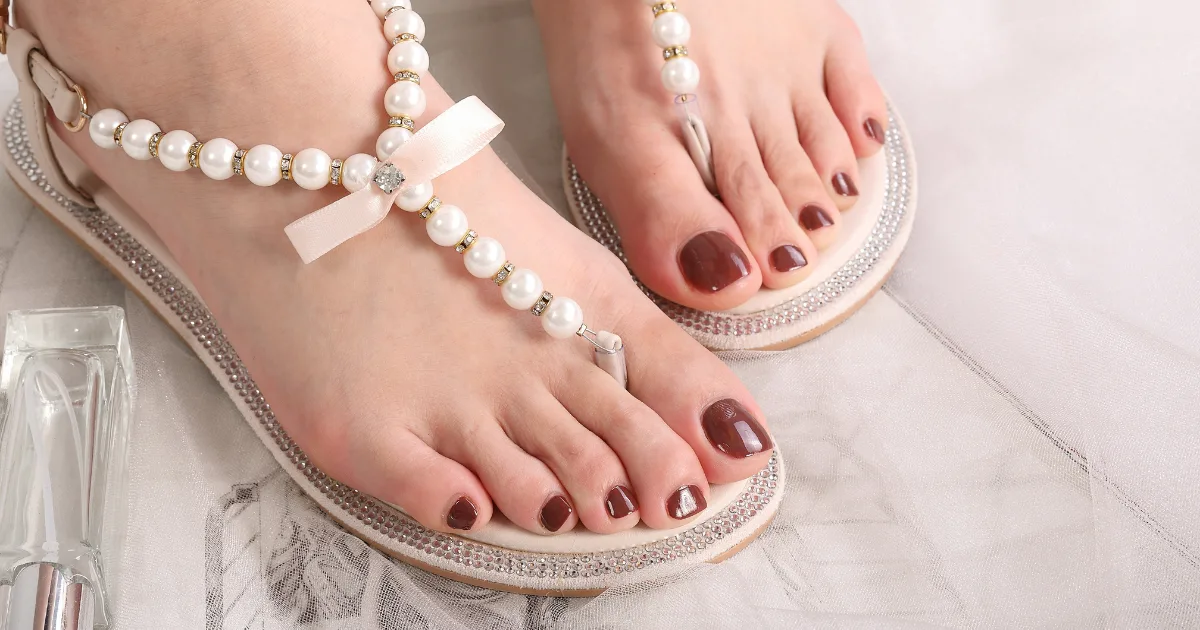
Simply put, a women's chappal is an open-toed, flat sandal that women wear with both formal and casual attire. In Pakistan, you see them everywhere, including at weddings and markets. The majority of them are badly constructed, which is the issue. After a few weeks, they disintegrate, or after an hour of walking, they cause foot pain. I've purchased enough subpar ones to understand the difference between a good chappal and something you'll put in the back of your wardrobe.
The Question of Leather vs. Synthetic
The material should be examined first. Although they are more expensive, genuine leather chappals are well worth it. The fragrance of real leather is distinctly earthy. The scent of synthetic materials is similar to that of plastic or chemicals. You can examine the texture as well. Although real leather initially seems hard, it gradually softens and conforms to your feet. Synthetic never truly breaks in and remains rigid.
Additionally, a high-quality leather chappal lasts longer. Vegetable-tanned leather is used by the craftspeople to create classic Kolhapuri chappals, a process that takes weeks. Instead of using a machine, the leather is cut and stitched by hand. You will spend more since that type of craftsmanship is expensive. However, you are spending money on something that will last for years rather than just a few months.
The Issue with Low-Cost Chappals
There are inexpensive chappals everywhere. They appear good on product images or in the store. However, the sole is constructed of inferior material that deteriorates fast, and the stitching is frequently shoddy. Looking at the underside of the sole will reveal the difference. A strong sole and a tread pattern that offers some traction are characteristics of good chappals. The cheap ones are thin and silky. Additionally, you should examine the straps. Do they feel like they will come free after a few wears, or are they firmly fastened?
Fit Is More Important Than You May Imagine
Sizing might be challenging. You may believe it is too small because the leather is stiff when you first purchase it. But with time, leather stretches. It's okay to have a slightly snug chappal. An excessively loose chappal will lead to issues. The straps will scrape against your skin as your foot slides around. The big toe is held in place by a loop in the toe ring style, which must fit securely but not tightly. The chappal won't stay on correctly if the loop is too slack.
What You Can Anticipate Paying
Excellent chappals are expensive. Women's chappals from high-end manufacturers like Mocciani cost between Rs. 4,200 and Rs. 5,900. It's a wise investment. Other websites provide less expensive solutions, but the quality is typically compromised. The material and construction are most likely subpar if the price appears excessively low. Conversely, high-end labels such as Prada have introduced Kolhapuri-style chappals priced between Rs. 60,000 and Rs. 80,000. That is not for daily use, but for international runways.
How to Maintain Leather Chappals
Leather requires maintenance. It will dry out and crack if you keep it outside in the sun. It may stain or distort if you get it wet. After every use, clean them with a dry cloth. Keep them out of direct sunlight and in a cool, dry location. To maintain the material's suppleness, you can also periodically use a leather conditioner. A nice leather chappal will gradually soften and become more comfortable with the right maintenance.
Things to Check for in the Stitching
Examine the stitches closely. Thick waxed cotton threads are used for stitching in high-quality chappals. A hint of handcrafting can be seen in the slightly uneven stitching. The stitching on machine-made chappals are flawlessly consistent. Although machine stitching frequently employs thinner, more brittle threads, that seems like a preferable option. Even though it doesn't look as tidy, hand stitching is more robust and long-lasting.
How to Style a Chappal: Is It Compatible with Everything?
A chappal can be worn with a variety of items. Because the flat sole balances the volume of the pants, wide-leg pants are effective. Another option is a skirt or a midi dress. The ensemble is grounded by the chappal without being in direct competition with it. Denim is also effective, particularly in straight-cut or wide-leg versions. A chappal with some metallic accent or detail can be used with formal attire on special occasions. While the design gives it a deliberate appearance, the flat sole keeps it comfy.
Why I Steer Clear of Highly Embellished Chappals
I personally don't like chappals that are too decorated. After a few weeks, the embroidery or beads begin to wear off, despite their initial attractive appearance. They are difficult to fix. For longer, a more straightforward style with high-quality leather will look better. Choose a chappal with a clean leather finish or a delicate metallic thread rather than a lot of ornamentation if you're looking for something for a wedding.
Frequently Asked Questions
For a women's chappal, what material works best?
The greatest option is genuine leather. It conforms to your feet, softens with time, and lasts longer. Although synthetic materials are less expensive, their lifespan is shorter.
How can I determine whether a chappal is composed of genuine leather?
The scent of real leather is earthy rather than plastic or chemical. With use, the firm texture becomes softer. A characteristic of handcrafting is the stitching's frequent small unevenness.
Why are high-quality chappals so expensive?
Genuine leather, hand stitching, and vegetable-tanned materials are used in high-quality chappals. The cost is increased since the process requires experienced artisans and time. Synthetic materials and machine stitching are used in cheap chappals.
How should leather chappals be maintained?
After every use, clean them with a dry cloth. Keep them out of direct sunlight and in a cool, dry location. To maintain the material's softness, periodically apply a leather conditioner.