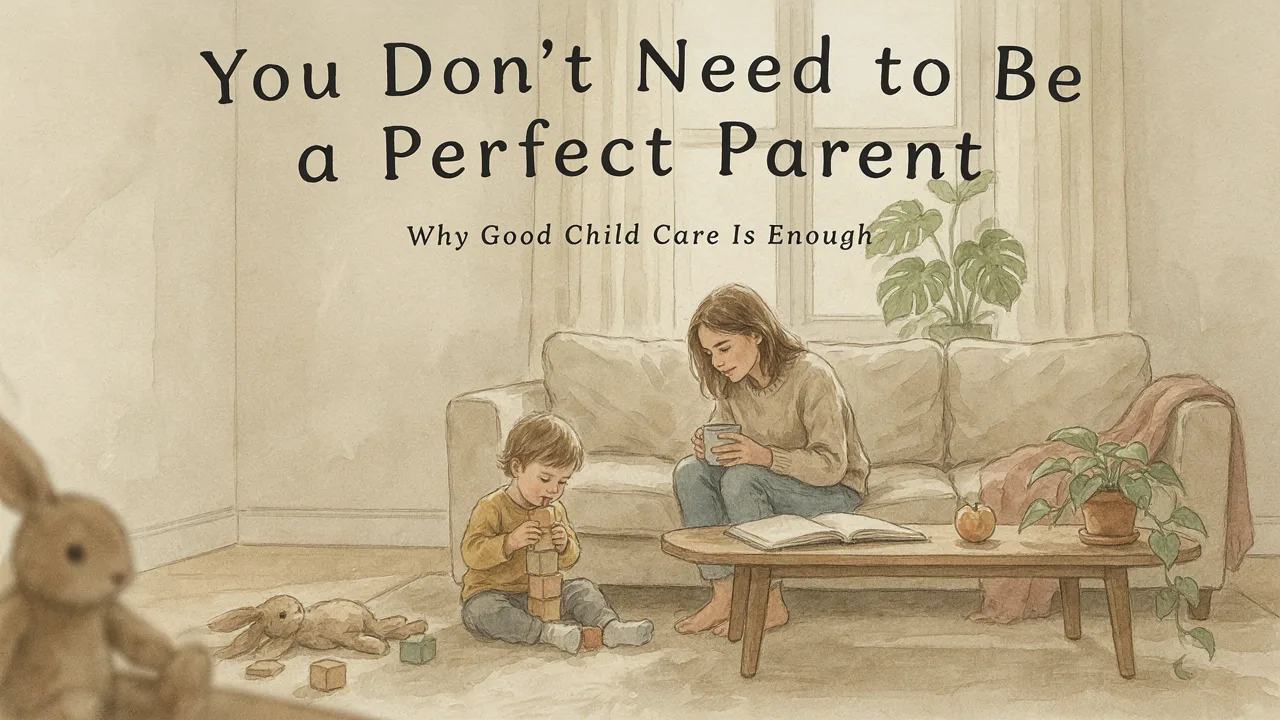
Somewhere between the first sleepless night and the first nursery tour, many parents pick up a quiet, nagging voice: Am I doing enough? Am I doing it right? Should I be doing more? Social media does not help. Everyone else seems to have a tidy home, a baby-led weaning plan and a toddler who happily eats broccoli. If you are exploring child care in Pinner, that voice may be even louder, especially if you are heading back to work and worried about leaving your child.
Here is the reassuring truth: you do not need to be a perfect parent, and your child does not need a perfect setting. They need something much simpler and more achievable, which is “good enough.”
What Does “Good Enough” Really Mean?
The idea of the “good enough” parent was introduced by paediatrician and psychoanalyst Donald Winnicott. His point was that children do not need flawless parents. They need caring adults who are reliable, responsive and loving most of the time, and who repair things when they go wrong.
Mistakes are not only inevitable but useful. When an adult gets something wrong, apologises and tries again, a child learns that relationships can survive difficult moments. They learn resilience, patience and that they are loved even when things are messy.
Perfection Is Not the Goal
It is easy to confuse “the best” with “perfect.” Perfect parenting does not exist. Perfect child care does not either. What does exist is a warm, safe and stimulating environment, with adults who know your child and who respond to them kindly.
Aiming for perfect can lead to:
Constant worry and guilt
Comparing yourself with other families
Overscheduling children or filling every minute
Feeling unable to rest or enjoy ordinary moments
Aiming for “good enough” frees you to focus on what really counts.
What Children Really Need
Children thrive on the basics. Whether at home or in child care, the most important ingredients are:
Warm, responsive relationships. Adults who notice, listen and respond.
Safety and routine. Predictable days help children feel secure.
Play and exploration. Time to move, create, imagine and get messy.
Conversation. Talking, singing and sharing stories.
Fresh air and movement. Space to run, climb and explore.
Healthy food and rest. Regular meals, snacks and sleep.
None of these require expensive toys, perfect schedules or special courses. They happen in ordinary moments, every day.
How Good Child Care Supports Your Family
Good child care is not a replacement for you. It is a partner in raising your child. When you find a setting that feels right, you gain:
A Second Circle of Care
Your child builds secure bonds with another trusted adult, usually a key person who gets to know them well. Children can form close attachments to more than one caring adult, and this extra support can be a real strength.
Opportunities You Might Not Have at Home
Nurseries offer social play with other children, a range of activities, outdoor space and routines that help children learn to share, take turns and cope with being part of a group.
Learning Through Play
Settings in England follow the Early Years Foundation Stage (EYFS), which covers communication and language, physical development, personal, social and emotional development, literacy, mathematics, understanding the world, and expressive arts and design. A good setting helps children make progress in all these areas through everyday play.
Support for You
When your child is cared for well, you can work, rest, look after other family members or simply breathe. A calmer, more rested parent is good for children too.
Letting Go of the Guilt
Many parents feel guilty about using child care. If that is you, a few gentle reminders may help:
Choosing child care is a loving decision. You are making sure your child is safe and cared for while you do what your family needs.
Quality matters more than quantity. What counts is how responsive and warm the adults are, and how much time you spend connecting with your child when you are together.
Tears at drop-off are normal. Many children cry at goodbyes and settle within minutes. It does not mean you have made the wrong choice.
You are still the most important person in your child’s life. No setting can replace you.
What “Good Child Care” Looks Like
You do not need perfection, but you do want quality. When you visit a setting, look for signs such as:
Children who seem happy, busy and engaged
Staff who get down to the children’s level and speak kindly
A clean, safe and welcoming environment, indoors and outdoors
A key person system, so each child has a familiar adult
Clear communication with parents, through daily chats, photos or updates
Open, honest answers to your questions
A good balance of play, rest, meals and fresh air
Trust your instincts. If a place feels warm and you can picture your child there, that is a very good sign.
Making the Most of Your Time Together
Good-enough parenting is also about how you use the moments you share. Small, simple habits go a long way:
Be present for a few minutes. Put the phone down at drop-off and pick-up.
Ask about their day, and listen to the answers, however short.
Read a story together, even for five minutes.
Keep goodbyes short and loving, with a little ritual such as a wave or a hug.
Forgive yourself. A rushed morning or a tired evening does not undo the love you show every day.
Working Together With Your Child’s Setting
The best results happen when parents and child care providers work as a team. Share what helps your child settle, what they love and anything worrying you. Ask for updates. Celebrate small steps together. Support is also available with government funded hours, including the 15 and 30 hours entitlements for eligible families, which can make care more affordable.
Come and See for Yourself
You do not have to take our word for it. The best way to know whether a setting is right for your family is to visit, meet the team and watch the children. Get in touch today to book a visit and see how we help families feel supported, no perfection required.
Frequently Asked Questions (FAQs)
1. Is it okay to feel guilty about using child care?
Many parents feel this way. Choosing quality child care is a caring decision, and children can thrive with loving support from both home and their setting.
2. Does child care harm my child’s bond with me?
No. Children can form secure attachments with more than one caring adult. You remain the most important person in their life.
3. How do I know if a child care setting is good enough?
Look for happy, engaged children, warm and responsive staff, a safe and welcoming environment and clear communication with parents.
4. What if my child cries at drop-off?
This is very common, and most children settle within minutes. Staff offer comfort and can update you during the day.
5. How do you help children settle in?
We offer gentle, flexible settling-in sessions tailored to each child, with support from their key person throughout.
6. Do you follow the EYFS?
Yes. Our approach follows the Early Years Foundation Stage, which supports all seven areas of learning.
7. Do you offer funded childcare hours?
We support eligible families with government funded early education places, including the 15 and 30 hours entitlements. Contact us for guidance on eligibility and how to apply.
8. How can I arrange a visit?
Simply call, email or use the contact form on our website to book a time that suits you. We would be delighted to show you around.