
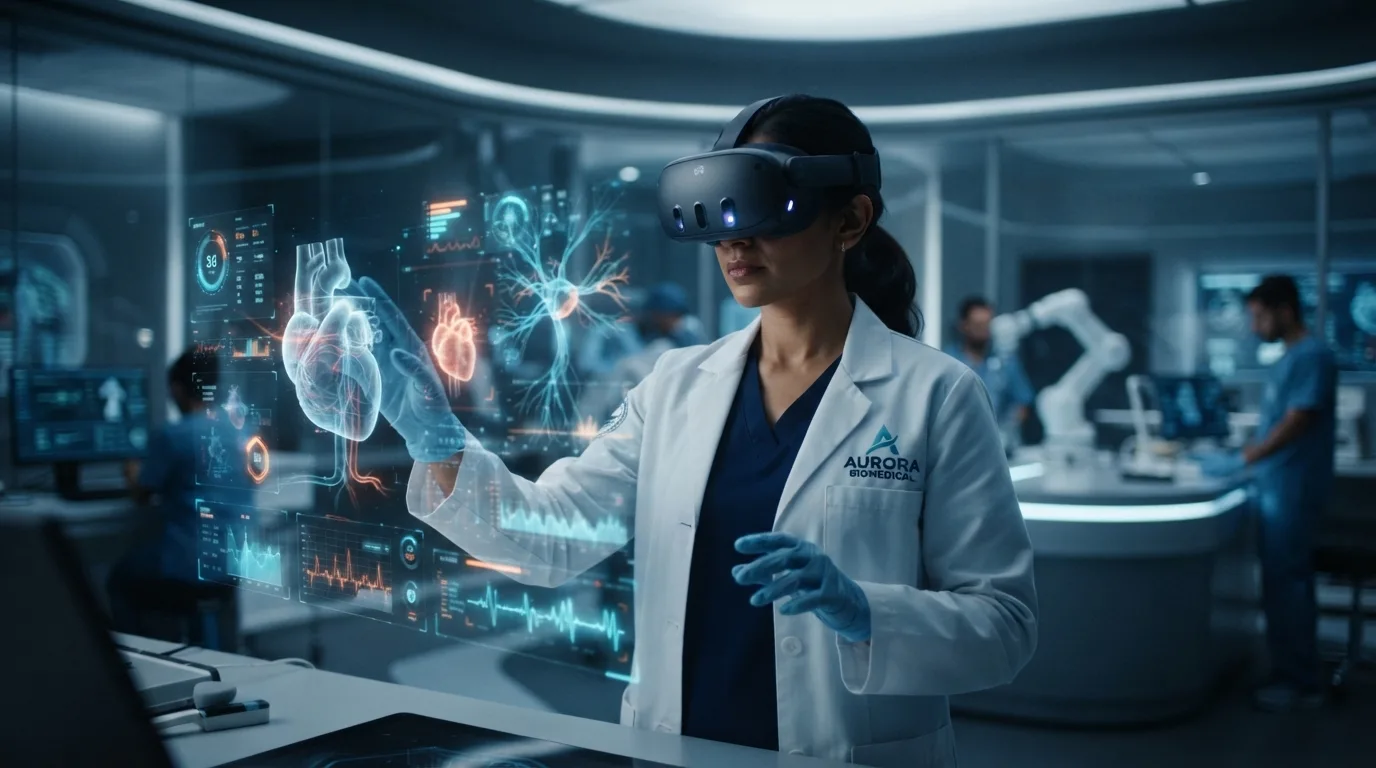
How immersive technology moved from novelty to clinical tool, reshaping pain relief, surgery, mental health care, and patient education.
Ten years ago, a virtual reality headset in a hospital would have looked like a toy someone forgot to take home. Today, doctors prescribe it, surgeons train on it, and national health systems buy it by the thousand. Virtual reality in healthcare has quietly moved from science fiction to standard equipment, and the evidence is more surprising than most people expect. Here are five facts that show how far immersive healthcare has come.
What Is Virtual Reality in Healthcare?
Virtual reality in healthcare is the use of immersive, computer-generated environments, usually delivered through a headset, to treat patients, train clinicians, and explain medical conditions. It supplements traditional methods with realistic simulations that people can see, hear, and interact with in real time.
The same technology now supports pain relief, surgical preparation, rehabilitation, mental health therapy, and virtual patient education, a practical digital health tool rather than a trade-show curiosity.
What Are the Most Surprising Facts About VR in Healthcare?
The claims below are not marketing. Each one rests on clinical trials, government programs, or peer-reviewed research.
1. A VR Headset Is Now an FDA-Authorized Prescription for Pain
In November 2021, the U.S. Food and Drug Administration authorized the first prescription virtual reality system for chronic lower back pain in adults, the moment VR crossed from wellness gadget to regulated medicine.
The device, first sold as EaseVRx and now called RelieVRx, guides users through short daily sessions grounded in cognitive behavioral therapy, with no opioids involved. In the clinical study behind the authorization, 66% of users reported more than a 30% drop in pain, against 41% in the control group.
The agency's own medical device list now tracks a growing set of authorized immersive tools. For a country facing an opioid crisis, a drug-free, at-home treatment is a genuinely different kind of care.
2. VR Training Can More Than Triple a Trainee Surgeon's Performance
A randomized study at UCLA's David Geffen School of Medicine found that participants who prepared with VR improved their overall surgical performance by 230% compared with peers who used traditional guides. Their speed and accuracy rose too.
The logic is simple. A headset lets a resident rehearse a difficult procedure as many times as needed, with zero risk to a real patient, and it can score each attempt objectively.
Gains like these depend on carefully designed medical simulation, which is why hospitals and medical-device makers increasingly work with studios that build immersive, simulation-based training programs for high-risk procedures.
For healthcare professionals, this kind of immersive learning shortens the path to competence.
3. One of the World's Largest VR Programs Runs Inside the U.S. Veterans' Health System
The U.S. Department of Veterans Affairs has deployed more than 3,500 VR headsets across over 170 medical centers and clinics in all 50 states. Few people realize the scale.
The VA's immersive health program uses the technology for pain management, mental health, rehabilitation, and staff training. This matters because it proves VR is not a pilot project or a showpiece for one flashy clinic.
It runs as everyday hospital innovation inside one of the largest healthcare systems in the country.
4. VR Has Passed the Largest Clinical Trial Ever Run for Mental Health
In the biggest clinical trial of VR for mental health, 346 patients living with psychosis used an automated therapy called gameChange, with results published in The Lancet Psychiatry. This is serious evidence, not a small pilot.
A virtual coach guided patients through everyday situations they normally avoided, such as boarding a bus or ordering a coffee. The peer-reviewed results showed reduced anxiety and avoidance, with the biggest benefits for the most severe cases, and Britain's health service later approved the program for wider use.
Because the coach is automated, one tool can extend therapy to many patients at once, a real gain for patient engagement where clinicians are scarce.
5. Healthcare Is on Track to Become VR's Biggest Use Case
Most people connect VR with gaming. Yet analysts now describe healthcare as one of the fastest-growing and largest applications for the technology, ahead of much of the entertainment world.
One widely cited estimate placed the global market for augmented and virtual reality in healthcare at about USD 3.4 billion in 2023, growing at more than 16% a year through 2030. Demand is following the money: in a 2025 industry survey, 69% of healthcare decision-makers said they plan to expand their use of VR within two years.
The exact figures differ by source, but the direction of this healthcare transformation is clear.
What Does the Future Hold for VR in Healthcare?
The next phase of virtual reality in healthcare focuses on wider access, sharper realism, and stronger clinical proof. Expect more regulator-cleared treatments, immersive tools written into medical school curricula, and better medical visualization that helps patients understand a diagnosis before they reach the operating room.
Progress is not automatic.
Cost, data privacy, and integration with electronic health records remain real hurdles, and researchers still want more long-term evidence. Even so, cheaper headsets, added touch feedback, and AI-driven virtual patients point to a future of healthcare where immersive care is routine.
The Bottom Line
Virtual reality in healthcare is no longer a promise about tomorrow. It relieves pain without drugs, sharpens surgical skill, supports mental health at scale, and reaches patients where they live. The technology still faces obstacles, from cost to privacy, but the evidence already on record is hard to ignore.
For most hospitals, the question is no longer whether to explore immersive care, but where to begin.
Frequently Asked Questions
What is virtual reality used for in healthcare?
VR supports pain management, medical training, rehabilitation, mental health therapy, and patient education. Clinicians practice procedures safely, and patients use it for treatment and to understand their own conditions.
Is virtual reality therapy approved by regulators?
Yes, in specific cases. The FDA authorized the first prescription VR system for chronic lower back pain in 2021, and other immersive medical devices have since been cleared for defined uses.
Does VR really reduce pain?
Evidence suggests it can. By absorbing attention and teaching relaxation skills, VR can lower the perception of pain and reduce reliance on medication, though results vary by person.
How is VR used to train doctors?
Doctors and students rehearse procedures in realistic, risk-free simulations. Studies show VR-trained learners can perform faster and more accurately than those who rely on traditional guides alone.
What are the main challenges for VR in healthcare?
The biggest hurdles are cost, data privacy, integrating VR with existing hospital systems, and the need for more long-term evidence on which applications work best.