Building strong customer relationships is essential for businesses that want to achieve sustainable growth. While attracting new customers can generate short-term revenue, retaining existing customers creates opportunities for repeat purchases, stronger brand relationships, and long-term profitability. This is why many organizations invest in loyalty initiatives that recognize customer value and encourage continued engagement.
However, simply offering discounts or reward points is not enough to build lasting loyalty. An effective customer loyalty program requires a thoughtful strategy, meaningful rewards, personalized experiences, and a clear understanding of customer expectations.
Businesses must create programs that deliver value to customers while supporting measurable business objectives. By following proven loyalty program best practices, organizations can develop stronger relationships, improve customer engagement, and encourage repeat business.
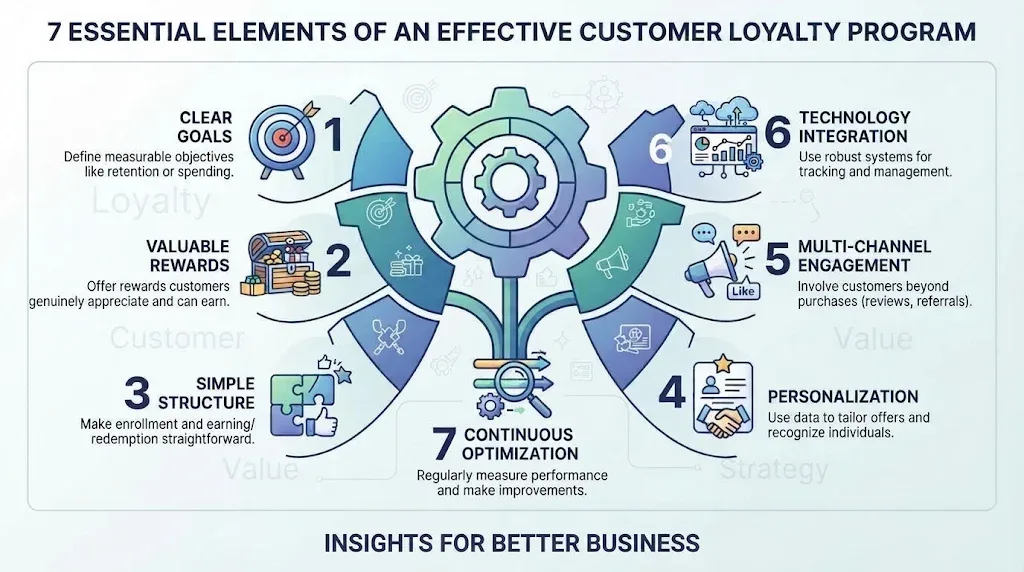
Here are seven essential elements that contribute to a successful customer loyalty program.
1. Clear Goals and a Well-Defined Strategy
Every successful loyalty program begins with a clear purpose. Before selecting rewards or designing membership tiers, businesses should identify what they want their program to accomplish.
Some organizations may want to increase repeat purchases, while others may prioritize customer retention, higher spending, referrals, or stronger brand engagement.
Establishing measurable objectives helps businesses build a program that supports their overall growth strategy.
Common loyalty program objectives include:
- Increasing customer retention and repeat purchases.
- Improving customer lifetime value.
- Encouraging higher transaction frequency.
- Strengthening customer relationships.
- Increasing customer referrals and advocacy.
- Improving participation and engagement.
Businesses should also establish key performance indicators (KPIs) to measure progress. Clear goals provide direction and make it easier to evaluate whether the program is delivering meaningful results.
2. Valuable and Relevant Rewards
Rewards are one of the main reasons customers participate in loyalty programs. However, not every reward creates the same level of interest or motivation.
An effective program offers benefits that customers genuinely appreciate and can realistically earn.
Depending on the business model and target audience, rewards may include:
- Discounts on future purchases.
- Cashback and redeemable points.
- Free products or services.
- Exclusive member promotions.
- Early access to new products.
- Birthday rewards and special offers.
- VIP experiences and premium benefits.
The reward structure should balance customer expectations with business profitability. If rewards are too difficult to earn, customers may lose interest. If they are too generous, the program may become financially unsustainable.
The best approach is to create a meaningful value exchange that encourages continued participation while protecting business margins.
3. Simple and Convenient Program Structure
A loyalty program should be easy to understand and convenient to use. Complicated earning rules, unclear redemption conditions, and lengthy enrollment processes can discourage customers from participating.
Businesses should simplify the customer journey from registration to reward redemption.
Important considerations include:
- Easy enrollment and registration.
- Clear earning and redemption rules.
- Accessible reward balances.
- Flexible redemption options.
- Transparent membership benefits.
- Consistent experiences across online and offline channels.
For example, a points-based program should clearly explain how customers earn points, what those points are worth, and how they can redeem them.
A straightforward experience removes unnecessary barriers and makes customers more comfortable participating in the program.
4. Personalization and Customer Recognition
Customers want to feel recognized and valued by the brands they support. Personalization helps businesses create loyalty experiences that reflect individual preferences and purchasing behaviors.
Instead of providing identical offers to every member, businesses can use customer data to deliver more relevant rewards and communications.
Personalization opportunities include:
- Offering recommendations based on purchase history.
- Providing birthday and anniversary rewards.
- Creating special offers for frequent customers.
- Recognizing high-value members.
- Sending personalized promotions.
- Tailoring rewards to customer preferences.
Customer segmentation can further improve program performance by helping businesses understand different member groups.
When customers receive relevant benefits and meaningful recognition, they have more reasons to remain engaged with a brand.
5. Multiple Opportunities for Customer Engagement
A successful loyalty program should encourage customers to interact with a brand beyond making purchases.
Although transactional rewards are important, businesses can also recognize other valuable customer activities.
For example, customers may earn rewards for:
- Referring friends and family.
- Writing product reviews.
- Participating in surveys.
- Engaging with brand content.
- Attending special events.
- Completing profile information.
- Participating in community activities.
These activities create additional opportunities for meaningful customer engagement and help businesses build stronger relationships with their members.
However, engagement incentives should align with genuine business objectives. Rewards should encourage valuable interactions rather than unnecessary or artificial activity.
6. Technology and Data Integration
Technology plays an important role in managing modern loyalty programs. The right systems help businesses automate program operations, track customer behavior, manage rewards, and deliver personalized experiences.
A well-integrated loyalty platform can connect with customer relationship management (CRM) systems, e-commerce platforms, point-of-sale systems, and marketing automation tools.
Important technology capabilities include:
- Customer profile and membership management.
- Automated points calculation.
- Reward tracking and redemption.
- Customer segmentation.
- Personalized communication.
- Performance reporting and analytics.
- Integration with existing business systems.
These capabilities help reduce manual processes and provide businesses with a clearer understanding of customer activity.
Technology should support the overall loyalty strategy rather than dictate it. Businesses should select solutions based on their operational needs, customer expectations, and long-term objectives.
7. Continuous Measurement and Optimization
Launching a loyalty program is only the beginning. Customer preferences and market conditions evolve, so businesses must regularly evaluate and improve their programs.
Measuring performance helps organizations identify strengths, recognize potential problems, and make informed decisions about future improvements.
Some important loyalty program metrics include:
Customer Retention Rate: Measures the percentage of customers who continue doing business with the company over a specific period.
Repeat Purchase Rate: Tracks how frequently customers return to make additional purchases.
Customer Lifetime Value (CLV): Estimates the total value a customer generates throughout their relationship with a business.
Reward Redemption Rate: Measures how frequently members redeem the rewards they earn.
Active Member Rate: Shows how many enrolled members actively participate in the program.
Customer Engagement Rate: Evaluates how frequently members interact with loyalty communications, offers, and other program activities.
Businesses should also collect customer feedback to understand what members appreciate and where improvements are needed.
Regular testing, performance reviews, and program adjustments help ensure that the loyalty initiative remains relevant and financially sustainable.
How These Seven Elements Work Together
The seven elements of a successful loyalty program should work as part of one connected strategy.
Clear objectives establish the direction, relevant rewards create motivation, and a simple structure makes participation convenient. Personalization and engagement strengthen customer relationships, while technology supports program operations. Continuous measurement ensures that the program keeps improving.
When these elements are aligned, businesses can develop loyalty experiences that provide value to customers and support long-term commercial success.
Conclusion
An effective customer loyalty program is much more than a collection of discounts and promotional offers. It is a strategic business initiative designed to strengthen customer relationships, encourage repeat purchases, and create lasting value.
By focusing on clear objectives, meaningful rewards, convenience, personalization, customer engagement, technology, and continuous optimization, businesses can build programs that deliver measurable results.
Following proven loyalty program best practices allows organizations to create more rewarding customer experiences while supporting retention and sustainable growth.
For businesses looking to develop, improve, or transform their loyalty initiatives, working with experienced loyalty consultants can help turn strategic objectives into effective program designs. With the right approach, customer loyalty can become a powerful driver of long-term business performance.