
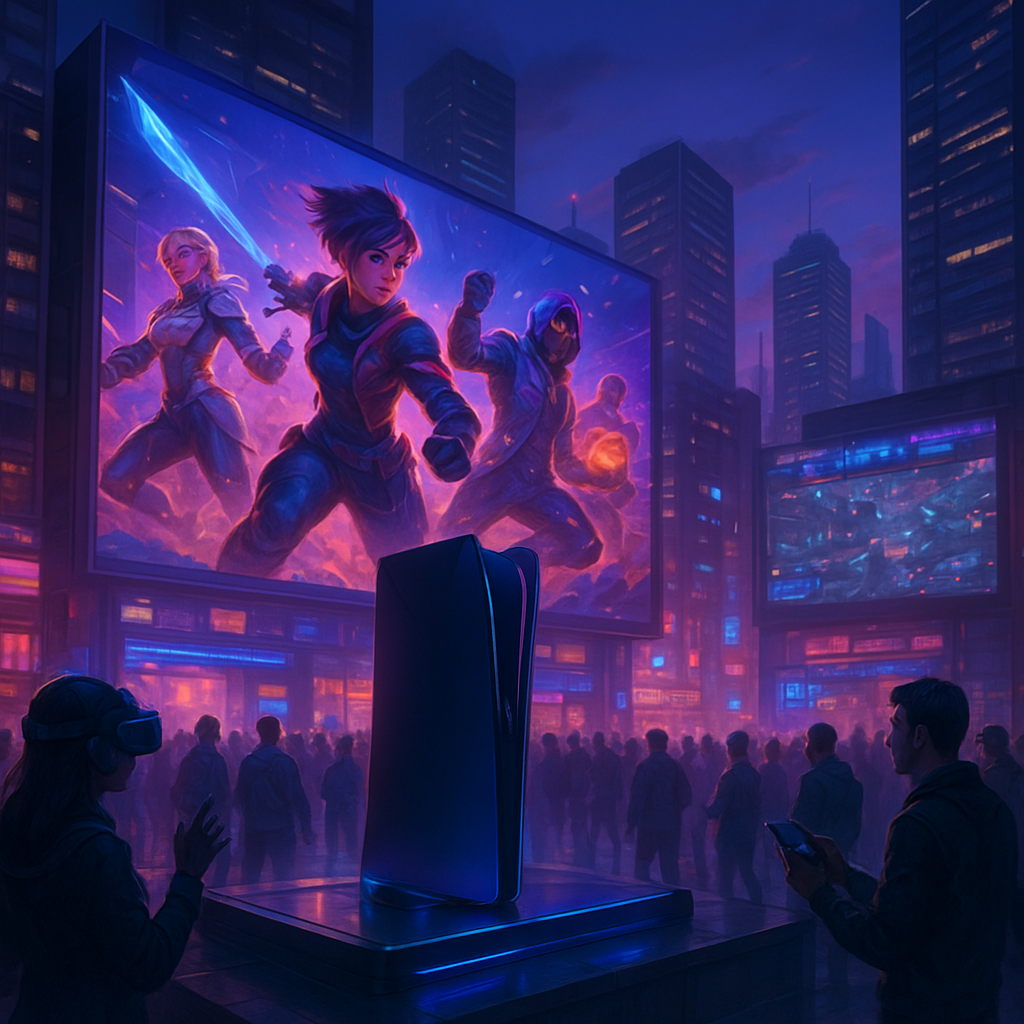
Immersed in Pixels: The Unstoppable Rise of Video Games
It is a brisk November evening in 2026, and across the globe, millions of players are logging into their favorite titles. From sprawling virtual metropolises to cooperative quests that span continents, video games have transcended mere pastime status to become a dominant cultural and technological force. Recent industry reports reveal that global revenue from video games exceeded $300 billion in 2025, surpassing box office and streaming combined, according to industry analysts. This unprecedented growth reflects not only technological innovation but a shifting societal embrace of interactive media.
Consider the phenomenon of "Elysium Nexus," a massive multiplayer online role-playing game released in early 2026. Within its first six months, it amassed over 120 million active users, integrating neural interface technology that allows players to experience gameplay through direct brain-computer communication. This level of immersion is emblematic of where gaming stands today: a convergence of storytelling, social interaction, and cutting-edge tech.
"Video games are no longer just games; they are complex social ecosystems and cultural hubs," says Dr. Elena Markovic, a digital culture expert. "Their role in entertainment and society is only deepening."
Such developments underscore the urgency of understanding video games beyond their surface appeal, recognizing their profound impact on culture, technology, and the global economy.
From Pixels to Paradigms: A Brief History of Gaming's Evolution
The journey of video games from rudimentary pixelated diversions to immersive virtual worlds is a story marked by rapid innovation and shifting societal attitudes. In the 1970s and 1980s, titles like "Pong" and "Super Mario Bros." laid the groundwork for what would become a multibillion-dollar industry. The 1990s saw the rise of 3D graphics and narrative depth, while the 2000s introduced online multiplayer experiences that connected players globally.
The past decade was particularly transformative. The mainstream adoption of virtual reality (VR) and augmented reality (AR) technologies in the early 2020s expanded the boundaries of player engagement. By 2023, subscription-based gaming services and cloud streaming had begun to eclipse traditional console sales, democratizing access to high-end gaming experiences.
More recently, artificial intelligence (AI) has revolutionized game design. Procedural content generation and adaptive AI opponents create personalized experiences tailored to each player’s skill level and preferences. This dynamic approach has redefined replayability and user engagement.
Yet, the cultural acceptance of gaming has also evolved. What was once dismissed as niche or juvenile is now recognized as a legitimate form of artistic expression and social interaction. Educational institutions have incorporated game design into their curricula, and governments are exploring esports as viable professional careers.
"The maturation of gaming parallels the maturation of society’s view on digital interaction," notes Dr. Samuel Lee, an interactive media historian. "It reflects broader technological and cultural shifts."
Analyzing the 2026 Gaming Landscape: Data and Trends
The 2026 gaming industry is characterized by several defining trends that illustrate its complexity and reach. According to recent market research data, key areas of growth include:
- Cloud Gaming Expansion: By mid-2026, cloud gaming subscriptions surpassed 400 million globally, driven by improved 5G infrastructure and edge computing. This shift allows players on modest hardware to access graphically intensive titles seamlessly.
- Neural Interface Integration: Emerging neural control devices have been adopted by approximately 15 million gamers worldwide, particularly in VR environments, enhancing immersion and accessibility.
- Cross-Media Synergy: Games increasingly serve as platforms for storytelling that extend into films, music, and live events, blurring lines between media forms.
- Diversity and Inclusion: The industry has made significant strides in representation, with over 40% of new game releases in 2026 featuring diverse protagonists and narratives, reflecting a global player base.
- Esports Monetization: Prize pools and sponsorships in esports tournaments collectively exceeded $4 billion in 2025, attracting mainstream corporate investment.
Financially, the sector is dominated by a handful of conglomerates, yet indie developers continue to innovate through niche markets and experimental gameplay. The balance between AAA blockbusters and indie creativity fuels the ecosystem's vibrancy.
Technological innovation is equally critical. The integration of AI-driven NPCs and dynamic storylines is enhancing player agency and emotional engagement, a trend that is expected to deepen in the coming years.
For a detailed exploration of emerging technologies reshaping gaming this year, see our analysis in How AI and Immersive Tech Are Transforming Video Games This May.
2026 Breakthroughs: What’s New and Noteworthy?
This year has been pivotal for video games, with several breakthroughs that push the medium forward. Among the most significant are:
- Neural Link Controllers: Several companies have released commercially viable neural interface devices enabling players to control games through thought alone. This technology has opened new possibilities for accessibility, especially for players with mobility impairments.
- Procedural Storytelling Engines: Games now employ advanced narrative AI that dynamically crafts story arcs responsive to player choices and emotional responses, creating unique experiences for every user.
- Mixed Reality Worlds: Hybrid AR/VR environments have become mainstream, allowing players to interact with both physical and digital objects seamlessly. This convergence is reshaping social gaming and location-based entertainment.
- Blockchain and Game Ownership: The adoption of blockchain technology for secure in-game asset ownership has stabilized after initial volatility, providing players with real-world value and transferability of digital goods.
- Global Accessibility Initiatives: Major studios and platforms have implemented extensive localization and adaptive difficulty features, expanding gaming’s appeal and usability worldwide.
These innovations are not just technical achievements but catalysts for new forms of player interaction and creative expression. They also raise important questions about privacy, data security, and the ethics of AI in entertainment.
For readers interested in the broader cultural and technological implications of these trends, our feature The Digital Frontier: How Video Games Are Shaping Culture and Technology offers a comprehensive perspective.
Voices from the Industry: Expert Insights on Gaming’s Trajectory
Leading voices across development, academia, and esports provide valuable context on the state of gaming in 2026.
"The fusion of AI and immersive tech is unlocking unprecedented creative freedom for developers," states Maya Chen, Creative Director at Lumina Interactive. "We can now craft worlds that react and evolve with players in deeply personal ways."
From a sociological standpoint, Dr. Anil Kapoor highlights gaming’s role in social cohesion: "Online multiplayer environments have become vital spaces for community building, especially among younger demographics. They foster collaboration, cultural exchange, and even activism."
In terms of economic impact, Jamie Ortiz, an esports entrepreneur, observes, "The professionalization of esports is attracting diverse talent and investment. We’re witnessing a maturation where players are not just competitors but content creators, influencers, and brand ambassadors."
Challenges remain, notably around mental health and regulatory frameworks. However, the consensus is optimistic about gaming’s potential to innovate responsibly and inclusively.
Looking Ahead: What Video Games Will Mean Tomorrow
As we project into the next five to ten years, several key developments will likely shape the trajectory of video games:
- Enhanced AI Companions: Players will engage with NPCs that learn and adapt with sophisticated emotional intelligence, blurring lines between human and programmed interaction.
- Full Sensory Immersion: Advances in haptic feedback and neural stimulation aim to engage all senses, offering fully immersive experiences indistinguishable from reality.
- Decentralized Gaming Economies: Blockchain and decentralized finance (DeFi) models may enable players to own, trade, and monetize digital assets with greater autonomy and security.
- Educational and Therapeutic Uses: Video games will increasingly serve as tools for learning and mental health, utilizing gamification to enhance engagement and outcomes.
- Environmental Sustainability: Industry-wide initiatives will focus on reducing carbon footprints through optimized data centers and greener production cycles.
Understanding these trends equips players, developers, and policymakers to harness gaming’s benefits while addressing its complexities.
For newcomers interested in entering the vibrant world of gaming, our guide How to Get Started with Video Games: A Beginner’s Roadmap to Play and Enjoyment offers practical advice and resources.
Conclusion: Beyond Entertainment—Video Games as a Cultural and Technological Nexus
Video games in 2026 are far from static entertainment; they are vibrant ecosystems where technology, culture, and human connection intersect. From the rise of neural interface gameplay to the booming esports arena, the medium continuously reshapes our experiences and expectations of digital interaction.
Industry data and expert insights alike confirm that video games have become essential to global entertainment, education, and socialization. As they evolve, so too will their capacity to influence broader societal trends and technological advancements. The challenge for all stakeholders is to balance innovation with ethical responsibility, ensuring games remain inclusive, engaging, and sustainable.
"The future of video games is not just about what we play, but how we live, learn, and connect," concludes Dr. Markovic. "They are the new frontier where humanity's creativity and technology converge."