
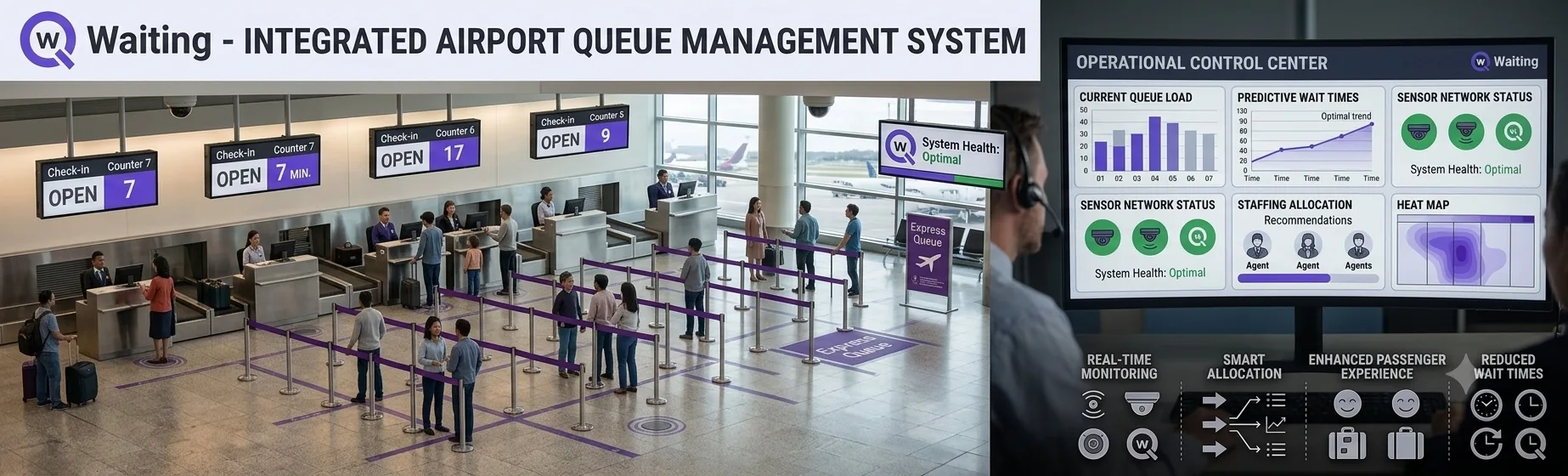
Air travel continues to grow every year, making efficient passenger movement more important than ever. Long lines at check-in, security checkpoints, immigration, and boarding gates can frustrate travelers and create operational challenges for airport staff. An airport queue management system helps solve these problems by organizing passenger flow, reducing congestion, and improving the overall airport experience.
A modern airport queue management solution combines digital ticketing, virtual queues, real-time monitoring, and analytics to help airports manage large crowds efficiently. Whether serving regional airports or international hubs, the right technology ensures smoother operations while enhancing passenger satisfaction.
What Is an Airport Queue Management System?
An airport queue management system is a digital solution designed to organize and optimize passenger queues throughout the airport. Instead of relying on manual line management, airports use intelligent software to distribute passengers efficiently across service points.
An effective airport queuing system can manage queues for:
- Airline check-in counters
- Security screening
- Immigration and customs
- Boarding gates
- Customer service desks
- Lounge entrances
Many airports also integrate queue management with flight information systems, self-service kiosks, and mobile notifications, allowing passengers to receive updates while waiting.
Challenges of Traditional Airport Queues
Without an efficient airport queuing system, airports often experience several operational issues, including:
- Long waiting times
- Passenger frustration
- Uneven staff workload
- Congested waiting areas
- Delayed boarding processes
- Difficulty monitoring queue performance
These challenges not only affect customer satisfaction but can also reduce operational efficiency and increase staffing costs.
Benefits of Queue Management in Airports
Implementing effective queue management in airports offers significant advantages for both travelers and airport operators.
Reduced Waiting Times
Smart queue allocation distributes passengers evenly across available counters, minimizing bottlenecks and shortening wait times.
Improved Passenger Experience
Passengers appreciate clear guidance, estimated waiting times, and digital notifications. A well-managed queue creates a calmer, more organized travel environment.
Better Staff Productivity
Airport employees can focus on serving passengers instead of manually directing queues. Supervisors also gain visibility into queue performance in real time.
Real-Time Monitoring
Modern dashboards provide insights into passenger flow, service speed, and counter utilization, enabling managers to respond quickly to changing conditions.
Data-Driven Decisions
Analytics help identify peak travel periods, optimize staffing schedules, and improve overall airport operations.
Contactless Service
Virtual queuing reduces crowding by allowing passengers to wait comfortably until it's their turn, supporting safer and more convenient travel.
Key Features of an Airport Queue Management Solution
When selecting an airport queue management solution, airports should look for features that support both operational efficiency and passenger convenience.
Feature: Virtual Queue Benefit: Reduces physical crowding Digital Ticketing Organizes Passenger Flow Real-Time Dashboard Monitors queue performance SMS & Mobile Alerts Keeps passengers informed of self-service kiosks Speeds up registration Performance Analytics Supports continuous improvement Multi-Location Management Ideal for large airports Cloud-Based Platform Easy deployment and scalability
These features allow airport managers to adapt quickly to changing passenger volumes while maintaining high service standards.
Choosing the Right Airport Queue Management System
Not every solution offers the same level of flexibility. When evaluating an airport queue management system, consider the following factors:
- Cloud-based deployment for easy scalability
- Integration with existing airport systems
- Real-time reporting and analytics
- Mobile-friendly passenger experience
- Multi-language support
- Easy customization
- Reliable customer support
- Strong security and data protection
A scalable platform ensures airports can accommodate future passenger growth without major infrastructure changes.
Organizations looking for a modern solution can explore Qwaiting's Airport Queue Management System, which provides digital queue management, virtual ticketing, real-time analytics, and cloud-based deployment tailored to airport operations:
Frequently Asked Questions
1. What is an airport queue management system?
It is a digital platform that manages passenger queues efficiently across airport service areas such as check-in, security, immigration, and boarding.
2. How does an airport queuing system reduce waiting times?
It distributes passengers intelligently, monitors queue lengths in real time, and optimizes counter allocation to reduce congestion.
3. Why is queue management in airports important?
Effective queue management improves passenger satisfaction, enhances operational efficiency, and helps airports handle increasing traveler volumes.
4. Can airport queue management solutions integrate with existing systems?
Yes. Most modern solutions integrate with flight information displays, kiosks, mobile applications, and customer service platforms.
5. Are cloud-based airport queue management systems secure?
Reputable cloud providers use encryption, access controls, and regular security updates to protect operational and passenger data.
6. What features should airports prioritize?
Airports should prioritize virtual queuing, real-time analytics, digital ticketing, mobile notifications, cloud deployment, and seamless integration with existing infrastructure.
Conclusion
As passenger numbers continue to rise, investing in an advanced airport queue management system is no longer optional—it's essential. A reliable airport queue management solution improves efficiency, reduces waiting times, enhances the passenger journey, and gives airport operators the insights they need to optimize daily operations. By embracing smart queue management in airports, organizations can create faster, safer, and more enjoyable travel experiences while preparing for future growth.