
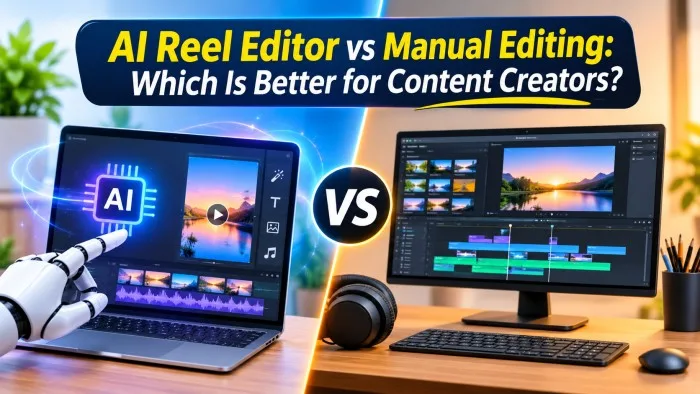
Short-form videos have become an important part of social media marketing, personal branding, and online entertainment. Platforms like Instagram, YouTube Shorts, and TikTok encourage creators to publish engaging videos regularly. However, producing quality content consistently requires time, creativity, and editing skills. This is where the choice between AI-powered tools and traditional manual editing becomes important.
Both approaches have their advantages, but the right option depends on your content goals, experience, and available time.
Understanding AI Reel Editing
AI-powered video editing uses artificial intelligence to simplify different parts of the editing process. Instead of manually adjusting every clip, creators can use automated features to trim footage, generate captions, identify highlights, add transitions, and improve video presentation.
An ai reel editor can help beginners and experienced creators produce social media videos more efficiently. These tools are particularly useful for people who publish content frequently and want to reduce repetitive editing work.
Some platforms also offer automated templates, background enhancements, audio synchronisation, and text-to-video features, making video production more accessible.
What Is Manual Video Editing?
Manual editing involves creating and modifying videos using traditional editing software. Creators control every aspect of the project, including clip selection, transitions, colour correction, sound effects, captions, and visual effects.
This approach provides greater creative freedom because editors can make detailed adjustments according to their preferred style. Professional videographers, filmmakers, and experienced content creators often prefer manual editing when working on projects that require a unique visual identity.
However, learning editing software and completing projects can take considerable time, especially when working with multiple video clips.
AI Reel Editor vs Manual Editing: Key Differences
Understanding the differences between these approaches can help creators choose the right workflow.
| Comparison Factor | AI Reel Editing | Manual Editing |
|---|---|---|
| Editing speed | Faster through automation | Usually takes more time |
| Learning curve | Generally beginner-friendly | Requires editing knowledge |
| Creative control | Depends on available features | Extensive creative control |
| Captions | Can generate captions automatically | Often requires manual adjustments |
| Transitions | Automated or template-based | Fully customisable |
| Consistency | Helps maintain repeatable workflows | Depends on the editor |
| Best for | Frequent social media content | Detailed creative projects |
Benefits of Using AI Reel Editors
AI editing tools offer several advantages for modern content creators.
1. Saves Time
One of the biggest advantages is faster video production. Automated editing features can reduce the time spent trimming clips, adding subtitles, and arranging footage. This allows creators to focus more on planning and publishing content.
2. Beginner-Friendly Editing
People without professional editing experience can create attractive videos using ready-made templates and automated suggestions. They do not necessarily need advanced technical knowledge to get started.
3. Faster Content Production
Social media creators often need to publish multiple videos every week. AI tools can simplify repetitive tasks and make it easier to maintain a consistent posting schedule.
4. Automated Captions and Effects
Many AI-powered platforms offer automatic subtitles, audio adjustments, and visual enhancements. These features can improve accessibility and make videos more engaging.
Benefits of Manual Video Editing
Although AI tools are becoming more advanced, traditional editing still offers important advantages.
1. Complete Creative Freedom
Manual editing allows creators to control every detail of their videos. They can experiment with different transitions, effects, colours, and sound arrangements without depending on automated suggestions.
2. Unique Visual Style
Creators who want to develop a recognisable brand identity may benefit from manual editing. Custom animations, carefully selected effects, and personalised transitions can make their content stand out.
3. Greater Precision
Some projects require frame-by-frame adjustments and detailed audio synchronisation. Manual editing provides greater flexibility for handling these requirements.
4. Better for Complex Projects
Product advertisements, storytelling videos, cinematic reels, and professional promotional content may require advanced editing techniques that automated tools cannot always handle effectively.
Can AI and Manual Editing Work Together?
Absolutely. Content creators do not necessarily need to choose only one editing method.
A combined workflow can offer the advantages of both approaches. For example, creators can use AI to generate captions, identify interesting moments, and complete initial edits. They can then manually adjust transitions, refine colours, improve sound quality, and add personalised effects.
Platforms such as Zupum AI Video Editor can be explored as part of an AI-assisted video creation workflow, depending on the editing features available.
This approach helps creators save time without completely sacrificing creative control.
Which Editing Method Should Content Creators Choose?
The right choice depends on the type of content you produce.
- Beginners: AI editing is a convenient starting point because it reduces the technical learning required.
- Influencers: AI tools can help produce regular Instagram Reels and YouTube Shorts.
- Businesses: Automated editing can simplify the creation of promotional videos and social media advertisements.
- Professional editors: Manual editing remains valuable for projects requiring detailed creative control.
- Frequent content publishers: A combination of AI and manual editing can improve productivity.
Final Thoughts
AI-powered editing and manual video editing both have an important place in modern content creation. AI tools make video production faster and more accessible, while traditional editing provides greater creative freedom and precision.
For creators who regularly publish short-form videos, AI editing can simplify everyday tasks and improve productivity. However, manual editing remains useful when originality, detailed adjustments, and creative storytelling are priorities.
Ultimately, the best approach is the one that helps you create engaging videos consistently while maintaining your desired content quality.