For most people in the UK, air conditioning has always sat in the "nice to have" column, something you might consider after a particularly brutal summer, then quietly forget about when the bills come in. That calculation shifted in April 2026, when the government overhauled the Boiler Upgrade Scheme to include air-to-air heat pumps for the first time.
Whether you are a homeowner thinking about home air conditioning installation or a business owner considering commercial air conditioning for a workplace that is becoming increasingly difficult to keep cool, the timing is worth paying attention to.
What Changed in April 2026
The Boiler Upgrade Scheme has existed since 2022 to incentivise homeowners in England and Wales to replace fossil-fuel heating with low-carbon alternatives. Until this spring, it covered air-to-water and ground-source heat pumps. From 28 April 2026, air-to-air heat pumps became eligible as a newly included technology.
The grant value for an air-to-air heat pump is £2,500, applied by an MCS-certified installer and deducted directly from the installation cost. It is not a rebate claimed after the fact the discount comes off your invoice at the point of installation.
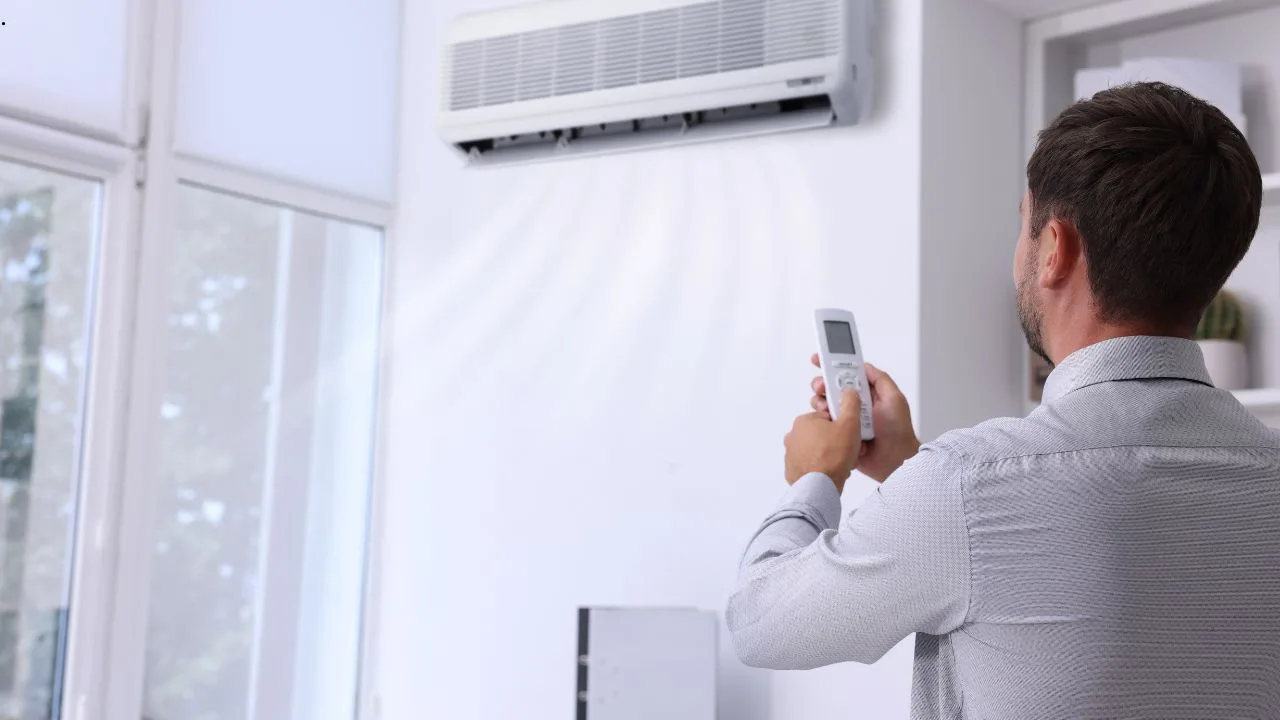
The reason this matters for air conditioning is straightforward. Almost every air-to-air heat pump on the UK market is reverse-cycle, meaning the same outdoor unit can deliver cool air in summer at the flick of a switch. In other words, the system being subsidised for low-carbon heating is functionally equivalent to a high-specification air-conditioning unit. The grant is designed for heating, but it also includes cooling capability.
Who the Grant Actually Applies To
It is important to be clear about the eligibility rules, because a £2,500 grant sounds appealing, and the details matter. The scheme has specific restrictions around existing heating systems, and not every home will qualify. The eligibility criteria are detailed enough that the most reliable course of action is to speak with an MCS-certified installer who can assess your property against the current scheme rules before you make any decisions. Ofgem publishes the full eligibility criteria on its website for anyone who wants to read the details first.
The scheme applies to England and Wales only. If your property is in Scotland, separate funding arrangements exist and are worth exploring independently.
The Case for Home Air Conditioning Regardless of the Grant
Even for homeowners who do not qualify for the Boiler Upgrade Scheme, the case for home air conditioning installation has strengthened considerably in recent years. UK summers are increasingly unpredictable, and the assumption that our climate does not warrant cooling systems is one fewer people hold after the last few years.
Modern split systems are quieter, more energy-efficient, and more discreet than the units most people picture when they think of air conditioning. A well-installed system cools the rooms you actually use rather than the whole property, and many units double as efficient supplementary heating in winter. Running costs for cooling are typically modest compared to heating. A typical three-bedroom home running an air-to-air system in cooling mode for the hottest two months of summer adds around £80 to £120 to the annual electricity bill, though this will vary depending on the system and usage.
What About Commercial Air Conditioning?
The Boiler Upgrade Scheme is a domestic grant and does not apply to commercial premises. But the conversation around commercial air conditioning has shifted for different reasons.
Post-pandemic expectations around workplace comfort have changed. Staff retention, productivity, and the increasing prevalence of hybrid working have all raised the stakes for what constitutes a comfortable working environment. A commercial space that becomes unbearable in July is not a minor inconvenience; it affects attendance, concentration, and the impression your premises make on clients.
Modern commercial air conditioning systems are also considerably more efficient than systems installed even a decade ago, and the energy savings over time can meaningfully offset installation costs for businesses running older equipment.
Getting the Right Advice
Whether you are a homeowner exploring what the new grant rules mean for your property, or a business assessing what a commercial installation would entail, the starting point is to understand what your building actually needs, rather than retrofitting a system around a headline figure.
There are a number of established installers operating across the East Midlands. Local specialists such as Leicester Air Conditioning Services, Chillaire, and Coolguys all work on domestic and commercial projects in the region. Whoever you go with, the questions worth asking are the same: what system is appropriate for your specific space, whether you are likely to qualify for available grant funding under the current scheme rules, and what the installation process looks like from survey through to commissioning. Getting clear answers to those questions before you commit is what separates a straightforward installation from an expensive one.