
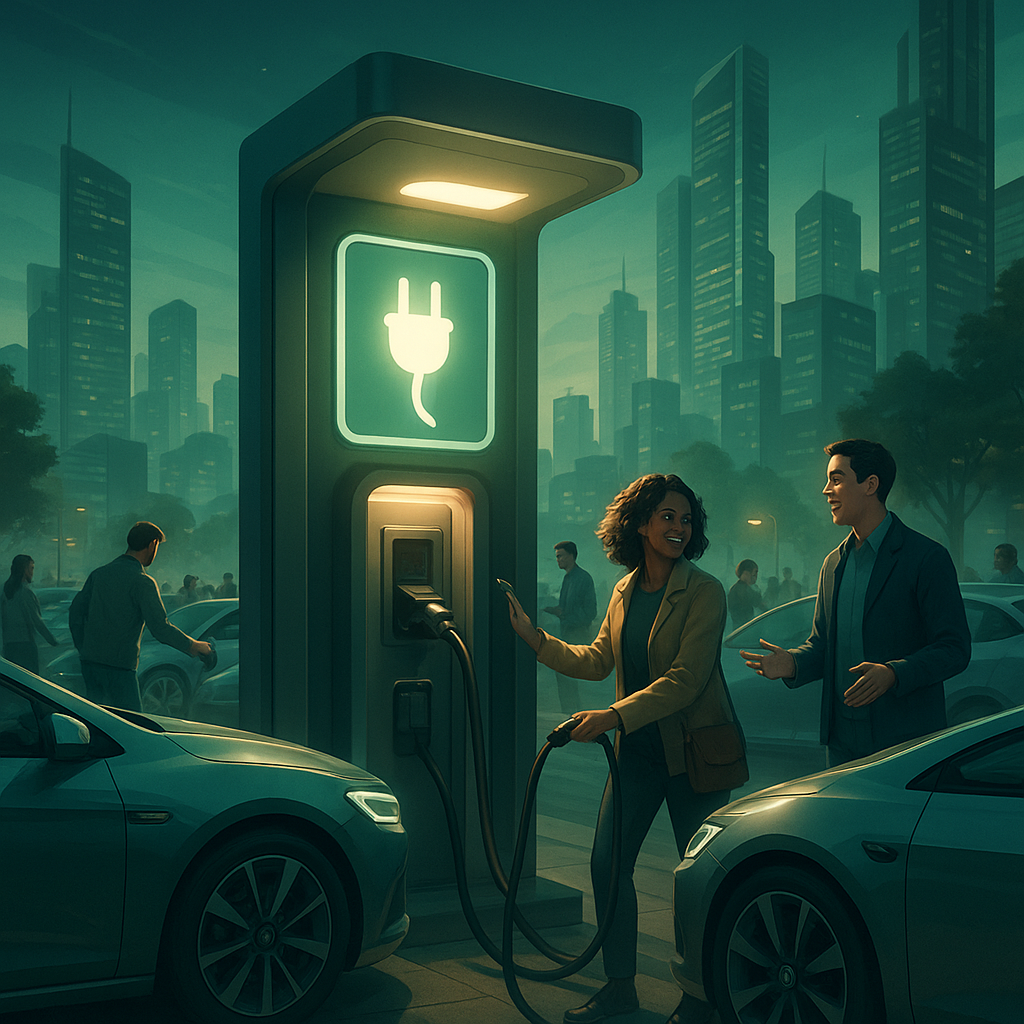
Charging Ahead: The Price Barrier to Electric Vehicle Adoption
Imagine walking into a dealership in 2026 and seeing an electric vehicle (EV) priced competitively with its gasoline counterpart. For many consumers, this remains a distant scenario. Despite notable advances in battery technology and production efficiencies, the upfront cost of EVs continues to be a significant hurdle. According to recent market data, the average price of a new EV hovers around $45,000, compared to roughly $38,000 for traditional internal combustion engine (ICE) vehicles. This price gap has consistently deterred a broad spectrum of buyers, especially in middle- and lower-income brackets.
What if that gap narrowed substantially? Industry analysts estimate that a 15-20% reduction in EV prices could trigger a surge in demand unmatched since the introduction of mass-market electric options. Consumers’ sensitivity to vehicle pricing is well-documented; even modest discounts have historically driven spikes in automotive sales across various segments. Lowering EV costs would not only accelerate adoption but also position electric cars as a mainstream choice rather than a niche alternative.
“Price remains the single most critical factor in mainstream EV adoption. Until EVs are price-competitive with ICE vehicles, widespread market penetration will be limited.” – Dr. Elena Markovic, Automotive Economist
Understanding this dynamic is crucial to grasping the potential trajectory of the electric vehicle market and the transformative effects it could have on the automotive industry and broader energy sectors.
The Road to Today: How Electric Vehicle Prices Evolved
The journey of electric vehicles from luxury curiosity to viable transportation option has been marked by incremental but impactful cost reductions. In the early 2010s, EVs were priced at a premium due to expensive lithium-ion batteries, limited manufacturing scale, and nascent supply chains. The Tesla Model S, released in 2012, started around $70,000, signaling both innovation and exclusivity.
Over the past decade, battery prices have plummeted, largely driven by advances in chemistry and manufacturing scale. BloombergNEF reported that lithium-ion battery pack costs fell from approximately $1,200 per kilowatt-hour in 2010 to near $150 per kilowatt-hour by 2025, a remarkable 87.5% decline. This reduction translated into lower vehicle costs but was offset by rising raw material prices and supply chain constraints in subsequent years.
Governments worldwide have played a pivotal role by introducing subsidies, tax credits, and regulatory incentives to bridge the price gap and encourage EV purchases. These policies helped expand production capacity, spurred competition, and pushed automakers to innovate. However, the withdrawal or scaling back of such incentives in some regions in recent years has exposed the underlying affordability issues, slowing adoption rates.
Moreover, the evolution of charging infrastructure and consumer confidence has paralleled price dynamics. Initially, limited charging options and range anxiety compounded price concerns, but now, with over 5 million public charging points globally and rapid charging technology improving, the focus has shifted predominantly to cost.
Numbers That Speak: Data-Driven Insights Into Price Impact
Empirical data underscores the correlation between EV pricing and consumer adoption. A 2025 study by the International Council on Clean Transportation (ICCT) analyzed sales trends in the U.S., Europe, and China, revealing that price reductions of just 10% led to an average 18% increase in EV sales volume within six months.
This elasticity of demand is magnified in markets where gasoline prices remain volatile or high. For instance, in California, where strong incentives and high fuel costs coexist, EV market share reached over 25% in 2025, compared to the global average of roughly 12%. Conversely, in regions with lower fuel prices and fewer subsidies, EV penetration lags.
- Average EV price in 2026: $45,000
- Average ICE vehicle price in 2026: $38,000
- Battery pack cost per kWh in 2026: $140
- Global EV market share in 2025: 12.2%
- Price elasticity of EV demand (ICCT study): -1.8
Furthermore, price drops have a cascading effect on total cost of ownership (TCO). As EV prices decline, upfront costs approach parity with ICE vehicles, and when combined with lower fueling and maintenance expenses, the TCO advantage becomes more compelling. This shifts the narrative from niche enthusiast purchases to mainstream consumer decisions.
“When EV prices fall below $35,000, we expect a tipping point where electric vehicles become the default choice for most buyers.” – Ravi Kapoor, Senior Analyst at GreenTech Insights
2026 Developments: Market Dynamics and Emerging Trends
This year, several factors are converging to influence the EV pricing landscape. First, the maturation of solid-state battery technology promises higher energy density and reduced production costs. Companies like QuantumVolt and ElectroDrive have announced pilot production lines targeting mid-2027 commercialization, with projected battery costs dropping below $100 per kWh.
Secondly, supply chain stabilization, particularly in lithium and cobalt markets, has eased previous price surges. New mining projects in Australia and Canada, alongside recycling initiatives from end-of-life batteries, have improved raw material availability. This stability supports manufacturers in managing production costs more effectively.
Major automakers continue to expand EV model offerings with a focus on affordability. For example, the 2026 Hyundai Ioniq 7 and Volkswagen ID.4 models have introduced variants priced under $35,000, targeting budget-conscious segments. These moves reflect strategic shifts towards volume sales rather than premium-only models.
Government policies are also evolving. The U.S. Inflation Reduction Act extensions and the European Green Deal’s updated targets have reintroduced incentives for lower-priced EVs, further narrowing the effective price gap for consumers. This regulatory environment encourages manufacturers to focus on cost reduction without sacrificing quality or safety.
- Emergence of solid-state batteries with costs below $100/kWh
- Increased raw material supply from new mining and recycling
- Automakers launching sub-$35,000 EV models
- Renewed government incentives targeting affordable EVs
These developments collectively set the stage for a potential surge in EV demand if prices drop meaningfully, as explored in related analysis at TheOmniBuzz: Why Electric Vehicles Could Explode in Popularity If Prices Drop.
Voices from the Industry: Perspectives on Price and Adoption
Industry insiders and experts offer varied insights on how price reduction could reshape the EV market. Jennifer Lee, Chief Product Officer at VoltDrive, emphasizes the consumer mindset: “Price is the decisive factor for the majority of buyers. Our research shows that beyond technology and environmental benefits, affordability drives purchase decisions more than any other factor.”
Automotive analysts also highlight the impact on secondary markets. Lower new EV prices would stimulate trade-in cycles and increase the availability of used EVs, making electric mobility accessible to an even broader audience.
From the supply side, manufacturers face intricate challenges balancing cost reduction with innovation. According to Markus Engel, Head of Battery Development at Electra Motors: “Achieving aggressive price targets requires breakthroughs not only in battery chemistry but also in manufacturing automation and supply chain integration.”
“Price parity is not an endpoint but a launchpad for electrification to become the norm, not the exception.” – Jennifer Lee, VoltDrive
These expert opinions underscore the complex interplay between technology, economics, and consumer behavior that will define the EV market trajectory in the coming years.
Looking Forward: What to Expect as Prices Fall
As prices approach parity, the automotive industry is poised for significant shifts. Analysts forecast the following likely outcomes if EV prices drop substantially:
- Rapid Market Penetration: EV market share could exceed 40% globally by 2030, accelerating the decarbonization of transportation.
- Infrastructure Expansion: Increased EV adoption would necessitate expanded charging networks, particularly in suburban and rural areas.
- Supply Chain Evolution: Greater demand for battery materials will drive investments in sustainable sourcing and recycling technologies.
- Competitive Landscape Change: Traditional automakers will intensify EV development, while new entrants leverage lower costs to capture market share.
- Policy Adjustments: Governments may shift focus from purchase incentives to infrastructure and grid management as adoption grows.
Consumers stand to benefit from a wider array of affordable EV models, improved vehicle range, and reduced operational costs. However, challenges remain, including grid capacity, raw material geopolitics, and long-term battery sustainability.
For detailed insights into the energy implications of this transition, see TheOmniBuzz’s coverage on related oil market impacts: Oil Shock Accelerates Electric Vehicles’ Surge Beyond Expectations.
Case Studies: Markets Where Price Drops Sparked Rapid Growth
Several regional markets illustrate the profound effect of price reductions on EV adoption. Norway, a global leader in electric mobility, achieved over 80% EV market share in 2025, largely due to aggressive subsidies and tax exemptions that effectively lowered purchase prices.
Similarly, China’s government-backed price cuts on popular models like the BYD Dolphin and Wuling Hongguang Mini EV fueled sales growth exceeding 40% annually between 2023 and 2025. These vehicles, priced under $20,000, opened electric mobility to millions of urban and rural consumers.
In the United States, states like California and New York have demonstrated that targeted rebates combined with competitive pricing can significantly boost EV registrations. The introduction of sub-$30,000 models in 2026 has already prompted a 30% increase in EV sales in these states within the first quarter.
- Norway: Over 80% EV market share driven by price incentives
- China: 40% annual growth in EV sales via affordable models
- California and New York: 30% sales increase following introduction of affordable EVs
These case studies confirm that price reductions, whether market-driven or policy-supported, are a vital lever in accelerating electric vehicle adoption worldwide.
Conclusion: The Price Path to Electrification
The evidence is clear: electric vehicles would surge in popularity if prices dropped to a competitive level with conventional cars. While battery innovations, supply chain improvements, and supportive policies are essential, affordability remains the primary gatekeeper for mass adoption.
The automotive industry stands on the cusp of transformation, with 2026 marking a year of significant progress toward more accessible EV pricing. The resulting widespread adoption promises to reshape transportation, reduce carbon emissions, and redefine consumer expectations.
Stakeholders from manufacturers to policymakers must prioritize strategies that address cost barriers to unlock the full potential of electric mobility. As this transition unfolds, continuous monitoring of market dynamics and consumer responses will be crucial to sustaining momentum.