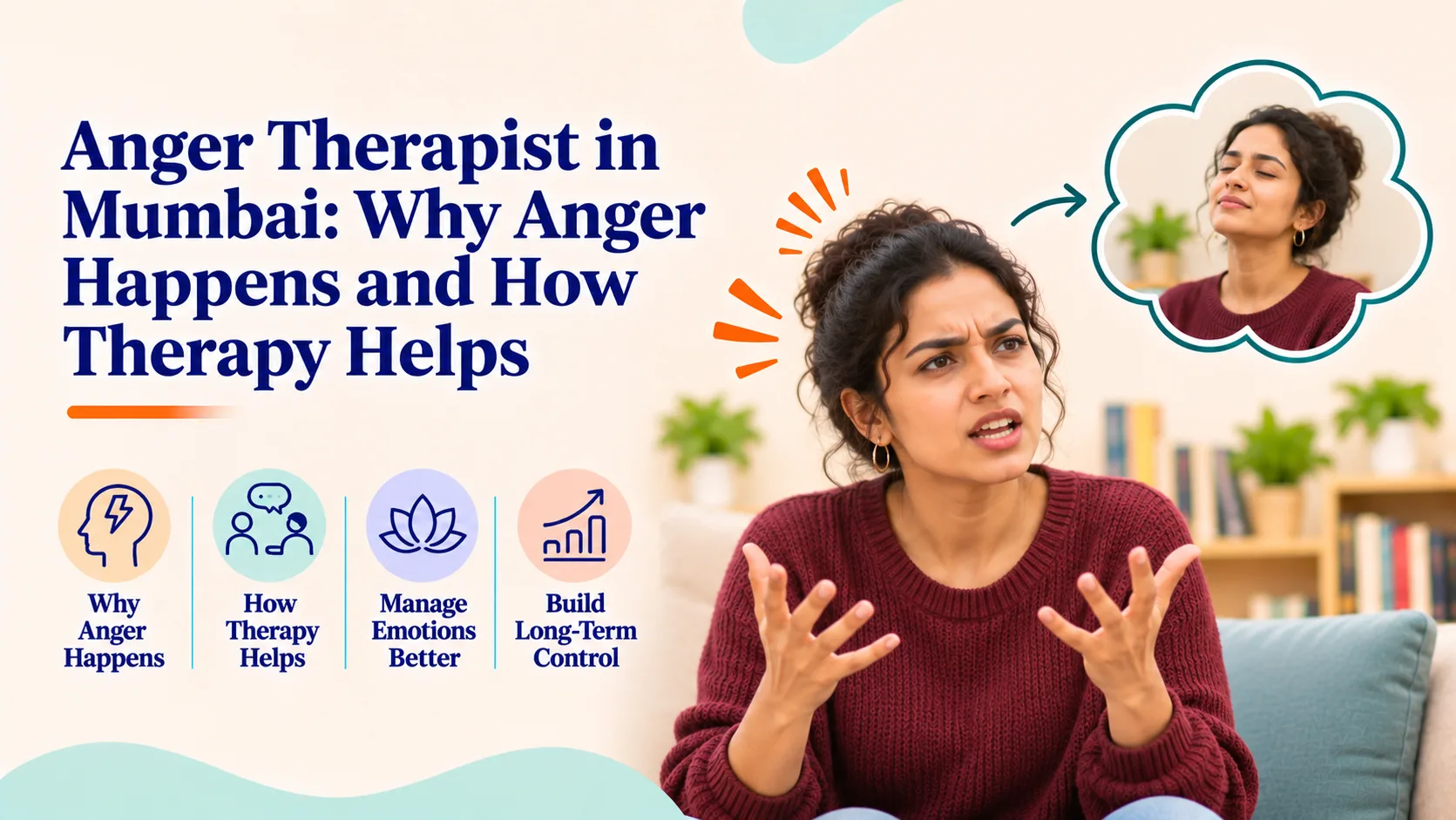
Most people who seek an anger therapist in Mumbai do not describe themselves as angry people. They describe losing their temper at home, snapping at colleagues, or saying things they regret. Often they feel ashamed, and sometimes their family has started walking on eggshells around them.
This article explains what anger usually is, why it keeps happening, and what therapy can do about it.
Anger Is Often a Secondary Emotion
Anger is frequently the surface layer of something else. Underneath it there may be hurt that did not feel safe to express, fear of being dismissed, shame, or a sense of not being respected. The anger arrives first because it feels more powerful than the feeling underneath.
This is why telling someone to "calm down" rarely works. It addresses the heat without touching what is producing it.
What Therapy for Anger Looks Like
Anger therapy focuses on understanding the pattern. The work usually includes:
- Identifying triggers and the early physical signs that come before the anger rises
- Examining the thoughts that make a situation feel more threatening than it is
- Building a pause between trigger and reaction, so you can choose a response
- Finding underlying needs and learning to express them directly
The goal is not to suppress anger. It is to understand it and respond in a way that protects your relationships and your sense of self.
Signs You May Need an Anger Therapist
- You regret what you say or do when angry
- People close to you have begun to brace before talking to you
- Anger is affecting your work, marriage, or parenting
- You feel out of control once the anger starts
- You have tried self-help and it has not made lasting change
What Happens in a First Session
The first session is an assessment. You will talk about what the anger looks like, when it happens, what the consequences have been, and what you have tried so far. The therapist will help you see patterns you may not have noticed, such as which situations trigger you most and what you were hoping would happen in those moments.
The Problem of Blaming the Other Person
Many people come to therapy certain that the other person is the problem. That may be partly true. Therapy does not ask you to agree that you are the only one at fault. It asks what you can change, which is the part of the situation you can actually influence.
Anger in Marriage and Family
Anger often shows up most strongly with people we are closest to. Partners and children may become cautious, and the relationship can start to feel tense even when no one is shouting. Couples and family work can help when the anger is shaping the whole household.
About Shyamolie Desai
I am a Clinical Psychologist in Mumbai working with anger, emotional regulation, and relationship concerns. I offer in-person and online sessions and work with each client directly.
Frequently Asked Questions
Is anger management therapy only for people who have been violent? No. Most people who seek it have never been violent. They have patterns of anger that affect their relationships.
How many sessions does anger therapy take? Many people notice clear changes within eight to twelve sessions, depending on how deeply the pattern runs.
Can I come for anger therapy on my own? Yes. Individual therapy is often the starting point, even when the anger affects a partner or family.