
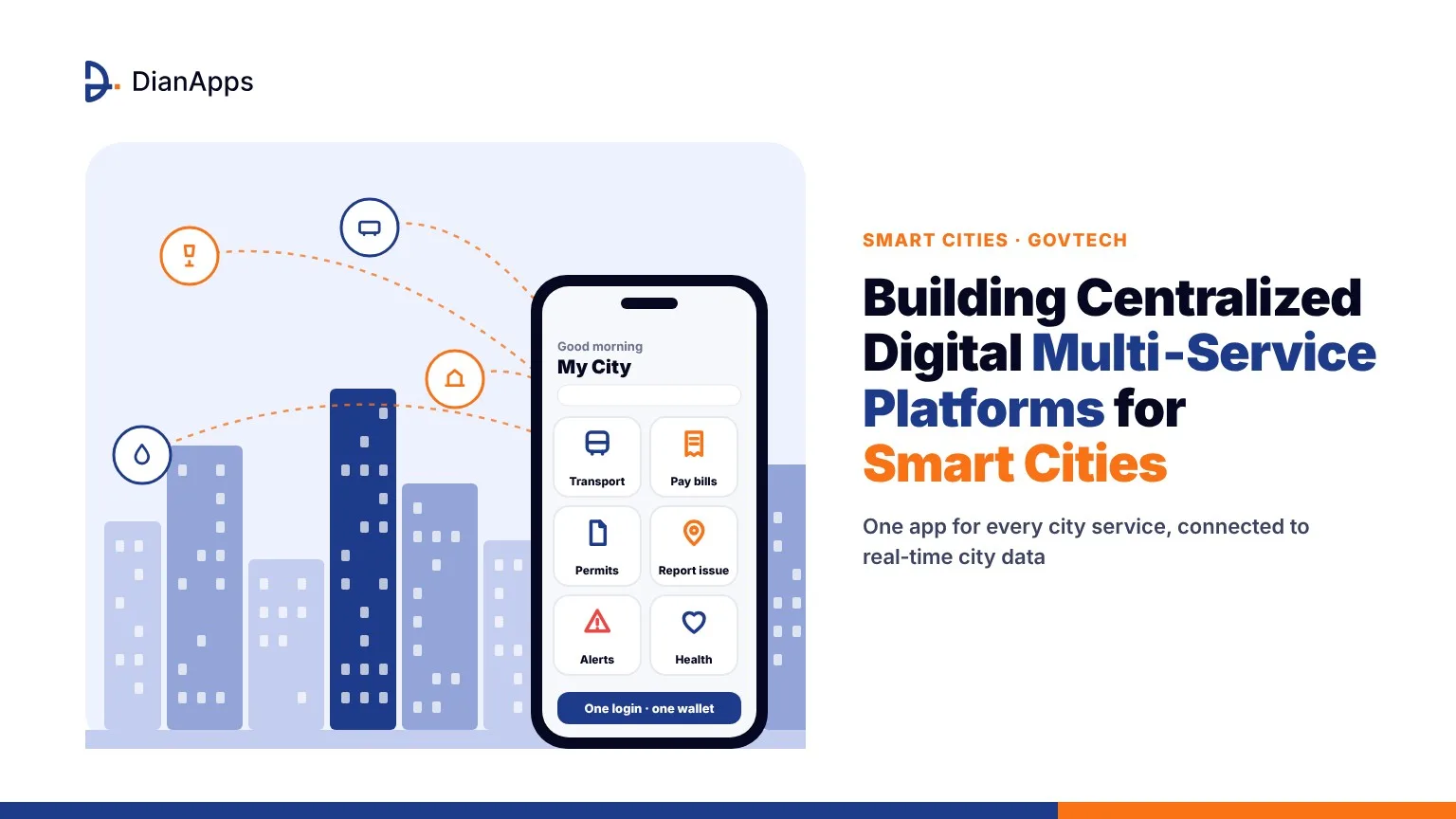
A centralized digital multi-service platform for a smart city is a single app and web portal where residents can access many city services in one place: paying bills, booking transport, reporting problems, applying for permits, getting alerts and more. Instead of dozens of separate websites and apps, citizens get one login, one wallet and one place to track everything. Behind the scenes, the platform connects city departments, data and sensors through shared systems and secure APIs.
Cities are under more pressure than ever. According to the United Nations’ World Urbanization Prospects 2025, cities are now home to 45% of the world’s 8.2 billion people, up from 20% in 1950. The number of megacities with more than 10 million people has grown to 33, and two-thirds of global population growth up to 2050 is expected to happen in cities.
More people means more demand for transport, utilities, healthcare, safety and public services. Yet in many cities, residents still deal with separate departments, paper forms and a confusing mix of apps. A centralized platform changes that.
Why Do Cities Need a Single Multi-Service Platform?
Most cities built their digital services one department at a time, which left residents with a fragmented experience.
A resident might use one app to pay for parking, another website for water bills, a third for property tax and a phone line to report a broken streetlight. Each has its own login, its own design and its own records. For the city, the data sits in separate systems that don’t talk to each other, so it’s hard to see the bigger picture or respond quickly.
A single platform solves both problems. Residents get a simpler, faster experience. City teams get shared data, lower running costs and a clearer view of what’s happening across the city.
What Services Can a Smart City Platform Include?
A smart city platform usually brings together services from many departments.
Payments and bills: property tax, water, electricity, parking and fines in one digital wallet.
Transport and mobility: live bus and metro timings, journey planning, ticketing, parking availability and bike or scooter sharing.
Requests and complaints: reporting potholes, broken lights, garbage collection or noise, with photos, location and status tracking.
Permits and documents: applying for licences, certificates and permits, and storing digital documents securely.
Alerts and safety: emergency alerts, weather warnings, traffic updates and quick access to emergency services.
Health and community: clinic bookings, vaccination information, community events and local news.
Utilities and environment: energy and water usage, air quality readings and recycling information.
How Does a Centralized City Platform Work?
A centralized city platform works like a super app: one front door, with many services plugged in behind it.
At the front is the citizen app and web portal, where residents log in once and see all services. Behind it, an API gateway connects the app to each department’s systems securely, so a new service can be added without rebuilding the whole platform. A shared identity system lets residents use one verified account everywhere. A payments hub handles all city payments in one place. An integration layer links older department systems, which many cities still rely on. Finally, a data platform combines information from services and city sensors, such as traffic cameras, air quality monitors and smart meters, into dashboards that help officials make better decisions.
This modular design means departments can join the platform over time, each as its own service, much like mini-apps inside a super app.
The Role of IoT and Data in Smart City Platforms
Smart city platforms become far more useful when they connect to sensors across the city.
Internet of Things (IoT) devices, such as smart parking sensors, connected streetlights, water meters, waste bin sensors and traffic monitors, send real-time data to the platform. That data can power features residents use every day, such as showing free parking spaces or warning of a water leak. It also helps city teams spot problems early, plan maintenance and use resources more efficiently. For a look at how one codebase can power apps that talk to connected devices, see this guide on Flutter for IoT.
Key Features Residents Expect
A smart city platform succeeds only if residents actually use it. The features that matter most are:
- One secure login for every service
- A simple home screen that shows the most useful services first
- Real-time status tracking for requests, applications and payments
- Notifications for bills, service updates and emergencies
- Multiple languages and accessible design for older and disabled residents
- Offline-friendly features for areas with weak connectivity
- A chat assistant to answer common questions and guide people to the right service
Keeping Citizen Data Safe and Private
A city platform holds sensitive information about residents, so trust is essential.
Platforms should collect only the data each service needs, encrypt data both stored and in transit, and use strong authentication for residents and staff. Access should be limited by role, with full audit logs of who viewed or changed records. Residents should be able to see what data the city holds and how it’s used, in line with local privacy laws such as GDPR in Europe or India’s Digital Personal Data Protection rules. Regular security testing and a clear incident response plan help protect the platform as it grows.
Common Challenges and How to Overcome Them
Building a city-wide platform comes with real challenges.
Older systems. Many departments rely on older software. An integration layer and APIs let the platform connect to them without replacing everything at once.
Many departments, many priorities. A central digital team with clear governance helps departments agree on shared standards and timelines.
Digital inclusion. Not every resident is comfortable with apps. Simple design, multiple languages, offline features and help desks make sure no one is left behind.
Budget and scale. Starting with a few high-value services and adding more over time spreads costs and proves value early.
How to Build a Smart City Multi-Service Platform, Step by Step
- Understand residents’ needs. Find out which services people use most and where they struggle.
- Start with high-impact services. Payments, complaints and transport updates often deliver quick wins.
- Design a modular architecture. Use an API gateway, shared identity and a payments hub so new services can plug in easily.
- Connect existing systems. Integrate department software through secure APIs.
- Build security and privacy in from day one.
- Launch, measure and expand. Track usage and satisfaction, then add more services and IoT data over time.
Because a city platform works much like a super app, many governments and partners work with teams that offer super app development services to design the modular architecture, mini-service framework and shared payments that hold everything together.
The Bottom Line
A centralized multi-service platform gives residents one simple way to access their city, and gives city leaders the shared data they need to run it better.
With nearly half the world’s population now living in cities and that share still growing, fragmented digital services are no longer good enough. By bringing services together in one secure, modular platform, connected to real-time city data, cities can save money, respond faster and make everyday life easier for the people who live there.x