Opening the Classroom Door to the Future
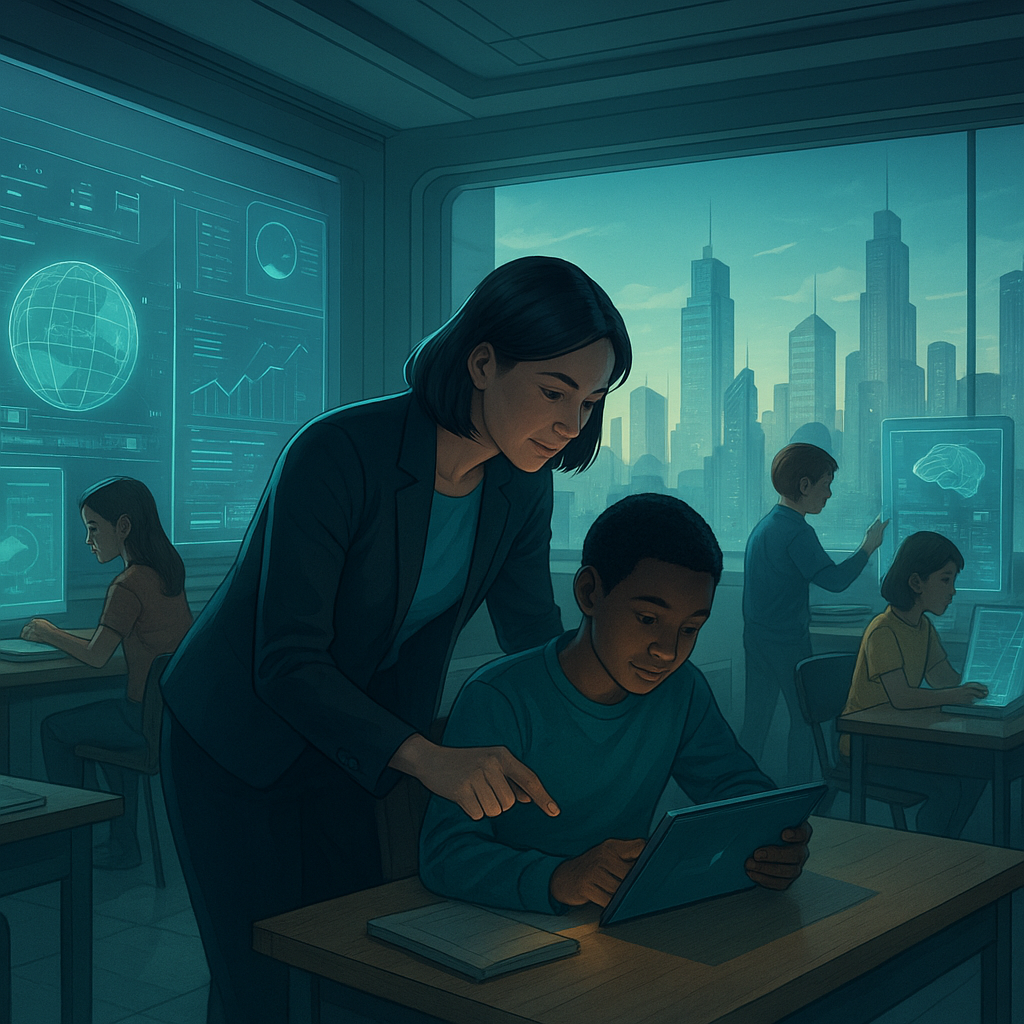
On a crisp morning in 2026, a high school in Helsinki welcomes students not to rows of desks but to interactive learning pods where artificial intelligence tutors tailor lessons in real-time. This scene is emblematic of a sweeping transformation redefining education worldwide. More than ever, systems are shifting from static, one-size-fits-all models to dynamic platforms that adapt to individual learners’ needs, paced by the accelerating demands of technology and society.
Recent UNESCO reports reveal that nearly 75% of jobs in developed countries will require continuous re-skilling by 2030, pushing education beyond traditional age boundaries. As economies pivot towards automation and digitalization, the gap between current educational models and future workforce demands has become glaring. This article examines the evolution of education through the lens of technology integration, policy shifts, and pedagogical innovation, highlighting how learning is becoming a lifelong, personalized journey.
“Education today isn’t just about knowledge transfer; it’s about cultivating adaptability and resilience in an unpredictable world.” — Dr. Helena Martikainen, Education Futurist
Tracing the Roots: How Education Arrived Here
The modern education system largely emerged during the Industrial Revolution, designed to produce disciplined workers for factories. Over the 20th century, this model expanded globally, emphasizing standardized curricula and mass literacy. However, the rise of the internet in the early 2000s began to challenge this centralized approach, introducing new modalities like online courses and digital resources.
By the late 2010s and early 2020s, hybrid learning environments became widespread, accelerated dramatically by the COVID-19 pandemic. This period forced institutions worldwide to rethink delivery methods, revealing stark disparities in access and digital readiness. The subsequent global investments in infrastructure and digital literacy programs set the stage for the current phase—where education systems are not just hybrid but highly personalized and technology-driven.
Policy frameworks also evolved. The United Nations’ Sustainable Development Goal 4 emphasized inclusive, equitable quality education, encouraging governments to adopt flexible learning pathways. Meanwhile, economic data highlighted the rising costs of traditional higher education and the growing demand for vocational and skills-based training, prompting diversification of learning options.
Data-Driven Insights: Measuring the Shift in Learning Paradigms
Quantitative data from the OECD and World Bank provide a clear picture of education’s transformation. For example, enrollment in fully online and blended programs has increased by over 60% globally since 2021, with Asia-Pacific and Africa showing some of the highest growth rates. Meanwhile, investment in education technology companies reached $45 billion worldwide in 2025, more than doubling the figures from five years prior.
Cognitive neuroscience advances have also informed educational practices. Studies show that personalized learning can boost student retention by up to 30%, while adaptive testing technologies improve assessment accuracy and fairness. In 2026, AI-driven platforms analyze student engagement patterns to dynamically adjust content difficulty and pacing, accommodating diverse learning styles and abilities.
Comparative analyses reveal that countries prioritizing lifelong learning frameworks and digital literacy outperform others in innovation indices and economic growth metrics. The World Economic Forum’s 2026 Future of Jobs Report underscores how continuous education correlates with career longevity and wage growth. This data compels education stakeholders to rethink curricula and delivery mechanisms to meet evolving labor market demands.
- 60% rise in global blended and online education enrollment since 2021 (OECD)
- $45 billion invested in EdTech by 2025, doubling 2020 figures (World Bank)
- 30% improvement in retention rates with personalized learning models (Neuroscience Research)
- 80% of jobs in 2030 will require digital skills and continuous upskilling (WEF Report)
“The data makes it clear: static education models are no longer viable. Dynamic, learner-centered systems are essential for future prosperity.” — Prof. Samuel Ortiz, Global Education Policy Analyst
Current Innovations and Trends Defining Education in 2026
In 2026, education technology is not confined to supplementary tools; it is integral to the learning experience. Virtual reality (VR) and augmented reality (AR) create immersive classrooms where students explore historical events or complex scientific phenomena firsthand. For instance, the University of Cape Town’s VR history modules have increased student engagement by 40%, according to recent internal studies.
Artificial intelligence tutors, such as the widely adopted "MentorAI" platform, provide instant feedback and personalized learning paths, helping reduce dropout rates in both K-12 and higher education sectors. Moreover, blockchain technology secures academic credentials, streamlining verification processes for employers and institutions globally.
Government policies increasingly support flexible learning environments. Countries like South Korea and Canada have implemented national lifelong learning accounts that fund citizens’ continuous education, promoting upskilling in response to labor market shifts. Meanwhile, corporate partnerships with educational providers have expanded apprenticeships and micro-credential programs, bridging the gap between academic theory and practical skills.
Importantly, equity remains a focus. Initiatives targeting underserved communities leverage mobile learning and offline digital solutions, narrowing the digital divide. UNESCO’s 2026 Global Education Monitoring Report highlights that these efforts have improved access for 25 million learners worldwide in the past two years alone.
- Immersive VR/AR learning modules adopted in over 30% of universities globally
- AI-driven personalized tutoring platforms reduce dropout rates by up to 15%
- Blockchain used for secure, verifiable academic credentials across 50+ countries
- Government lifelong learning funding programs expanded in 15 nations
- Mobile and offline digital education reaching 25 million underserved learners (UNESCO)
Expert Perspectives: Voices Shaping Education’s Evolution
Leading educational theorists and practitioners emphasize that the future of education lies in its ability to adapt fluidly to each learner’s context. Dr. Anya Chen, a cognitive psychologist at Stanford University, notes, “Learning environments that respect individual cognitive differences and cultural backgrounds lead to deeper understanding and motivation.”
Industry leaders also stress the importance of public-private collaboration. Rajesh Patel, CEO of EdTech startup LuminaLearn, explains how partnerships with governments enable scalable solutions: “By combining technological innovation with policy support, we can reach learners anywhere and anytime, democratizing education.”
However, concerns remain about over-reliance on technology potentially exacerbating inequalities or diminishing critical thinking skills. Dr. Martikainen advocates for balanced integration: “Technology should amplify human teaching, not replace it. Educators must retain agency to nurture creativity and social-emotional skills.”
These perspectives resonate with the findings in our related analysis on Rethinking Education: How Innovation and Inclusion Are Shaping Learning Today, emphasizing that innovation must be inclusive and holistic.
Looking Ahead: What Education Must Embrace to Thrive
As we progress deeper into the 2020s, education’s trajectory is unmistakably toward lifelong, personalized learning ecosystems. The convergence of AI, immersive technologies, and data analytics offers unprecedented opportunities to tailor education to individual goals and societal needs. However, this potential hinges on addressing persistent challenges such as digital equity, educator training, and ethical governance of AI tools.
Future priorities include expanding access to learning for marginalized populations, integrating sustainability education, and fostering interdisciplinary skills that prepare learners for complex global challenges. The Omnibuzz’s recent coverage on Why Education’s Future Hinges on Personalized and Lifelong Learning outlines key strategies for stakeholders to navigate these demands effectively.
Crucially, education systems must cultivate adaptability—not merely in students but within institutions themselves. Continuous curricular updates, flexible credentialing, and robust feedback loops between learners, educators, and employers will be essential to remain relevant.
- Prioritize digital inclusion and infrastructure to close access gaps
- Enhance educator professional development in technology and pedagogy
- Implement ethical frameworks for AI and data use in education
- Embed sustainability and global citizenship in curricula
- Promote modular, interdisciplinary skill-building and credentialing
“Education’s future is not a fixed destination but a responsive, evolving journey that must empower every learner.” — UNESCO Director-General
In sum, education in 2026 is a dynamic reflection of societal transformation, technological innovation, and human aspiration. Its success will depend on collaboration across sectors, continuous innovation grounded in equity, and a steadfast commitment to nurturing human potential at every stage of life.
For further insights on how online learning continues to reshape education globally, see our detailed report How Online Learning Is Reshaping Education and Society in 2026. Additionally, our analysis on Education in 2026: Transformations, Challenges, and the Road Ahead explores systemic shifts and future-ready strategies for education stakeholders.