
The global computer vision market is projected to grow from $24.14 billion in 2026 to $72.80 billion by 2034, a 14.80% compound annual growth rate, according to Fortune Business Insights. Manufacturing alone accounted for over 28% of the market in 2025, ahead of every other industry, which means most companies adopting computer vision are solving a narrow, well-defined inspection or detection task, not an open-ended research problem. That distinction is exactly what determines whether you need a computer vision consultant or a hands-on builder.
Source: Fortune Business Insights, Computer Vision Market Report, 2026.
The 60-Second Test
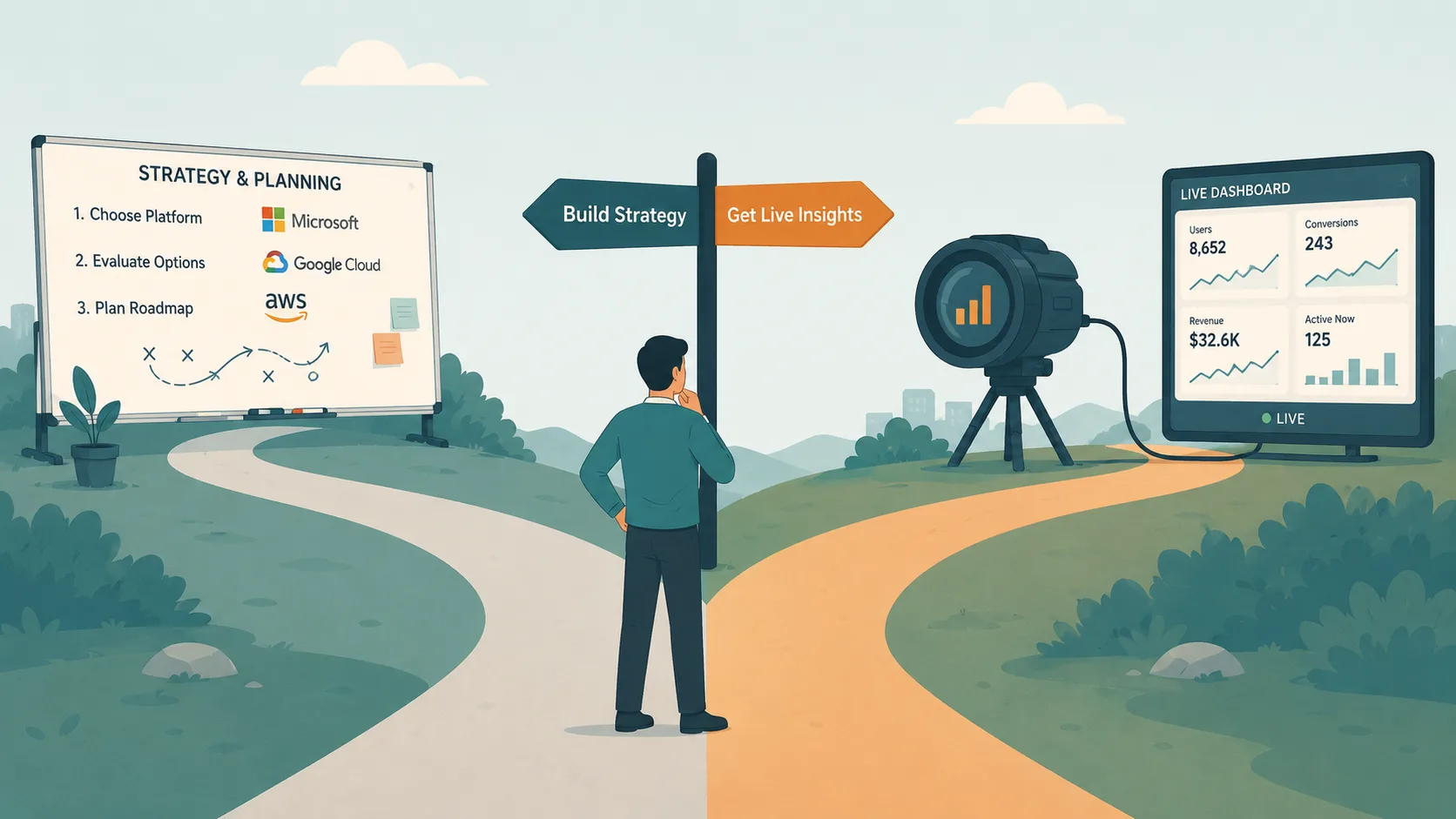
Answer three questions honestly. First: do you already know the exact task, camera setup, and success metric, or are you still exploring what "good" looks like? Second: is there an existing dataset of labeled images, or does someone need to design the data collection and annotation process from scratch? Third: does the project need one working model shipped into your existing stack, or an ongoing strategy covering multiple use cases and vendor evaluation over time? Answering "already know" and "existing dataset" to the first two, and "one working model" to the third, points toward a builder. Answering "still exploring" or "ongoing strategy" points toward a consultant.
Why the Wrong Choice Costs More Than the Right Hire
Hiring a consultant for a narrowly scoped, ready-to-build task usually means paying for strategy documents and vendor comparisons on a project that just needed code shipped. Hiring a builder for an open-ended strategic question usually means an unstructured pile of experiments with no framework for choosing between them later. A hire computer vision developer engagement that starts with the 60-second test above tends to match scope to skill set from day one, the same discipline that turned an NLP feedback classification project into a system a client's data team could run without re-explaining the pipeline every quarter.
What's the real difference between a computer vision consultant and a freelance builder?
A consultant typically evaluates your problem, compares approaches or vendors, and produces a strategy or roadmap, often before any code is written. A freelance builder takes a defined task, a labeled or collectible dataset, and ships a working model into your existing systems. Some professionals do both, but the pricing, timeline, and deliverable differ significantly depending on which one you actually need, which is why a quick scope test before hiring a computer vision consultant or a builder saves real budget.
Do I need a labeled dataset before hiring a computer vision developer?
Not always, but you should know whether one exists before you hire, since it changes both cost and timeline significantly. If labeled images already exist, a builder can usually move straight to model selection and integration. If they don't, budget extra time for data collection and annotation, or hire someone who explicitly includes that step in scope, since skipping it is one of the most common reasons computer vision projects stall midway.
Where This Goes Next
Most computer vision projects fail not because the technology falls short, but because the engagement type was wrong from the start. Getting the scope test right before you post a job listing saves weeks of misaligned expectations later. computer vision consultant vs freelancer breaks down the full decision framework with cost comparisons, and if you're ready to talk to ai ml developers about your specific use case, that's the natural next step.