Ask ten people what an e-business is and half will describe an online shop. That's only a small slice of it. The e-business meaning is much wider, and understanding it helps founders decide where to spend time and money when building a company that runs on the internet.
E-business meaning in simple terms
An e-business is any business activity carried out with the help of the internet and digital systems. That includes selling products, but also buying supplies, managing inventory, handling payroll, supporting customers, running marketing campaigns and collaborating with partners. If a process that used to run on paper, phone calls or in-person meetings now runs through software and the web, it belongs to e-business.
The term became popular in the late 1990s, when companies began connecting internal operations to the internet rather than just building websites. Today it covers everything from a solo consultant who invoices through an app to a manufacturer whose suppliers log into a shared portal.
The main parts of an e-business
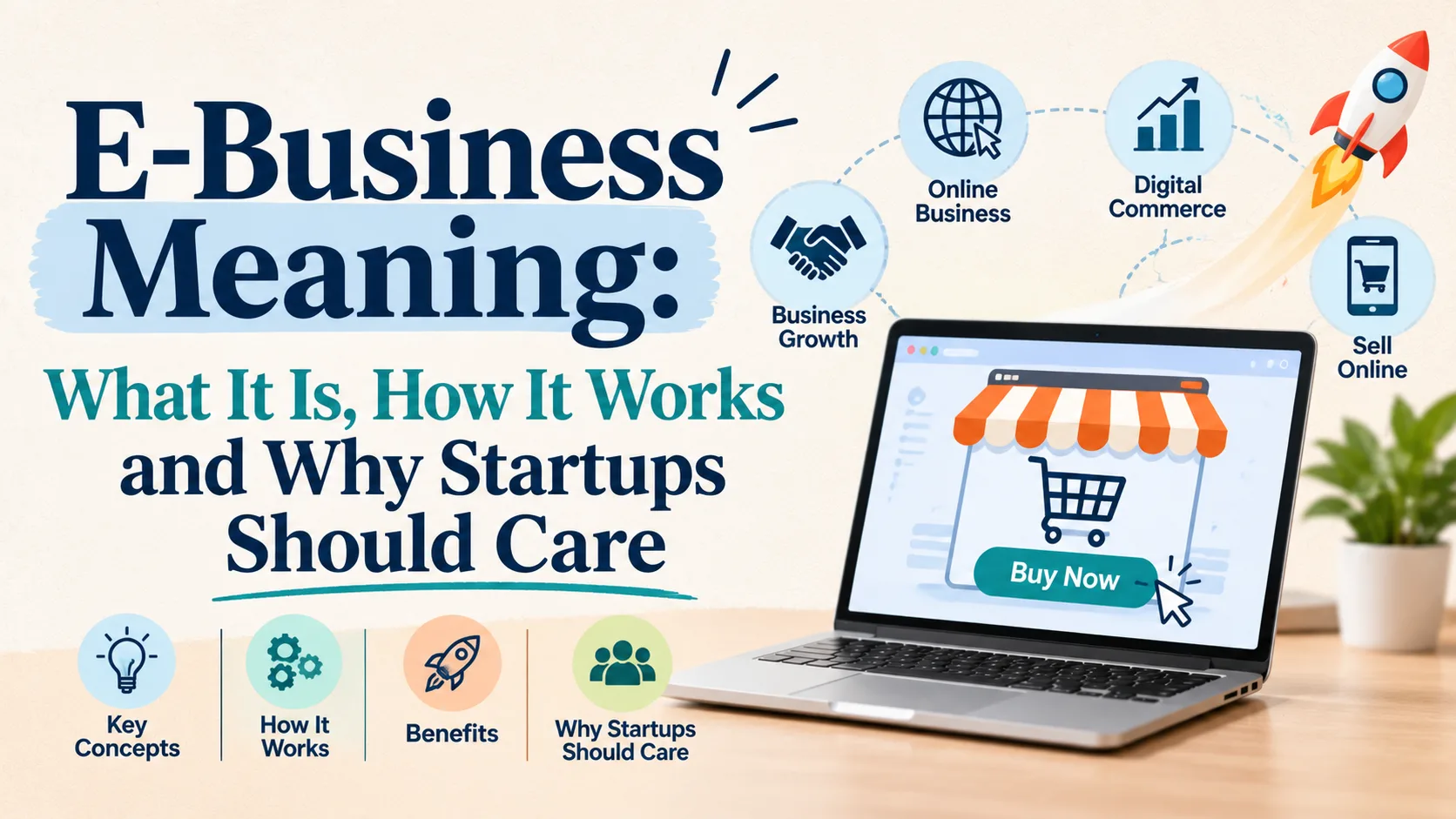
Online selling. Websites, marketplaces and social storefronts where customers place orders. This is the part most people call e-commerce.
Digital operations. Inventory tools, accounting software, logistics tracking and project management apps that keep the business running behind the scenes.
Customer relationships. CRMs, live chat, WhatsApp support and email sequences that keep buyers informed and returning.
Supply chain connections. Supplier portals, automated reordering and shipping integrations.
Marketing and analytics. SEO, paid ads, social media and dashboards that show what's working.
Examples of e-business in everyday life
A clinic that lets patients book and pay online, then sends reminders on WhatsApp, is running an e-business even though it never ships a product. A manufacturer that receives purchase orders through a supplier portal is an e-business. So is a freelancer who finds clients through LinkedIn, signs contracts digitally and gets paid through a payment gateway.
E-business vs traditional business
A traditional business relies mostly on physical presence: a shop, an office, face-to-face deals and paper records. An e-business moves many of those steps online.
The practical differences:
- Reach: A shop serves the people who walk past. An e-business can serve customers in other cities.
- Hours: Orders and enquiries arrive around the clock.
- Cost structure: Less spending on rent and more on technology, advertising and logistics.
- Data: Every click, order and enquiry can be measured, which makes decisions easier.
Many successful companies are a mix of both. A local jeweller with a showroom and a well-run Instagram page and WhatsApp catalogue is a good example.
Benefits and challenges
The benefits are real: lower cost of reaching customers, faster service, better records and the ability to test ideas quickly. The challenges are just as real. Competition is a click away, customers expect quick replies, and cybersecurity, data protection and payment reliability need ongoing attention.
There's also a visibility problem. A great product still sells poorly if nobody finds it, which is why digital marketing sits at the centre of most e-business plans.
How a startup can begin
Start with the process that earns money, not the whole system. Choose one sales channel, set up payments and delivery, then add tools only when a manual task becomes a bottleneck. Build a simple website that explains what you do and how to contact you, claim your Google Business Profile, and track enquiries from day one.
A specialist startup marketing agency can help you choose channels in a sensible order so early budget goes where it brings leads rather than spreading across every platform. Industry estimates suggest more than half of small businesses in India still lack a proper website, so a clear online presence alone can set a new company apart.
For a longer walkthrough with examples, read Startup Rabbit's guide to understanding e-commerce and e-business.
Common e-business models
Not every e-business earns money the same way. The most common models are direct sales (a brand selling its own products), marketplaces (a platform connecting buyers and sellers), subscriptions (recurring fees for access or deliveries), service-based models (consultations and bookings handled online), and advertising or lead-based models (content that attracts an audience and earns through partners or enquiries). Knowing which one you're building shapes everything from pricing to the marketing channels you choose. A booking-led clinic and a subscription box company need very different funnels, even though both count as e-business.
The takeaway
The e-business meaning is simple once you strip away the jargon: it's running the core activities of a company through digital tools. Selling online is one part. Operations, support, supply chain and marketing complete the picture. Begin small, automate what's repetitive and keep your focus on getting found by the right customers.