Charging Ahead: The Unfolding Electric Vehicle Revolution
On a brisk spring morning in early 2026, the streets of Oslo, Norway, are alive with the hum of electric motors. The majority of new cars gleam with sleek aerodynamic lines, emitting no exhaust fumes, symbolizing a transformative shift in global transportation. Globally, electric vehicle (EV) sales surpassed 15 million units in 2025, marking a staggering growth of 40% over the previous year, according to industry estimates. The surge is driven by improving battery technology, expanding charging infrastructure, and increasingly stringent environmental regulations. Yet, this electrification boom is not without its challenges.
While consumers enthusiastically embrace EVs for their environmental benefits and lower operating costs, critical questions loom regarding the capacity and resilience of electrical grids worldwide. TheOmniBuzz's recent analysis highlights how the rapid adoption of EVs is outpacing grid preparedness, risking reliability and sustainability. This article offers a comprehensive exploration of the electric vehicle landscape, uncovering the technical, economic, and infrastructural hurdles that must be overcome to sustain this momentum.
"The transition to electric vehicles is the single largest transformation in automotive history, but it demands a parallel revolution in energy infrastructure," says Dr. Lena Hoffmann, an energy systems expert at the European Institute of Technology.
Tracing the Road: A Brief History of Electric Vehicles
The journey of electric vehicles dates back over a century, with early models appearing as far back as the late 19th century. However, the dominance of internal combustion engines (ICE) relegated EVs to niche status for much of the 20th century. The 1990s saw renewed interest fueled by environmental concerns and innovations in battery chemistry, particularly lithium-ion technology.
The past decade has been pivotal. Governments worldwide implemented aggressive policies to curb carbon emissions, including bans on new ICE vehicle sales in several countries by 2035 or earlier. Automakers responded by investing billions into electrification. Tesla's market capitalization soaring past traditional automotive giants in 2020 symbolized this tectonic shift. By 2024, global EV stock exceeded 30 million vehicles, representing over 5% of all passenger cars.
Notable milestones include:
- 2010s: Introduction of affordable mass-market EVs like Nissan Leaf and Chevrolet Bolt.
- 2020: China becomes the largest EV market, accounting for nearly half of global sales.
- 2023: Breakthrough solid-state battery prototypes promise higher energy density and faster charging.
This historical context underscores how technology, policy, and market forces have converged to accelerate EV adoption at an unprecedented pace.
Powering the Shift: Technical and Infrastructural Challenges
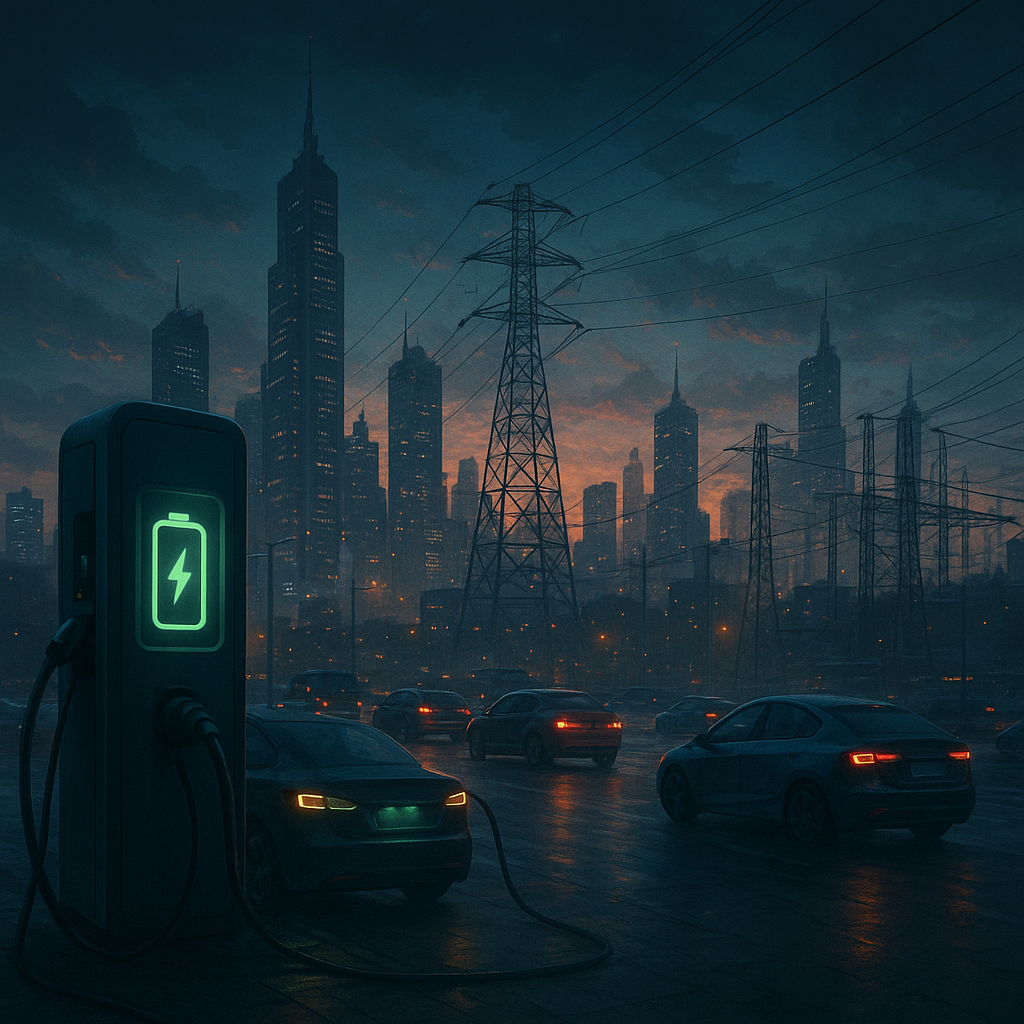
Despite impressive growth, the EV revolution places enormous strain on electrical grids. The increased demand for electricity to charge millions of vehicles creates new peaks in load profiles. Utilities must manage these surges without compromising service reliability.
Key challenges include:
- Grid Capacity and Stability: Many regions face insufficient generation and distribution capacity to handle widespread EV charging, particularly during peak hours.
- Charging Infrastructure: Although public fast chargers have expanded rapidly, the ratio of EVs to chargers remains uneven, notably in urban apartment complexes lacking dedicated parking.
- Energy Source Mix: The environmental benefits of EVs depend on decarbonizing the electricity supply. Regions reliant on coal or natural gas see limited emission reductions.
- Battery Recycling and Raw Materials: The surge in lithium, cobalt, and nickel demand raises concerns about sustainable sourcing and end-of-life management.
TheOmniBuzz's detailed report on Electric Vehicles Are Booming — But the Grid Isn't Ready delves deeper into grid integration issues. It highlights that without smart charging and vehicle-to-grid technologies, peak demand could overwhelm distribution networks, leading to outages or costly infrastructure upgrades.
"The grid must evolve from a one-way power delivery system to a dynamic, bi-directional network capable of managing distributed energy resources, including EVs," explains Dr. Hoffmann.
2026 Snapshot: Innovations and Market Dynamics Shaping the EV Sector
The first half of 2026 has witnessed notable developments. Automakers launched new EV models with ranges exceeding 500 miles, addressing range anxiety—a persistent consumer concern. Battery prices have declined to under $80 per kilowatt-hour, making electric cars financially competitive with ICE vehicles even without subsidies.
Government incentives remain critical. The European Union extended tax credits for EV buyers alongside mandates for public charging infrastructure deployment. In the United States, the Inflation Reduction Act's EV tax credits continue to stimulate demand, particularly for domestically produced vehicles.
Charging technology is advancing as well. Ultra-fast chargers capable of replenishing 80% battery capacity in under 10 minutes are becoming standard at highway rest stops. Wireless charging pilots for residential and commercial parking are gaining traction, promising added convenience.
Automakers and energy companies have forged partnerships to integrate EVs into smart grids. For example:
- Volkswagen's recent collaboration with Enel X focuses on bidirectional charging to enable vehicle-to-grid (V2G) services.
- Tesla's expansion of its Supercharger network includes solar-powered stations to reduce carbon footprint.
- Hyundai and LG Energy Solution are developing solid-state batteries slated for commercial release in late 2027, promising higher safety and energy density.
Despite these advances, supply chain disruptions persist, particularly for semiconductor chips and critical battery minerals, tempering production ramp-ups.
For a deeper understanding of consumer attitudes and market penetration, see TheOmniBuzz's Are Consumers Considering Electric Vehicles? A Deep Dive into the 2026 Landscape.
Industry Voices: Perspectives from Experts and Stakeholders
Industry leaders emphasize the importance of a holistic approach. According to Maria Chen, Chief Sustainability Officer at Stellantis, "EV adoption is not just about selling cars; it's about reshaping mobility ecosystems, including energy, urban planning, and customer engagement." She advocates for integrated policies that align vehicle electrification with renewable energy expansion and grid modernization.
Utilities face the dual challenge of managing demand growth while transitioning to cleaner energy sources. Samuel Ortiz, CEO of a major US utility, points out, "We are investing billions in grid upgrades, distributed energy resources, and smart meters to prepare for the EV surge. However, cooperation among regulators, automakers, and consumers is essential to avoid costly bottlenecks."
Environmental groups welcome the shift but call for attention to lifecycle emissions and ethical sourcing. "EVs reduce tailpipe emissions dramatically, but mining impacts and battery disposal must be addressed to ensure true sustainability," states Dr. Amina Rashid of GreenFuture Alliance.
"The EV revolution is a critical component of climate strategy, but it requires systemic thinking and collaboration across sectors," Rashid adds.
Looking Forward: What to Watch in the Electric Vehicle Ecosystem
The trajectory of electric vehicles in the coming years will hinge on several pivotal factors:
- Grid Modernization Progress: Investments in smart grids, energy storage, and demand response will determine how smoothly EVs integrate into existing systems.
- Battery Innovation: Commercialization of solid-state batteries and alternative chemistries could dramatically improve range, safety, and cost.
- Policy and Incentives: Sustained and adaptive government support remains key to maintaining market momentum and addressing equity concerns.
- Charging Infrastructure Expansion: Especially in multi-unit dwellings and rural areas, to ensure access and convenience.
- Second-life Battery Applications and Recycling: Enhancing circular economy approaches to reduce environmental impact.
Consumers will continue to influence the market, as preferences evolve alongside technological availability. TheOmniBuzz will monitor these trends closely, providing updated analysis and insights.
In conclusion, the electric vehicle revolution is accelerating rapidly, reshaping the automotive and energy sectors. Yet, its success depends on overcoming significant infrastructural and systemic challenges. As Dr. Hoffmann aptly summarizes, "Electrification of transport is a marathon, not a sprint. Strategic planning and innovation will define its ultimate impact on our societies and the planet."