Running a busy chippy means juggling fryers, queues and delivery riders, so packaging often gets picked in a hurry. However, the wrong choice leads to soggy batter, leaking sauce and unhappy reviews. Therefore, understanding fish and chips packaging before you order saves money and protects your reputation. At Sky Print and Enterprise, we supply food-safe packaging that works in real British kitchens. Moreover, you can browse our complete food box selection to cover every item on your menu.
Need a packaging plan that fits your shop? Message our packaging team for friendly, practical advice.
What Good Fish and Chips Packaging Must Do
Great packaging performs four jobs at once. First, it holds heat, so the meal arrives warm. Second, it lets steam escape, so the batter stays crisp. Third, it resists grease, so the base never turns soft. Finally, it carries your brand, so customers remember your shop.
Consequently, price alone should never decide your order. A cheap tray that collapses costs far more in refunds than a slightly better box. Furthermore, packaging affects speed, because staff need cartons that fold and close in seconds during a Friday rush.
Side orders matter too. Mushy peas, curry sauce and dips need their own containers, so consider sauce and side cartons that keep liquids away from the chips.
Matching Packaging Formats to How You Sell
Every chippy sells differently, so start with your sales mix. Counter customers who eat nearby need little protection, whereas delivery customers need secure lids and sturdy walls. Therefore, think about your split before you choose a format.
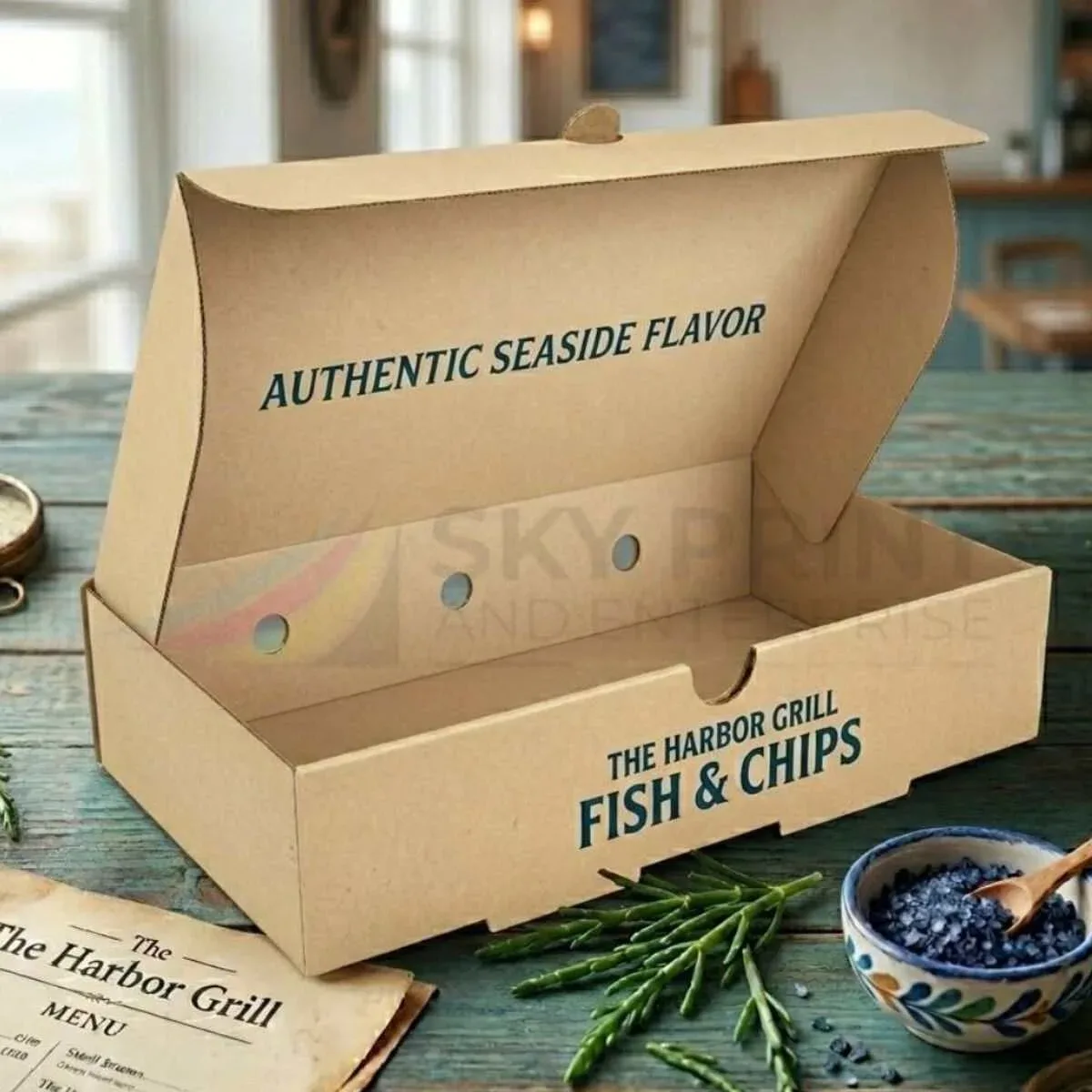
A clamshell box suits delivery, because it closes firmly and stacks neatly. A scoop tray suits quick service and seaside kiosks. A lidded tray suits sit-down takeaway with sauces. Additionally, a small sleeve or cone works for snack portions and children's orders.
Structure and layout work together, so review these box construction basics before you finalise sizes. As a result, you avoid awkward fold lines and wasted space.
Choosing Materials for Hot, Oily Food
Hot, oily food puts real pressure on board. Therefore, compare strength, insulation and grease resistance before you buy. Our advice on choosing food-safe board explains each option in plain English.
For heavy portions and long drives, specify strong fluted board. The fluted layer traps air, so it insulates the meal and resists crushing in delivery bags. Moreover, a grease-resistant lining protects the base from oil and steam.
In Great Britain, materials that touch food must be safe for their intended use. Consequently, ask your supplier for documentation and keep it on file. Experience shows that shops with tidy records handle inspections far more calmly.
Eco-Friendly Options Without the Guesswork
Customers increasingly ask whether packaging is recyclable. As a result, greener choices now influence buying decisions across the UK. Natural uncoated kraft solutions look honest and suit a traditional chippy feel, while recyclable card options work well for lighter items.
However, stay honest about recycling. Grease can reduce recyclability, and councils treat soiled cardboard differently. Therefore, check local guidance and print a short disposal message on the lid. In addition, keep every environmental claim accurate and specific, because vague claims damage trust.
Printing and Branding Your Packaging
Plain boxes waste a free advertising space. Place your logo in the centre of the lid, add one short message and include a QR code for reviews. Keep the layout simple, because crowded artwork looks messy and costs more to print.
Colour choice matters as well. Navy and white suggest the sea, whereas red and yellow suggest warmth and appetite. Nevertheless, always match your shopfront colours. Before you send files, follow these print-ready artwork steps so that bleed and colour modes print correctly the first time.
Print method affects cost too. Flexographic printing suits large runs, digital printing suits short runs and seasonal offers, and offset printing suits photographic detail. Therefore, match the method to your order volume.
Keeping Chips Crisp During Delivery
Delivery tests packaging harder than any counter sale. Riders stack bags, turn corners and wait at traffic lights. Therefore, choose boxes with secure tuck-in lids and test a real hot portion before you order in bulk.
Small vent holes let steam escape, so the batter stays crisp. However, too many holes cool the food quickly. Furthermore, a paper liner absorbs surface oil, and separate pots keep sauces from soaking the chips.
If wings share your menu, add crispy chicken containers that follow the same venting principles. Consequently, your whole hot menu arrives in better shape.
Packaging the Rest of Your Menu
Many chippies now sell burgers, sandwiches and street-food specials. Consistent packaging makes the whole menu look professional, even for a small team. For grill items, choose burger meal packaging with the same colours as your fish cartons. Likewise, lunchtime sandwich packs suit deli specials, while grab-and-go hot dog trays suit events and festival stalls.
Standardising board and finishes simplifies ordering. Moreover, a single supplier means fewer deliveries and faster answers when you need extra stock at short notice.
Keeping Costs Under Control
Budget matters, especially for new takeaways. Nevertheless, weak packaging costs more than it saves. Limit your range to two or three sizes, print in fewer colours and order larger quantities when storage allows.
Our tips to stretch your packaging budget show how these tactics work in a busy takeaway. If you also run a pizza line, explore custom pizza carton printing to carry the same branding across both menus. Additionally, track waste. Damaged boxes often point to a storage or folding problem that costs more than a small price gap.
Local Support for Chippies in Sheffield and Leeds
Yorkshire takeaways serve busy student areas, match-day crowds and loyal regulars. Consequently, they need suppliers who understand deadlines. If you trade in South Yorkshire, meet a trusted packaging supplier Sheffield shops recommend. Similarly, West Yorkshire owners can explore Leeds packaging solutions for local guidance.
Our team advises from daily experience with food-safe boards and print production. Please note that allergen labelling, recycling and plastics rules change, so check current Food Standards Agency and local council guidance. We share what we know, but you remain responsible for your own compliance.
Final Thoughts on Fish and Chips Packaging
Smart fish and chips packaging protects your food, shows your brand and keeps customers coming back. Therefore, measure your portions, test every sample and choose materials that match your menu. Whether you run one chippy or several branches, Sky Print and Enterprise can help you build packaging that looks sharp and performs well.
A better box is one conversation away. Unlock your box estimate today and give every portion the finish it deserves.
Frequently Asked Questions
1. What is the best fish and chips packaging for delivery?
Clamshell boxes with secure lids suit delivery best. They stay closed in a bag and hold heat well.
2. How do I stop chips going soggy?
Use small vent holes, add a paper liner and pack sauces in separate pots.
3. Is eco-friendly packaging strong enough for hot food?
Yes, many kraft and cardboard options handle hot, oily food well. Always test a sample first.
4. Can I print my logo on my packaging?
Yes. We print logos, slogans and QR codes in one or several colours.
5. Does Sky Print and Enterprise supply small orders?
Yes. Ask our team about quantities, samples and short print runs.