Paper documentation, postal services and hand written signatures all contribute to slow processes such as recruitment and loan processing. Aadhaar eSign is currently one of the most widely used digital signing solutions within India.
How It Works
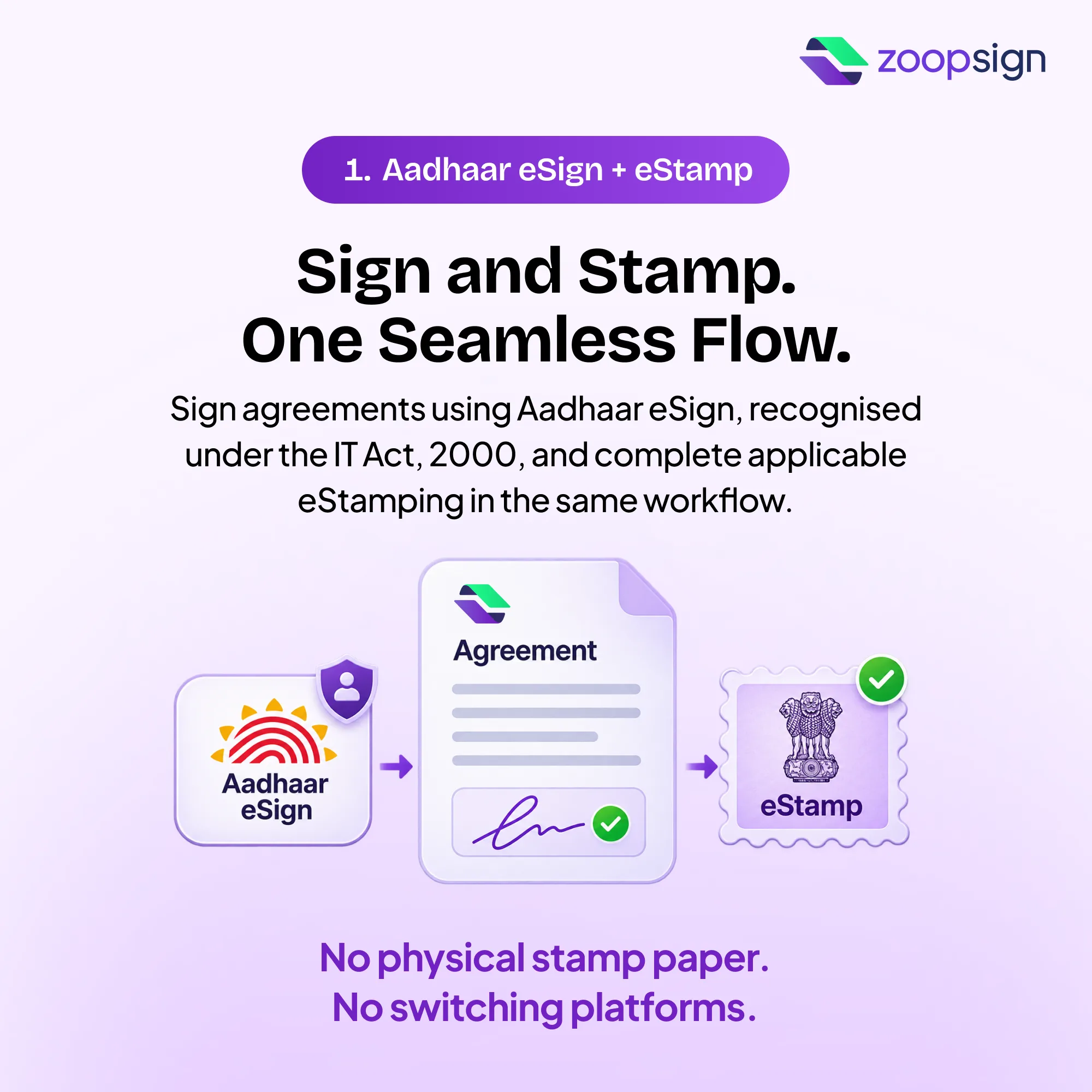
A signatory can confirm their identity by entering an One Time Password (OTP) that is delivered to their mobile number associated with their Aadhaar. Signatures can then be added digitally. As stipulated within the IT Act, 2000, digital signatures are legally valid and therefore there is no requirement to print, use hardware or meet in person.
Benefits
- Speed – Signatories can sign in minutes rather than days.
- Cost effectiveness – There are no printing, postal or storage costs.
- Secure validation – Using Aadhaar for verification lessens the likelihood of someone signing in another person’s name.
- Immutability – A signature becomes untrustworthy if a document is altered post-signing.
Security and legal validity
The biggest reasons businesses trust digital signing. With Aadhaar eSign, the signer's identity is confirmed through a one-time password, and the signature is bound to the document with a timestamp. If anyone alters the file afterward, the signature becomes invalid, protecting both parties. This makes the process ideal for sensitive agreements such as loan contracts, insurance policies and employment letters. Because every signing record can be verified later, it also gives companies reliable proof during audits and disputes.
Business Applications
Loan, employment, insurance, supplier and client on-boarding are typical areas for digital signing.
Choosing a Platform
Should a business signs numerous documents then it should select a platform which offers good API functionality, group signing facilities and detailed auditing. Solutions such as ZoopSign enable organisations to incorporate Aadhaar signing within their own apps and processes. Customers can then continue to sign without having to exit a business’ site.
Getting started is simpler than most teams expect. Begin by listing the documents that cause the most delays, such as customer agreements or HR paperwork, and move those to digital signing first. Choose a provider that offers easy integration, so signing happens inside your existing systems rather than through manual uploads. Test the flow on a mobile phone, since most signers will use one, and keep the steps short to reduce drop-offs. Once your team sees the time saved, rolling out eSign elsewhere is easy.
In Short
Businesses no longer need to tolerate paper based signing. By implementing Aadhaar eSign on a suitable platform, organisations can benefit from quicker processing, cost savings and an enhanced customer experience.