
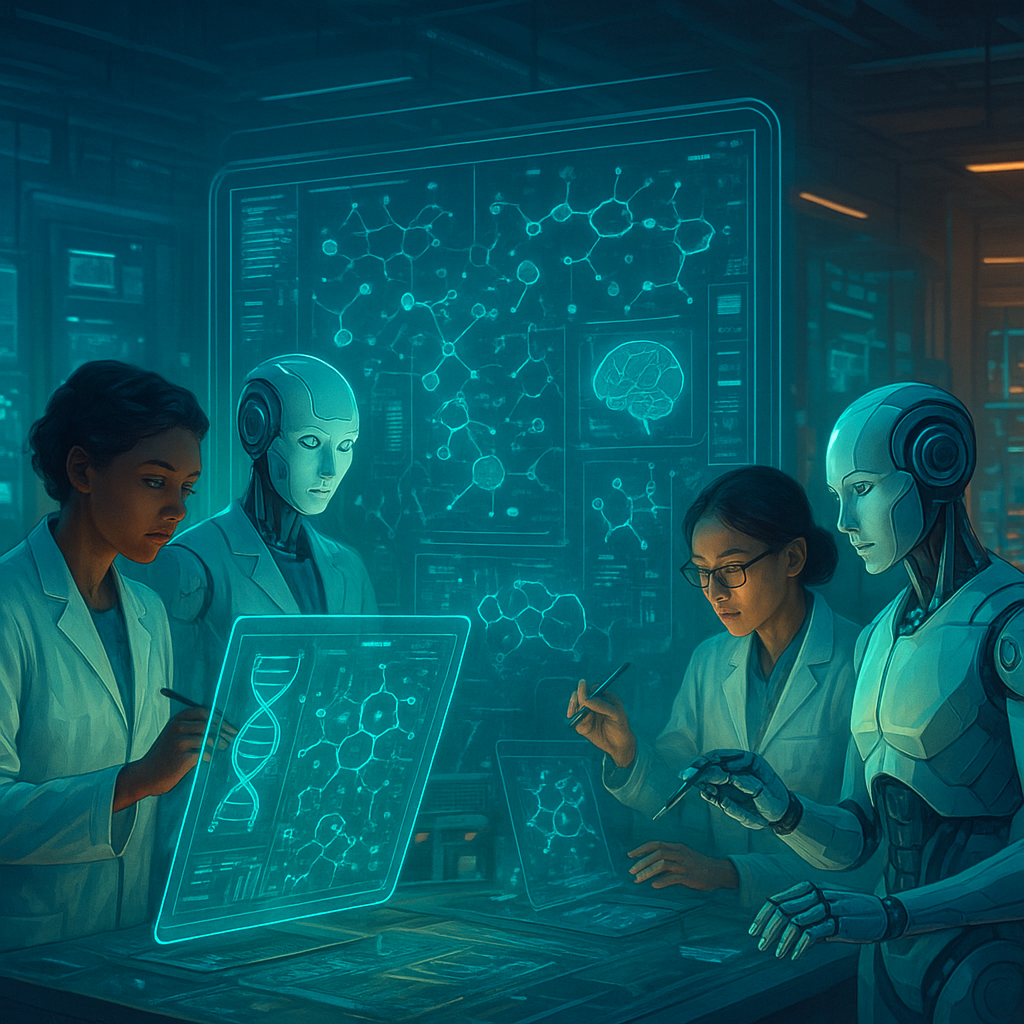
Revolutionizing Medical Research: A Precise Moment in History
In the spring of 2026, a clinical trial conducted by GenomiX Therapeutics in Boston captured global attention. Using a novel AI-driven platform combined with multi-omics profiling, the team identified a personalized therapeutic regimen for a rare autoimmune disorder within weeks—a process that traditionally took years. This breakthrough not only saved a patient’s life but also highlighted a profound shift in the methodology of medical research. The interplay of artificial intelligence, genomic data, and real-time analytics is enabling researchers to transcend conventional boundaries, ushering in an era where precision and speed redefine discovery.
The urgency to innovate stems from persistent challenges in medicine: the complexity of diseases, heterogeneity in patient response, and inefficiencies in traditional trial designs. As health systems worldwide grapple with an expanding burden of chronic and emerging conditions, advanced strategies are no longer optional but imperative. This article explores the cutting-edge approaches shaping medical research in 2026, emphasizing their transformative potential for health outcomes and scientific rigor.
From Foundations to Frontiers: Historical Context of Medical Research Innovation
The trajectory of medical research has been marked by waves of technological and methodological revolutions. The mid-20th century heralded the advent of randomized controlled trials (RCTs), which standardized experimental rigor. Yet, by the early 2000s, researchers recognized that one-size-fits-all approaches often obscured patient-specific variations. The Human Genome Project’s completion in 2003 was a watershed, igniting the genomic medicine era. Over the subsequent two decades, integration of high-dimensional data—from genomics to metabolomics—began to reshape hypotheses and clinical applications.
Simultaneously, computational advances facilitated the mining of complex datasets. Machine learning models initially assisted in pattern recognition but have since evolved into sophisticated AI systems capable of hypothesis generation, predictive modeling, and adaptive trial management. Regulatory frameworks, too, evolved: agencies like the FDA and EMA now endorse adaptive trial designs and real-world evidence incorporation, reflecting a paradigm shift towards flexibility without compromising safety.
These historical developments laid the groundwork for today’s advanced strategies, where multidisciplinary collaboration, computational power, and patient-centric designs converge. The 2020s, particularly post-pandemic, accelerated this integration, as highlighted in the article “Harnessing Innovation: Advanced Strategies Transforming Medical Research Today” on TheOmniBuzz, which chronicles how innovation became a necessity amid global health crises.
Core Strategies Defining Cutting-Edge Medical Research in 2026
Modern medical research thrives on a suite of sophisticated strategies that collectively enhance discovery precision, efficiency, and applicability. Below are five pivotal approaches currently dominating the field:
- AI-Driven Data Integration and Analysis: Advanced AI platforms now integrate heterogeneous datasets—from electronic health records (EHRs) to wearable biosensor outputs—providing holistic patient profiles. These systems employ deep learning to uncover subtle biomarker patterns predictive of disease progression or therapeutic response. For instance, BioMind Analytics’ AI model recently predicted chemotherapy resistance in lung cancer patients with 92% accuracy, outperforming traditional statistical models.
- Multi-Omics and Systems Biology: Beyond genomics, researchers use transcriptomics, proteomics, metabolomics, and epigenomics to construct comprehensive molecular maps. This systems biology approach elucidates disease mechanisms at multiple biological layers, enabling target identification with unprecedented specificity.
- Adaptive and Decentralized Clinical Trials: Trials employ adaptive protocols that modify parameters based on interim data, enhancing ethical considerations and reducing patient exposure to ineffective treatments. Decentralized trials leverage telemedicine and digital monitoring, expanding participant diversity and geographical reach.
- Real-World Evidence (RWE) and Digital Biomarkers: Continuous data collection from patient devices and registries supplements traditional trial endpoints. RWE accelerates post-market surveillance and comparative effectiveness studies, informing regulatory decisions and clinical guidelines.
- CRISPR and Gene Editing Integration: Precision editing technologies have transitioned from experimental to clinical stages, with strategies combining gene editing and regenerative medicine to address genetic and acquired conditions.
“The fusion of AI and multi-omics is not merely a technological upgrade; it represents a fundamental redefinition of how we understand and intervene in human biology.” — Dr. Elena Marquez, Chief Scientific Officer, GenomiX Therapeutics
These core strategies are not isolated but synergistic, collectively enhancing predictive power, trial efficiency, and personalized treatment development. TheOmniBuzz’s recent coverage in Revolutionizing Health: The Unseen Power and Promise of Modern Medical Research further illustrates the integrative nature of these approaches.
2026 Spotlight: Current Developments Driving Medical Research Innovation
The year 2026 has witnessed remarkable milestones that exemplify the maturation of advanced medical research strategies. Several developments stand out:
- AI-Powered Predictive Modeling in Neurodegenerative Diseases: A consortium led by the European Institute of Neurology released a model predicting Alzheimer’s disease progression using longitudinal imaging and proteomic data, achieving a 15% improvement in early detection rates compared to 2024 benchmarks.
- First FDA-Approved Adaptive Trial Incorporating Digital Biomarkers: The approval of an adaptive trial for a novel heart failure drug incorporated continuous data from implantable sensors, marking a regulatory endorsement of next-gen trial designs.
- Expansion of Global Genomic Databases: The Global Alliance for Genomics and Health (GA4GH) surpassed 10 million sequenced genomes, enabling more diverse and representative datasets that mitigate historic biases.
- Integration of Quantum Computing for Drug Discovery: Quantum algorithms have started to simulate complex protein folding and interactions, shortening drug candidate identification timelines from years to months.
- Increased Patient Engagement via Digital Platforms: Mobile apps and virtual reality tools facilitate patient education, consent, and monitoring, improving retention rates and data quality in decentralized trials.
These advancements are not just incremental but signify a systemic transformation. According to industry experts cited by the National Institutes of Health (NIH), these trends collectively contribute to a projected 30% reduction in drug development timelines by 2030. TheOmniBuzz’s Unveiling Breakthroughs: How May 2026 Is Redefining Medical Research provides an in-depth analysis of these breakthroughs.
“The convergence of multi-modal data and AI is accelerating discoveries once thought impossible, fundamentally reshaping both the pace and precision of medical innovation.” — Prof. James Li, Director, Center for Computational Medicine
Case Studies: Real-World Applications Illustrating Advanced Strategies
Concrete examples illuminate how these strategies translate into impact. Two cases stand out in 2026:
- Precision Oncology with AI and Multi-Omics: At Memorial Sloan Kettering Cancer Center, a pilot program uses AI to integrate tumor genomics, transcriptomics, and patient clinical data to tailor immunotherapy regimens. Early results show a 25% increase in progression-free survival among participants compared to standard protocols.
- Decentralized Trials in Rare Diseases: The Rare Disease Consortium launched a decentralized adaptive trial for a novel gene therapy targeting Duchenne muscular dystrophy. Utilizing remote monitoring and digital consent, enrollment expanded by 40% globally, with improved patient adherence and data fidelity.
These cases underscore the tangible benefits of deploying cutting-edge strategies, including enhanced patient outcomes, broader access, and more efficient resource utilization. They also highlight the importance of multidisciplinary collaboration and technological investment.
Expert Perspectives and Industry Impact
Leading figures in pharmaceutical and academic research emphasize that these advanced strategies are not mere trends but foundational shifts. Dr. Anika Shah, Head of Clinical Innovation at PharmaNova, notes, “Incorporating AI and real-world data is now integral to our pipeline, enabling us to identify promising candidates earlier and optimize trial designs dynamically.” Similarly, academic institutions are restructuring curricula to train researchers adept at computational biology and data science.
Pharmaceutical companies report that these approaches reduce attrition rates in drug development, a historically costly hurdle. Moreover, regulatory bodies increasingly collaborate with stakeholders to refine guidelines supporting flexibility without compromising patient safety. Industry analysts forecast that companies embracing these strategies will dominate the market by 2030, capturing a larger share of the $2.5 trillion global pharmaceutical market.
Healthcare systems benefit as well. Precision medicine reduces trial-and-error prescribing, lowers adverse events, and improves cost-effectiveness. This is particularly vital in managing chronic diseases, where personalized strategies can significantly reduce morbidity and healthcare expenditures.
Future Outlook: What to Watch in Medical Research Innovation
Looking ahead, several trends promise to deepen the impact of advanced strategies:
- Integration of Digital Twins: Virtual replicas of patients will simulate disease progression and treatment response, enhancing individualized care planning.
- Expanded Use of Quantum Computing: As quantum technology matures, its application in simulating biomolecular interactions will become routine, further accelerating drug discovery.
- Ethical and Regulatory Evolution: Frameworks will evolve to address data privacy, algorithm transparency, and equitable access, ensuring responsible innovation.
- Greater Patient-Centricity: Empowering patients as partners in research through digital platforms and real-world data contribution will expand.
- Cross-Disciplinary Synergies: Collaboration between biologists, data scientists, engineers, and ethicists will become standard practice.
For researchers and stakeholders, staying abreast of these developments is critical. TheOmniBuzz’s insightful piece Why Medical Research Remains Humanity’s Best Hope Against Disease underscores that sustained investment and innovation in these domains are essential to meet future healthcare challenges.
“Medical research is entering a phase where technology and biology are inseparable partners, and the ability to harness this synergy will determine the next frontier of human health.” — Dr. Sophia Nguyen, Biomedical Innovator
In conclusion, advanced strategies in medical research in 2026 reflect an intricate tapestry of technology, biology, and patient engagement. Their integration promises not only faster and more precise discoveries but also a more inclusive and adaptive research ecosystem. The ongoing evolution demands rigorous scrutiny, ethical stewardship, and collaborative spirit to fully realize its transformative potential.