Not all shilajit is created equal. That’s not just a marketing line – it’s a scientific fact tied to its origin, purification process and ultimately, how it affects your body. Altitude plays a role too.
The form-whether it’s resin, powder or encapsulated-is more important than product descriptions let on.
Herein, you’ll find out what Himalayan shilajit resin actually is, its origins, its contents, the latest research findings, and how to pick one that meets a basic quality standard. Use this information, whether you’re a novice looking to get started or you’re making a better choice after a previous less-than-satisfactory experience.
What is Himalayan Shilajit Resin?
Shilajit is a sticky, resinous substance collected from the rock formations of mountains all around the world, including the Himalayas, Caucasus, Altai and Tibetan Plateau. Himalayan shilajit has been by far the most extensively studied and is highly valued in traditional Indian Ayurvedic medicine, where it’s known as silajatu or shilajatu and has been used for more than 3,000 years. In Sanskrit, the word shilajit translates to “conqueror of mountains” or “destroyer of weakness,” a name that highlights its traditional significance, although modern use should approach it more cautiously.
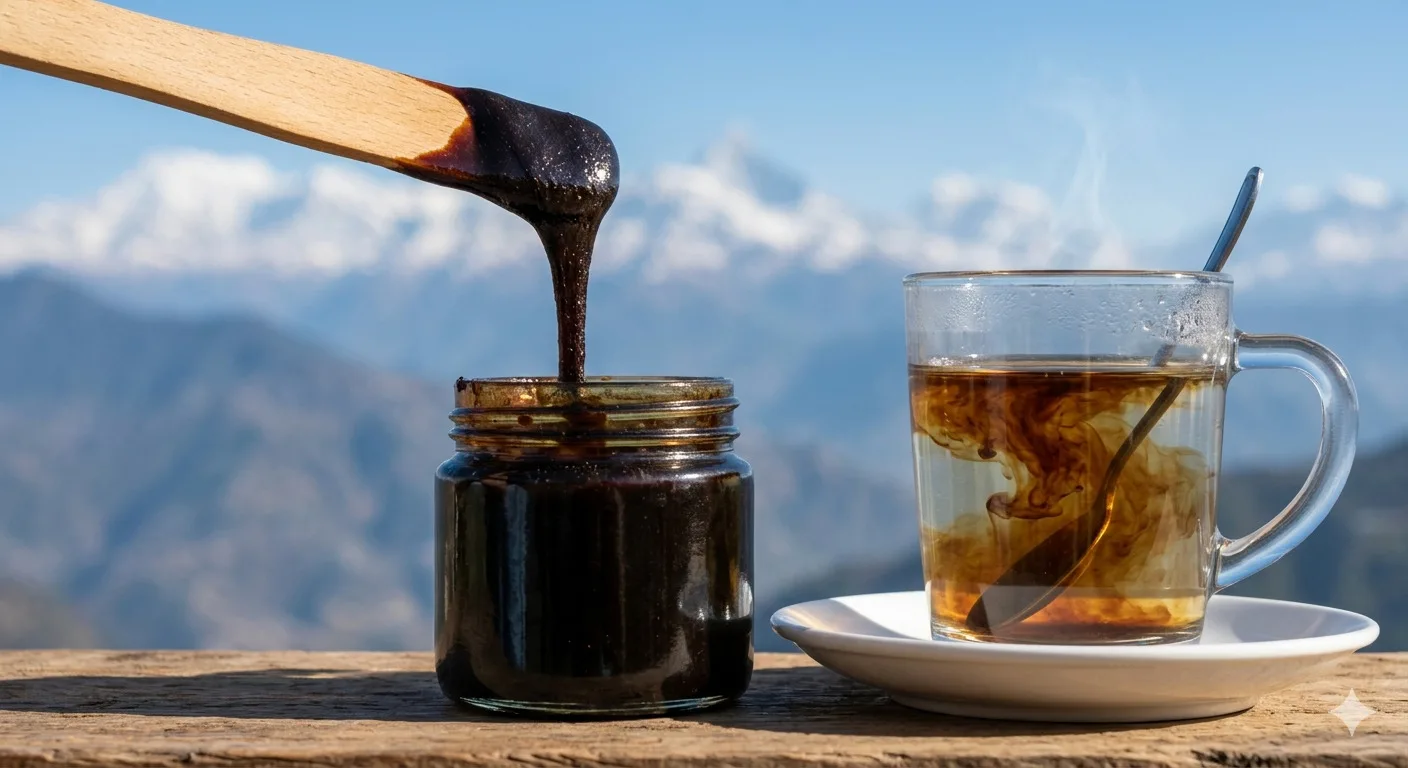
In practical terms, Himalayan shilajit resin is a dark brown to black tar-like product that retains its form at room temperature, but becomes viscous and dissolves in warm water.
It has an earthy, mineral scent, which isn't unpleasant, but far from ideal. As resin, it represents a minimally processed form of shilajit, staying as close to its natural form as possible while undergoing purification for human use. This contrasts with powdered or extract versions, which are processed differently and may contain fillers.
How Does Himalayan Shilajit Resin Form – and Why is Altitude Important?
This is a process that occurs very slowly over many years-we're talking centuries. At high altitudes in the Himalayas (between 1,000 and 5,000 meters above sea level), decomposed organic materials like plants, animal remnants and microbes trapped between strata of rock undergo a transformation due to pressure and temperature over long periods.
This turns the material into a complex matrix rich in minerals, humic acid, fulvic acid and other bioactive components. When the temperature warms during spring and summer, it seeps from the rock cracks where it's gathered by experienced harvesters familiar with the rock formations. In the winter months, the resin solidifies and returns to the rock. That is why reputable brands will specify the altitude at which their product was collected. Vague source claims are a red flag.
Resin vs. Powder vs. Capsules: A Realistic Comparison
It's helpful to compare forms.
FormProcessing LevelBioavailabilityConveniencePurity RiskCostResinLowestHighestLowLow (if tested)HigherPowderModerateModerateModerateModerateModerateCapsulesHighestVariableHighHigher (fillers, dilution)VariableLiquid dropsVariableVariableHighModerate–HighVariableAs the lowest processed option, resin is the most closely aligned to its traditional use in Ayurveda and most consistent with human clinical trials. The mineral complex and fulvic acid content are well-preserved due to minimal processing, with the trade-off being the effort needed to dissolve a small portion of resin in warm water, as opposed to taking a pill.
Capsule-based shilajit can be convenient, but a significant proportion of them are poorly formulated: either containing negligible amounts of the key compound, shilajit, or relying heavily on fillers to bulk out the capsules, leading to far lower concentrations than used in clinical studies (though good-quality capsules do exist). Powder is somewhere in the middle – easier to handle than resin but without the same intact mineral composition and beneficial compounds found in the resin.
What's In Himalayan Shilajit Resin?
The active composition of high-quality, purified Himalayan shilajit resin includes:
- Fulvic acid – The primary active ingredient in shilajit, which acts as a nutrient delivery system and antioxidant. High-quality purified shilajit resin typically contains 60-80% fulvic acid.
- Humic acid – Similar to fulvic acid but less abundant, it also provides antioxidant benefits.
- Dibenzo-alpha-pyrones (DBPs) – compounds which play an important role in supporting energy production at the cellular level (mitochondria).
- Trace minerals – More than 80 have been identified, including zinc, magnesium, iron and manganese. The trace mineral composition varies based on the geographical source of the shilajit.
- Amino acids and other phytochemicals – occur in smaller quantities, contributing to the overall efficacy.
Uses of Himalayan Shilajit Resin
Traditional use for shilajit encompasses a wide range of applications from increasing energy to enhancing cognition and immunity. Current research has narrowed down to several areas of focus:
- Boosting energy and physical stamina: This is the most popular modern application for shilajit.
- Natural testosterone enhancement: A series of studies in humans have documented moderate, but statistically significant, increases in testosterone levels (specifically total and free) with shilajit supplementation. These effects were most noticeable in men between the ages of 40-55.
- Supporting male fertility: One of the human studies on testosterone also observed a marked improvement in sperm count, quality, and motility in men with infertility after taking shilajit for 90 days.
- Faster recovery after physical training: Users commonly report decreased delayed onset muscle soreness (DOMS) and improved muscle recovery.
- Enhancing cognitive function: While this is mostly anecdotal at present, early research on fulvic acid’s potential for brain health is promising.
- Altitude sickness adaptation: Used traditionally to combat altitude sickness, there's a biological rationale for it involving improved oxygen uptake and red blood cell production.
- Iron absorption: Due to fulvic acid's ability to transport minerals, shilajit is a good candidate for aiding iron absorption, particularly in individuals experiencing iron-deficiency anemia.
The Evidence: What the Research Actually Says
Be aware that the claims made about shilajit vary enormously, from well-substantiated benefits to unsupported marketing hype.
The science on shilajit has found:
- Significant improvements in testosterone and sperm parameters in human trials (Pandit et al., 2015; Biswas et al., 2010).
- Evidence of cellular mitochondrial support due to fulvic acid and DBP activity (Bhattacharyya et al., 2009).
- Potent antioxidant properties shown in in vitro and animal studies.
Preliminary but promising evidence exists for:
- Cognitive function, potentially through brain inflammation pathways (Carrasco-Gallardo et al., 2012).
- exercise performance and VO2 max in small trials (Keller et al., 2019).
- Improved iron absorption and possible anemia benefits, though more direct human studies are needed.
Tradition suggests benefits in areas like immune support, anti-aging and blood sugar control, but these are currently lacking rigorous clinical evidence.
How to Take Himalayan Shilajit Resin the Right Way
Typical dose: A pea-sized amount of resin - around 300-500 mg - 1-2 times daily, mimicking the doses in key human studies.
How to prepare: Dissolve the resin in warm (not hot) water, milk, or warm herbal tea. Higher heat can degrade beneficial compounds like fulvic acid. Stir until it completely dissolves within 30-60 seconds. It also dissolves easily in protein shakes, and can be placed directly under the tongue, although the taste will take some getting used to.
When to take it: It doesn’t truly matter when you take shilajit, although morning is popular because adaptogens tend to support healthy diurnal rhythms. Post-workout can support recovery, and splitting the dose (morning and night) can support consistent systemic levels.
Consistency > duration: Shilajit's effects are cumulative. Take it consistently for at least 8-12 weeks to properly assess benefits such as energy, sleep quality, and recovery. Two weeks are typically too soon to judge meaningful impact.
With or without food: Your choice. It’s often absorbed a little more quickly on an empty stomach, and with food can minimize initial stomach upset some users report. Experiment to see which method works best for you.
Potential Side Effects & Safety Considerations
When you source pure, properly tested Himalayan shilajit from a reliable provider, most people can take it with minimal side effects.
The side effects that can occur include:
Stomach upset or loose stools: Especially with higher doses or when starting. Most people adapt within a week or two.
Lightheadedness: Less common, and may occur on an empty stomach.
Allergic reactions: Rarely, itching, rashes or rapid heartbeat occur – discontinue immediately.
Increased uric acid levels: Be cautious if you have gout or a history of kidney stones.
The Uncomfortable truth About Heavy Metals
Let’s be brutally honest here: Raw Himalayan shilajit naturally contains heavy metals like lead, mercury, arsenic, and cadmium because of its source (mineral-rich geological formations). That’s not to say it’s necessarily contaminated.
The problem lies with the purification process. Many products simply don’t have robust purification processes that bring heavy metals down to safe levels. You’ll see warning letters from the FDA to some brands over their shilajit products, and consumer testing groups have found harmful levels of lead and arsenic in products on the market.
This isn’t a minor issue.
It’s the most critical one in the shilajit market and one that many brands gloss over.
Quality purification: The purification process used by legitimate companies (water purification, sun drying, filtration) removes these heavy metals down to or below the levels considered safe by regulatory bodies like USP and EFSA. These companies test their final product by an independent third party against those safety guidelines.
The minimum requirements for any brand you’re considering:
A Certificate of Analysis (COA) that is readily available.
Heavy metal panel test results (lead, arsenic, mercury, cadmium) that shows results compared to USP/EFSA limits.
The percentage of fulvic acid.
Batch-specific testing (not one generic historical COA for all products).
Himalayan Shila’s COAs meet these requirements. This isn’t a competitive advantage, it’s the bar to clear.
How to Confirm If Your Shilajit Is Truly Pure
A simple checklist:
Get the COA. No COA, no buy.
Check the lab that performed the test; it should be an independent, accredited third-party lab.
Does the COA have a heavy metal test? It must show results for lead, arsenic, mercury, and cadmium.
Is the fulvic acid percentage listed and substantial? We recommend 60-80% for a quality resin.
Is the batch number on the COA the same as the batch number on your product?
Steer clear of extremely cheap prices. High-quality purification, testing, and authentic Himalayan sourcing simply cost money.
When NOT to Take Himalayan Shilajit Resin
Pregnant or breastfeeding women: Insufficient safety data available.
Children: Lack of dosing information and safety research.
Individuals with gout or a history of kidney stones: Shilajit can increase uric acid levels.
Those with hemochromatosis, sickle cell anemia, or thalassemia: May increase iron absorption.
People on thyroid medication: Potential for interaction with hormone levels.
Individuals with hormone-sensitive cancers: Potential for testosterone-supporting effects is contraindicated.
People with active autoimmune diseases: Immune-modulating effects might be detrimental.
Final thoughts
Shilajit has a long history of use and a growing body of scientific evidence behind its many potential benefits. While not a magic cure, properly sourced and purified Himalayan shilajit is one of the more unique and well-supported natural compounds you can take to support your overall health.