
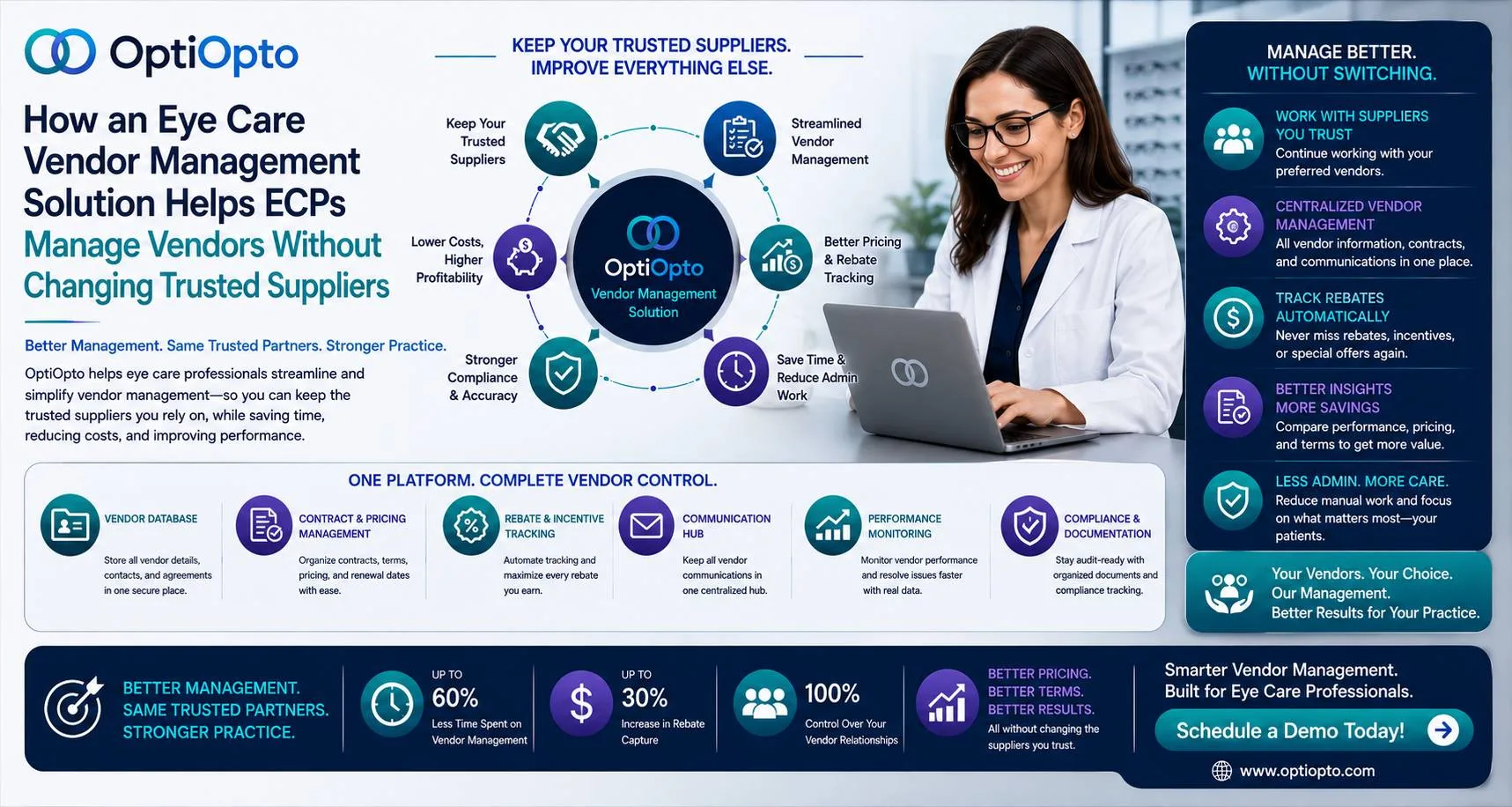
What happens when a practice likes its suppliers but struggles with everything around them? Separate invoices arrive. Rebates need checking. Staff chase credits. Vendor questions take longer than expected.
OptiOpto for ECPs addresses this side of supplier management. An eye care vendor management solution can bring the paperwork and vendor activity into one place without asking a practice to walk away from suppliers it already knows.
Vendor Relationships Are Often Not the Issue
Independent eye care practices usually have reasons for staying with certain suppliers. A lens lab may provide reliable service. A frame representative may know what sells in the practice. Contact lens orders may already follow a process that staff know well.
The trouble starts behind those relationships. As the number of suppliers grows, so does the office work. Different billing dates, different rebate terms, several online accounts, and separate support contacts can make a normal purchasing process harder than it needs to be.
OptiOpto for ECPs takes a different route. The supplier relationship can remain in place, while the administration around it becomes more organized.
One Vendor List Can Create Many Separate Workflows
A practice working with ten suppliers may end up running ten slightly different processes. One vendor sends invoices by email. Another uses a portal. A third applies credits later. Rebates may arrive under another schedule. None of these tasks looks difficult on its own. Together, they take time.
An eye care vendor management solution brings these activities closer together. Billing, purchasing records, rebates, and supplier support can be handled through a more centralized process. Staff have fewer places to check, and owners get a better view of vendor activity without rebuilding the entire purchasing setup. That can make a noticeable difference in a busy independent practice.
Consolidated Billing Can Remove a Lot of Repetitive Work
Invoices create more work than paying the amount shown. Someone still has to check the supplier, confirm the charge, record it, match any credits, and keep the paperwork ready for reconciliation. Consolidated billing reduces some of those repeated steps.
Instead of working through a pile of separate statements, participating vendor charges can appear through one monthly billing process. It does not change what the practice buys. It changes how the financial administration reaches the practice.
For an ECP with several established supplier accounts, that distinction is useful. The practice keeps purchasing freedom while cutting down the number of billing workflows staff have to manage.
What Should ECPs Look for in Vendor Management?
Not every vendor program works the same way. Practices should look at how much control they keep after joining.
Useful features can include:
- one monthly statement for participating vendors
- rebate tracking without separate spreadsheets
- access to negotiated vendor pricing
- support when a supplier issue needs follow-up
- one portal for vendor-related administration
- no forced minimum purchasing levels
- freedom to continue using preferred suppliers
A good eye care vendor management solution should reduce administration without deciding what a practice has to buy.
That is particularly important for independent ECPs, where product selection often depends on the patient base, local demand, clinical needs, and the practice owner's own buying strategy.
Rebates Are Easy to Miss When Tracking Is Manual
Rebates sound straightforward until several vendors use different qualification periods and payment schedules.
Staff may need to check whether a purchase qualified, whether the correct rebate rate applied, and whether the credit actually arrived. A spreadsheet can handle some of this, but it still depends on someone keeping it updated. Centralized rebate tracking removes part of that chasing.
When rebate activity stays connected with vendor purchasing records, practices can review the information with less manual checking. It also becomes easier to spot a missing credit or a payment that does not match what was expected.
Vendor Problems Need More Than Another Support Ticket
Even a trusted supplier can have an invoice error, delayed credit, account question, or shipment issue. The frustrating part is often the follow-up. Staff call one department, email another person, then explain the same problem again. Vendor advocacy can shorten that chain.
A support team can work with the supplier on behalf of the practice rather than leaving staff to manage every issue alone. This is one area where centralized vendor management has a direct operational value. It reduces the number of small supplier problems landing back on the practice manager's desk.
Purchasing Support Should Not Mean Giving Up Independence
Independent ECPs usually want better purchasing terms, but that does not mean they want another company choosing their suppliers.
That is an important difference.
A practice may want access to negotiated pricing while still buying frames from a long-standing representative. It may want rebate opportunities without moving all lens purchases to one lab.
The better approach leaves those decisions with the practice. Vendor management handles the administrative layer. The ECP still decides which products, brands, and supplier relationships fit the business.
A Better Vendor Process Can Start Without Replacing What Already Works
Many practices do not need a new supplier network. They need a better way to handle the network they already have.
An eye care vendor management solution can reduce separate billing tasks, organize rebates, improve vendor follow-up, and bring purchasing administration into fewer systems. At the same time, the practice can continue working with suppliers that already fit its clinical and commercial needs.
For an independent ECP reviewing vendor operations, the useful question is simple: which supplier relationships are working, and which administrative tasks around them are taking too much staff time?.