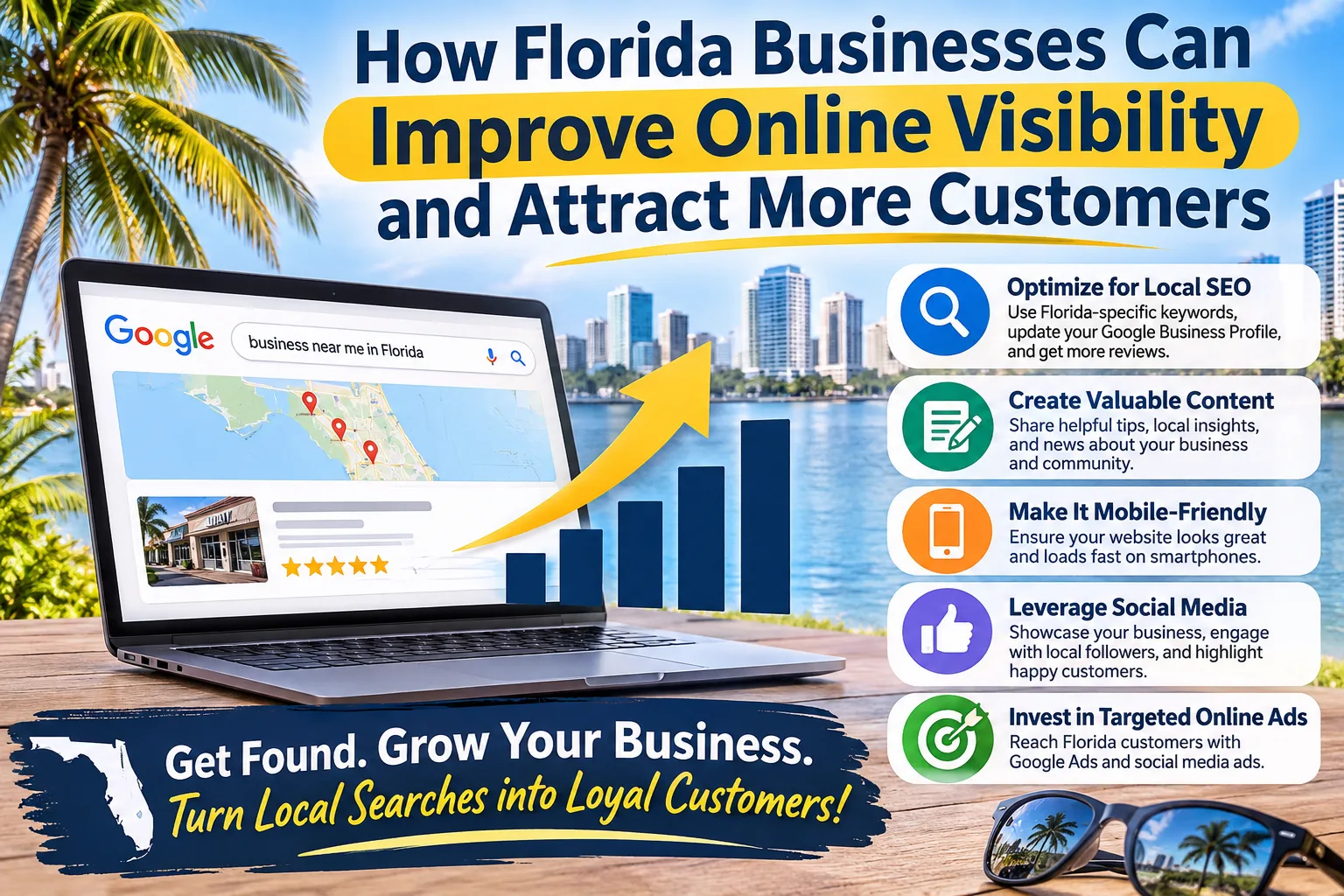
In today's competitive digital environment, having a strong online presence is essential for businesses that want to reach new customers and grow consistently. Whether a company operates in Miami, Orlando, Tampa, Jacksonville, or another part of Florida, appearing in relevant search results can create valuable opportunities for business growth.
Search Engine Optimization (SEO) helps businesses improve website visibility, attract relevant visitors, and build credibility online. With a well-planned strategy, companies can strengthen their digital presence and reach potential customers who are actively searching for their products or services.
Why Is SEO Important for Florida Businesses?
Florida has a diverse business landscape, including tourism, healthcare, real estate, retail, hospitality, and professional services. With many companies competing for online attention, businesses need effective digital marketing strategies to stand out.
Businesses looking to improve their online presence can benefit from professional SEO services Florida that focus on keyword research, website optimization, local search visibility, and quality content creation. A well-planned SEO strategy helps businesses reach relevant audiences and build sustainable organic growth.
SEO offers several benefits:
- Improves visibility in search engine results.
- Attracts relevant organic website traffic.
- Helps reach customers searching for local services.
- Builds online credibility and brand awareness.
- Generates potential leads and business enquiries.
- Supports long-term digital growth.
Essential SEO Strategies for Better Website Rankings
A successful SEO campaign requires a combination of content optimization, technical improvements, keyword research, and website authority development.
1. Conduct Effective Keyword Research
Keyword research helps businesses understand what their target audience searches for online.
Identifying relevant keywords based on search intent allows companies to create useful website pages and content that match customer needs.
Businesses should consider:
- Industry-specific keywords.
- Location-based search terms.
- Long-tail keywords.
- Informational search queries.
- Commercial and transactional keywords.
Selecting relevant keywords helps attract visitors who are more likely to be interested in a business's offerings.
2. Optimize Website Content
High-quality content plays an important role in SEO performance. Search engines aim to provide useful information that satisfies users' search intent.
Businesses should create informative service pages, blog posts, guides, and FAQs that answer common customer questions.
Effective content optimization includes:
- Writing descriptive page titles.
- Creating relevant meta descriptions.
- Using proper heading structures.
- Adding meaningful internal links.
- Including relevant keywords naturally.
- Optimizing images with descriptive alt text.
Content should prioritize readability and usefulness rather than excessive keyword repetition.
3. Focus on Local SEO
Local SEO is especially important for businesses that serve specific cities or geographic areas.
Optimizing a Google Business Profile, maintaining accurate contact information, collecting genuine customer reviews, and creating relevant location pages can help businesses improve their local search presence.
Companies serving multiple Florida locations should develop useful location-specific content rather than publishing repetitive pages with only city names changed.
4. Improve Technical SEO
Technical SEO ensures that search engines can access, crawl, and understand website content effectively.
Important technical improvements include:
- Improving website loading speed.
- Making websites mobile-friendly.
- Fixing broken links.
- Resolving indexing and crawling issues.
- Implementing HTTPS security.
- Maintaining a logical website structure.
- Monitoring Core Web Vitals.
Regular technical audits help identify issues that may affect website performance and user experience.
Why Quality Content Matters for Organic Growth
Publishing valuable content consistently can help businesses establish topical authority and answer questions that matter to their audiences.
For example, a real estate company can publish property investment guides, while a healthcare provider can create educational articles about relevant services.
Useful content should be accurate, clearly structured, original, and written for the intended audience.
A strong content strategy can also support internal linking, improve user engagement, and create opportunities to earn relevant backlinks.
How to Choose the Right SEO Partner
Selecting the right digital marketing partner is an important decision for businesses that want to improve their search performance.
When evaluating an SEO agency or consultant, consider:
- Experience with different industries and business models.
- Understanding of technical and on-page SEO.
- Knowledge of local and national search strategies.
- Transparent reporting and communication.
- Focus on relevant traffic and qualified leads.
- Realistic expectations and ethical optimization practices.
Avoid providers who guarantee specific rankings or promise overnight results. Sustainable SEO requires consistent effort, analysis, and improvements.
Measuring the Success of an SEO Campaign
Tracking performance helps businesses understand whether their SEO activities are delivering meaningful results.
Some important metrics include:
- Organic traffic: Measures visitors arriving through unpaid search results.
- Impressions: Shows how often website pages appear in search results.
- Clicks: Tracks visits generated from search listings.
- Click-through rate: Measures the percentage of impressions that result in clicks.
- Keyword rankings: Helps monitor search visibility for target queries.
- Conversions: Measures enquiries, purchases, and other valuable actions.
Tools such as Google Search Console and Google Analytics can help businesses monitor performance and identify opportunities for improvement.
Building a Stronger Digital Presence With the Right SEO Strategy
Businesses need a practical SEO approach that aligns with their industry, target audience, and growth objectives.
Cybrical Tech supports businesses with digital marketing and search optimization strategies designed to strengthen website visibility, improve organic performance, and create opportunities for sustainable growth.
Combining keyword research, content development, technical optimization, and performance monitoring can help businesses build a stronger foundation for long-term online success.
Final Thoughts
Growing a business online requires more than simply creating a website. Companies need a consistent strategy that helps search engines understand their content while providing visitors with useful information.
By investing in technical improvements, relevant content, local search optimization, and regular performance analysis, Florida businesses can improve their digital visibility and reach potential customers more effectively.
A well-planned SEO strategy can become a valuable part of long-term business development and online brand building.
Frequently Asked Questions
1. Why do Florida businesses need SEO?
SEO helps businesses improve search visibility, attract relevant website visitors, build credibility, and generate potential customer enquiries.
2. How long does SEO take to show results?
SEO results depend on website condition, competition, industry, and optimization efforts. Meaningful improvements often take several months of consistent work.
3. What is local SEO?
Local SEO focuses on improving a business's visibility in location-based search results and helping it reach customers in specific geographic areas.
4. Is keyword research important for SEO?
Yes. Keyword research helps identify the search terms customers use and allows businesses to create content that matches their needs and search intent.
5. How can businesses measure SEO performance?
Businesses can monitor organic traffic, impressions, clicks, click-through rates, keyword rankings, and conversions using tools such as Google Search Console and Google Analytics.