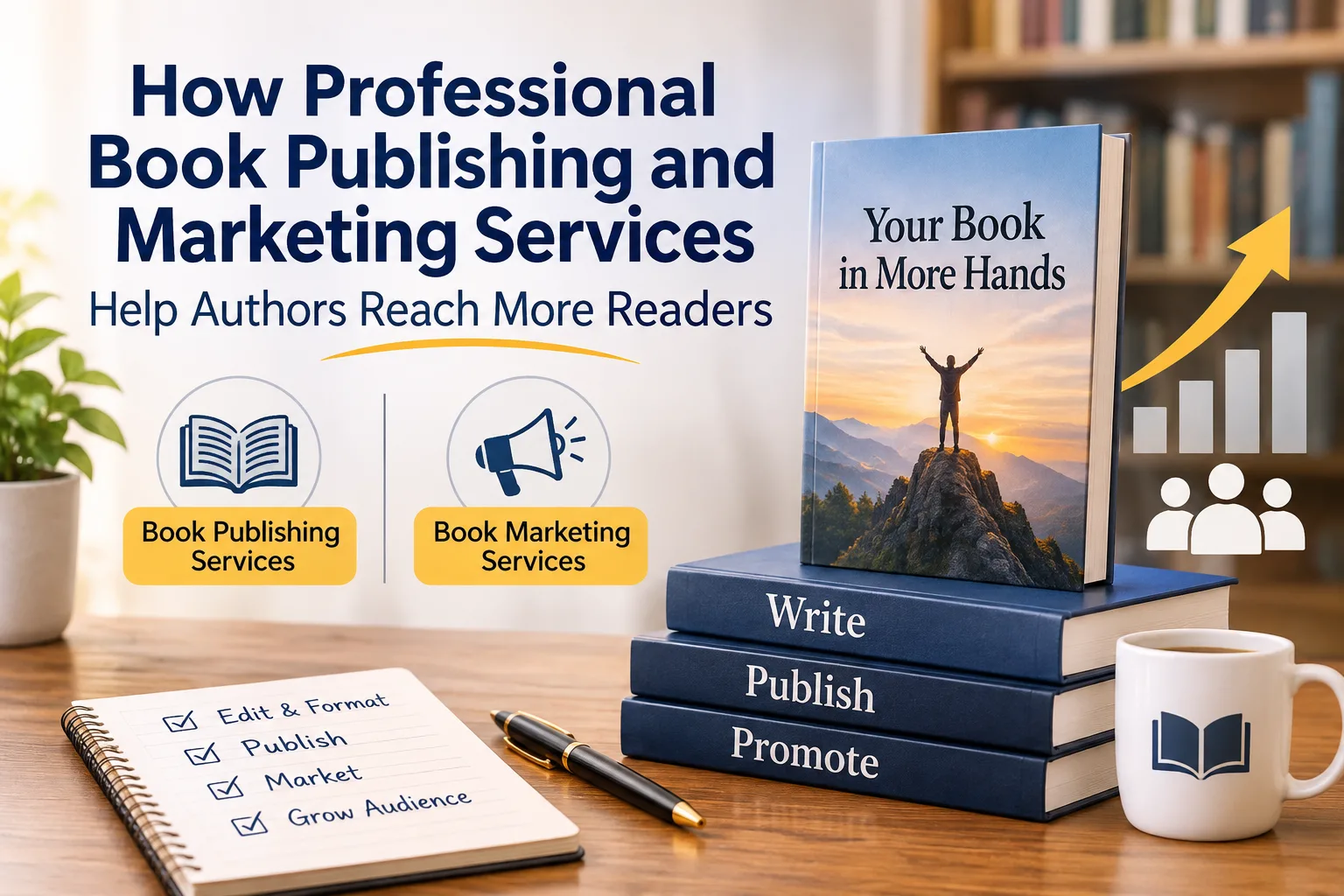
Publishing a book is an important milestone for any writer, but completing a manuscript is only one part of the journey. Authors must also consider editing, design, formatting, publication options, and ways to introduce their work to potential readers. With more publishing formats and promotional channels available today, navigating these steps can feel challenging, especially for first-time authors.
Professional publishing support can help writers understand the process and prepare their books for the market. By combining book publishing services with effective promotional strategies, authors can work toward presenting their books professionally and building awareness among their intended audiences.
Preparing a Manuscript for Publication
Before a book reaches readers, its manuscript needs careful preparation. Editing and proofreading help improve clarity, grammar, consistency, and readability. These steps also allow authors to identify areas where ideas, descriptions, or explanations may need further development.
Professional book publishing services may include several important stages, such as:
- Manuscript editing: Improving structure, language, and overall readability.
- Proofreading: Identifying spelling, punctuation, and grammatical errors.
- Cover design: Creating a visual presentation that reflects the book's subject and genre.
- Interior formatting: Organizing the content for a professional reading experience.
- Illustration: Developing visual elements where appropriate.
- Publishing guidance: Helping authors understand available publishing formats and processes.
Each stage contributes to the presentation of the finished book. A well-prepared manuscript gives readers a more polished experience and helps authors move forward with greater confidence.
Understanding Different Publishing Options
Authors today can explore several ways to publish their work. Traditional publishing, independent publishing, and self-publishing each involve different processes, responsibilities, and levels of creative control.
Some writers prefer working with established publishing houses, while others want greater involvement in decisions about their books. Self-publishing can provide flexibility, but authors may need to manage or arrange services such as editing, cover design, formatting, and distribution.
Understanding these options before publication can help writers choose an approach that matches their budget, expectations, and long-term goals. Professional guidance can also make it easier to identify which services are necessary and which responsibilities remain with the author.
Why Book Marketing Matters After Publication
Publishing a book does not automatically mean readers will discover it. With numerous titles entering the market, authors need ways to introduce their work and communicate what makes it relevant to a particular audience.
This is where book marketing services can become valuable. Marketing focuses on building awareness, reaching potential readers, and creating opportunities for people to discover a published title.
Depending on the author's goals, promotional activities may include:
- Developing social media content about the book.
- Creating promotional descriptions and author profiles.
- Planning email marketing campaigns.
- Exploring relevant book review opportunities.
- Building awareness through online publicity.
- Identifying reader communities interested in the book's subject.
- Promoting new releases and special announcements.
Not every strategy is suitable for every book. A marketing approach should consider the genre, target readership, competition, and available promotional budget.
Connecting Publishing and Marketing Strategies
Publishing preparation and marketing work best when they support a shared objective. For example, a professionally designed cover can provide useful material for promotional graphics, while a clear book description can be adapted for online listings, social media posts, and marketing campaigns.
Authors can begin thinking about promotion before their books are released. Identifying the intended audience, preparing an author biography, developing promotional messages, and planning a release announcement can help create a more organized launch process.
Combining publishing preparation with marketing planning also helps maintain consistency. The book's description, visual identity, and promotional messaging should accurately represent its content and appeal to the readers it aims to reach.
Choosing the Right Publishing and Marketing Support
Selecting a publishing service provider requires careful consideration. Authors should understand what each company offers and whether its services match their individual needs.
Before making a decision, writers may want to review:
Service details: Check whether editing, proofreading, design, formatting, and marketing are included or offered separately.
Experience and portfolio: Review previous projects and examples of completed work where available.
Pricing and agreements: Understand the costs, payment terms, deliverables, and any additional charges.
Communication: Choose a provider that explains the process clearly and responds to questions.
Marketing expectations: Ask which promotional activities are included and how progress or results will be evaluated.
Authors should also be cautious of guaranteed sales, bestseller rankings, or promises of immediate visibility. Book performance depends on many factors, including reader interest, competition, pricing, distribution, and promotional consistency.
How Authors Can Build Long-Term Visibility
Book promotion should not always end after a launch campaign. Authors can continue introducing their work through relevant content, reader engagement, interviews, newsletters, and social media updates.
For example, a nonfiction author might share useful insights related to the book's subject, while a fiction writer could introduce characters, discuss the writing process, or share background information about the story.
Maintaining an author platform can also help writers establish a recognizable presence over time. A professional website, updated book information, and consistent communication can make it easier for interested readers to learn more about an author and their publications.
The most effective approach is one that remains realistic, relevant to the intended audience, and manageable within the author's available resources.
Conclusion
Bringing a book to market involves more than writing a manuscript. Authors must prepare their work, choose suitable publishing options, and find practical ways to reach potential readers. Professional book publishing services can support the preparation and presentation of a book, while book marketing services can help build awareness and create promotional opportunities.
By approaching publishing and marketing as connected parts of the same journey, writers can make more informed decisions, present their work professionally, and explore different ways to connect with readers.