Payroll is one of the most important recurring responsibilities for any business. Every month, companies need to calculate employee salaries, account for attendance, adjust leave and overtime, process deductions, and prepare payslips. When these activities are managed manually, even a small calculation or data-entry error can create delays and employee dissatisfaction.
Quick payroll software and mobile applications are helping businesses bring these activities into a more organised process. By connecting attendance records, salary calculations, employee information, and payroll reports, these tools can reduce repetitive work and make salary administration easier to manage.
Businesses exploring digital payroll solutions can also learn about Quick Payroll software and app features to understand how these applications support everyday payroll activities.
Why Traditional Payroll Processes Can Become Difficult
Many small and medium-sized businesses still depend on spreadsheets, paper attendance registers, and manually maintained employee records. These methods may work when a company has only a few employees, but the workload increases as the workforce grows.
Common challenges include:
- Attendance discrepancies: Manually transferring attendance information can result in missing or incorrect entries.
- Salary calculation errors: Leave deductions, overtime, incentives, and advances can make calculations complicated.
- Delayed payslips: Preparing individual salary statements manually takes time.
- Scattered employee records: Important information may be stored across multiple spreadsheets and documents.
- Limited reporting: Management may struggle to get a clear picture of monthly salary expenses and payroll changes.
Payroll software helps bring these activities together, reducing dependence on disconnected records and repetitive manual calculations.
What Is Quick Payroll Software?
Quick payroll software is a digital solution designed to simplify salary processing and related employee administration. Depending on the platform, it may combine employee data, attendance tracking, leave records, salary structures, deductions, and payslip generation.
Instead of calculating every employee's salary separately, businesses can maintain employee information in a central system and use configured payroll rules to process monthly salaries.
A payroll application may also provide mobile access, allowing authorised users to review attendance, manage employee information, or access payroll details without depending entirely on a desktop computer.
Important Features to Look for in a Payroll App
A useful payroll application should do more than calculate salaries. It should support the complete workflow involved in managing employee payments.
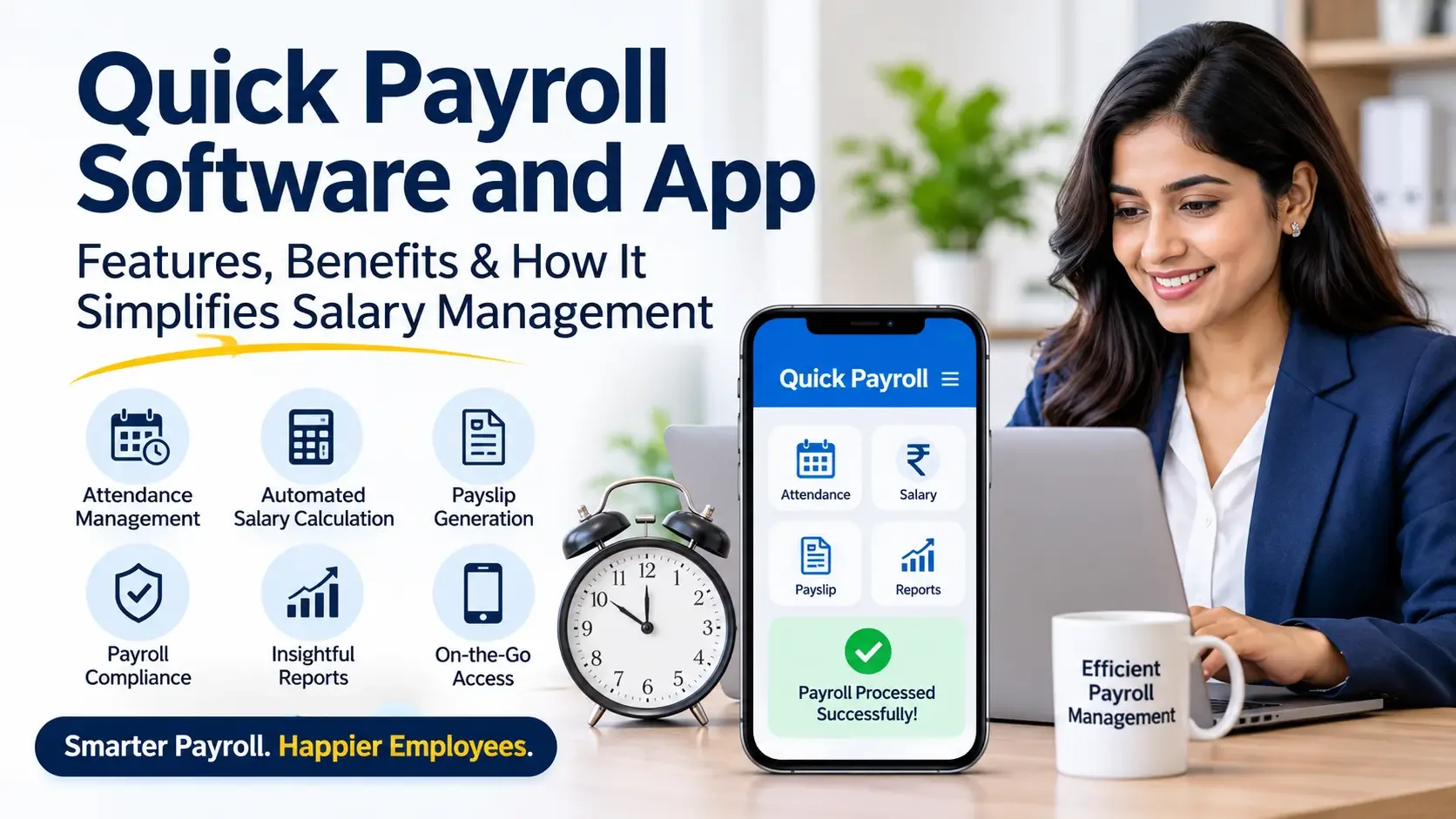
1. Employee Attendance Management
Attendance information directly affects salary calculations. A payroll app may allow businesses to record present days, absences, half-days, and other attendance categories.
Some platforms also support attendance integration or automated attendance records. This can reduce the need to transfer information manually between systems.
2. Automated Salary Calculation
Salary calculation is one of the most valuable functions of payroll software. Based on configured salary structures and attendance records, the system can help calculate payable salaries.
Depending on the software, businesses may also manage allowances, deductions, incentives, overtime, and salary advances.
3. Payslip Generation
Preparing payslips manually for every employee can become time-consuming. Payroll software can generate individual payslips containing salary components, deductions, and net payable amounts.
Digital payslips also make it easier to maintain salary records and share statements with employees.
4. Leave and Overtime Tracking
Leave balances and overtime hours can influence monthly payroll. A suitable application can help maintain these records and incorporate approved information into salary processing.
Businesses should establish clear approval procedures so that incorrect or unverified attendance and overtime entries do not affect payroll.
5. Payroll Reports and Records
Payroll reports help businesses understand monthly salary expenses and maintain records for internal review.
Depending on the platform, reports may include salary summaries, attendance registers, deduction details, and other payroll-related statements.
6. Mobile Accessibility
A mobile payroll app can be useful for business owners and HR teams who need access to employee or attendance information while away from their desks.
Before choosing an app, check whether it offers secure login, role-based access, data backups, and appropriate controls over sensitive employee information.
How Payroll Software Can Improve Business Operations
The benefits of payroll software extend beyond faster salary calculations. Its value comes from creating a more consistent and organised payroll process.
Less repetitive administration: Automating routine calculations and document preparation can reduce manual workload.
Better record management: Centralised employee and payroll information makes it easier to locate records when required.
More consistent processing: Configured salary rules can help standardise calculations across employees, provided the underlying information is accurate.
Improved employee communication: Timely payslips and accessible salary information can help employees understand their payments.
Useful management insights: Payroll reports can help management review salary expenses and identify changes from one month to another.
Businesses comparing different solutions can also explore this guide to payroll software in India to understand the features commonly available in payroll platforms.
Payroll Software and Statutory Compliance in India
Payroll processing in India involves more than calculating gross and net salaries. Depending on the organisation, employee category, establishment, and applicable laws, employers may need to consider requirements relating to provident fund, employee state insurance, professional tax, tax deduction at source, minimum wages, leave, and overtime.
Payroll software can support compliance-related administration by maintaining relevant employee information, applying configured calculations, and generating reports.
However, software does not automatically guarantee legal compliance. Employers must ensure that the system reflects the rules applicable to their establishment and that statutory rates, thresholds, filing requirements, and deadlines are reviewed whenever regulations change.
Businesses requiring professional assistance can explore payroll compliance services to understand how payroll-related compliance activities can be supported.
How to Choose the Right Payroll Software for Your Business
Not every payroll application is suitable for every organisation. A small business with a limited workforce may need basic attendance and salary features, while a larger organisation may require multiple salary structures, approval workflows, integrations, and detailed reporting.
Before selecting a solution, consider the following points:
- Business size: Check whether the software can handle your current workforce and expected growth.
- Essential features: Confirm that attendance, salary calculation, leave, deductions, and payslip functions meet your requirements.
- Compliance support: Understand which Indian statutory requirements the platform supports and what still needs to be handled separately.
- Ease of use: HR and finance teams should be able to operate the system without unnecessary complexity.
- Data security: Review access controls, backup arrangements, and how employee information is protected.
- Customer support: Check the availability and quality of technical assistance.
- Pricing: Compare subscription charges, employee limits, setup costs, and additional feature fees.
A practical approach is to test the software with sample employee records before using it for an actual payroll cycle.
Payroll Software or Payroll Outsourcing: Which Should Businesses Consider?
Payroll software and payroll outsourcing address related but different business needs.
Payroll software provides a system that an organisation's own team can use to manage salary administration. The business remains responsible for maintaining employee information, checking calculations, approving payroll, and handling its compliance responsibilities.
Payroll outsourcing involves assigning defined payroll activities to an external service provider. Depending on the agreement, the provider may assist with salary processing, payroll documentation, statutory calculations, and compliance-related administration.
Businesses with sufficient in-house HR and finance resources may prefer managing payroll through software. Organisations with limited internal capacity or complex payroll requirements may also consider professional payroll outsourcing services in India.
For example, Futurex Management Solutions provides payroll management and outsourcing support, including salary processing, payroll administration, and agreed compliance-related activities.
Businesses interested in understanding the service scope can also explore Futurex payroll management services.
The right choice depends on workforce size, internal expertise, operational complexity, budget, and the level of support required. Some businesses may use software internally while seeking external assistance for specialised payroll or compliance activities.
Final Thoughts
Quick payroll software and mobile apps can make salary administration more organised by bringing attendance, employee records, salary calculations, payslips, and reporting into a connected workflow.
However, selecting software should not be based only on the promise of faster processing. Businesses should also evaluate accuracy, security, reporting capabilities, compliance support, and ease of use.
A well-managed payroll process combines suitable technology with accurate employee data, clear approval procedures, and regular verification. When these elements work together, businesses can spend less time on repetitive administration and more time focusing on their people and operations.